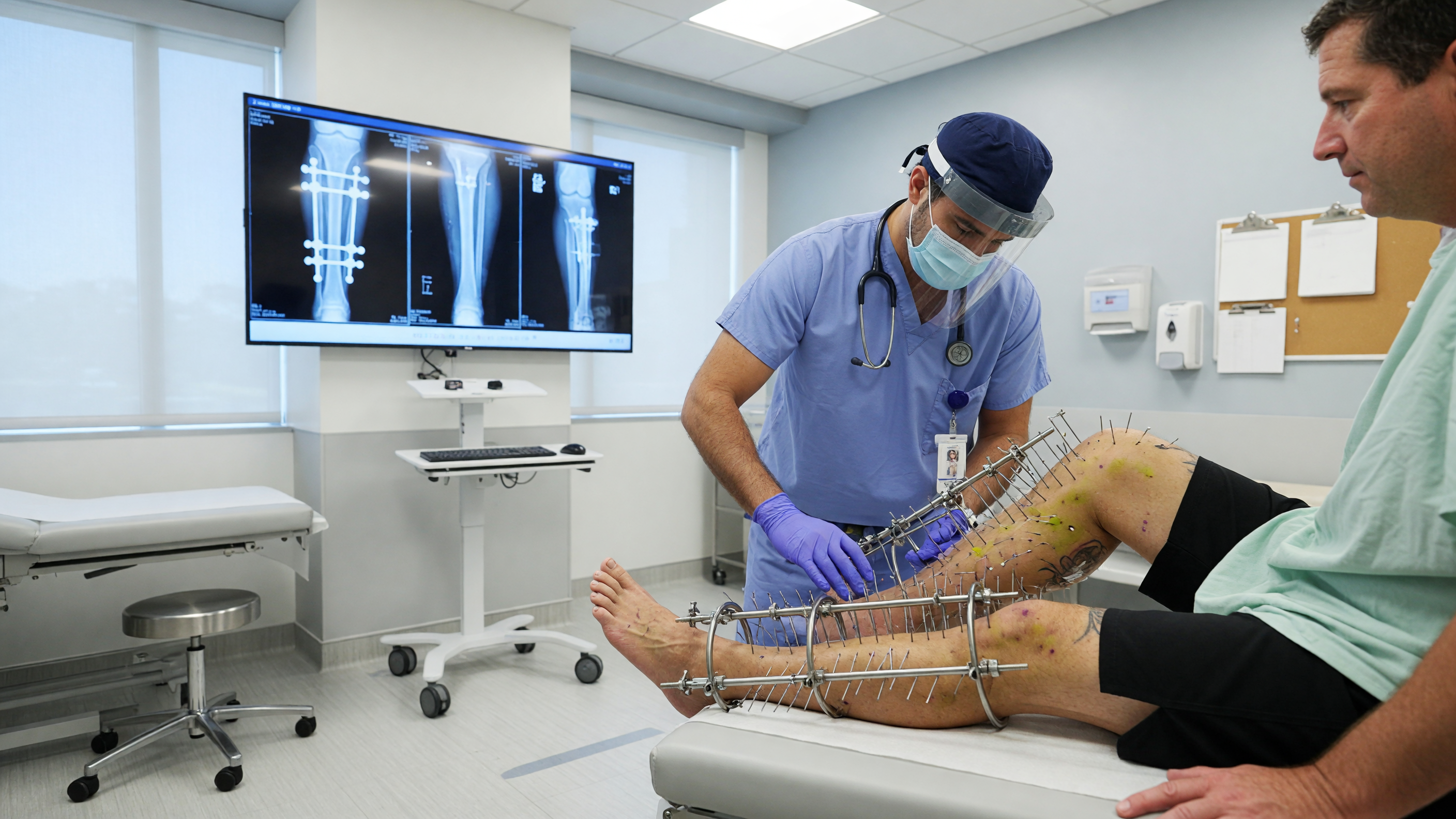
Limb reconstruction is a surgical process that restores the shape, length, function, and alignment of an arm or leg affected by injury, infection, deformity, or disease. It rebuilds damaged bone and soft tissue so patients can walk, move, and live with less pain. This guide explains what limb reconstruction is, who needs it, the techniques involved, recovery expectations, and how specialists manage complex cases. You will also learn about diagnosis, risks, and when to consult an orthopedic surgeon. Whether facing a non-healing fracture or a congenital deformity, understanding your options helps you make confident decisions about your treatment and long-term mobility.
What Is Limb Reconstruction?
Limb reconstruction is advanced orthopedic surgery that rebuilds bones, joints, and soft tissue in the arms or legs. It aims to restore length, alignment, and function lost to trauma or disease.
The goal is to help patients regain mobility and avoid amputation. Surgeons use it to correct problems that simpler methods cannot fix.
Limb reconstruction may address:
- Broken or non-healing bones
- Limb length differences
- Angular bone deformities
- Bone infections and defects
- Congenital limb abnormalities
Explore your options with the orthopedic specialists at Lux Hospitals today.
Who Needs Limb Reconstruction?
People with complex bone or limb problems that standard treatment cannot resolve often benefit from reconstruction. It suits both children and adults.
Your surgeon considers severity, age, and overall health before recommending surgery.
You may be a candidate if you have:
- Fractures that fail to heal
- Legs of unequal length
- Bowed or crooked limbs
- Deep bone infections
- Deformities from past injuries
- Birth-related limb differences
Not sure if you qualify? Consult an experienced surgeon at Lux Hospitals.
Conditions Treated With Limb Reconstruction
Limb reconstruction treats a wide range of orthopedic conditions affecting bones and joints. Many stem from severe trauma or long-standing disease.
Some patients first seek help for common issues like a complicated bone fracture treatment or joint damage before reconstruction becomes necessary.
Conditions commonly treated include:
- Malunited or non-union fractures
- Chronic osteomyelitis (bone infection)
- Post-traumatic bone loss
- Growth plate injuries in children
- Rickets and metabolic bone disease
- Tumor-related bone defects
Get an accurate diagnosis for your bone condition at Lux Hospitals.
Common Limb Reconstruction Techniques
Surgeons choose techniques based on the problem's location, severity, and the patient's needs. Several approaches may be combined.
Modern methods aim for strong healing with minimal scarring and faster recovery.
Key limb reconstruction techniques include:
- Ilizarov ring fixator for gradual correction
- External fixation of fractures
- Internal fixation with plates or nails
- Bone grafting to fill defects
- Bone transport for large gaps
- Soft tissue and tendon repair
The Ilizarov Method and External Fixation
The Ilizarov technique uses a circular metal frame with wires to stabilize and gradually reshape bone. It harnesses the body's natural healing to grow new bone.
This method is powerful for infections, deformities, and bone loss. An Ilizarov ring fixator or other external fixation of fractures lets surgeons adjust alignment over time.
Benefits of external fixation include:
- Corrects deformity gradually and safely
- Allows weight-bearing during healing
- Treats infection without large incisions
- Enables precise limb lengthening
- Supports complex bone transport
Ask about advanced Ilizarov treatment at Lux Hospitals.
Limb Lengthening and Deformity Correction
Limb lengthening surgery corrects differences in limb length and straightens bent bones. Surgeons cut the bone and slowly separate it, letting new bone fill the gap.
This process, called distraction osteogenesis, is gradual and carefully monitored.
Limb lengthening and deformity correction can:
- Equalize uneven leg lengths
- Straighten bowed or angled bones
- Restore normal walking patterns
- Improve joint alignment and balance
- Reduce pain from poor alignment
How Limb Reconstruction Is Diagnosed and Planned
Careful planning is key to successful reconstruction. Your surgeon reviews your history, examines the limb, and orders imaging.
This helps map the exact deformity, bone quality, and treatment path. Sometimes problems like knee osteoarthritis treatment or arthritis need addressing alongside reconstruction.
Diagnosis typically involves:
- Detailed physical examination
- X-rays to measure deformity
- CT or MRI scans
- Blood tests for infection
- Gait and alignment analysis
Begin your personalized treatment plan at Lux Hospitals.
Recovery and Rehabilitation
Recovery from limb reconstruction takes time and commitment. Healing depends on the procedure, bone quality, and your participation in therapy.
Physiotherapy is essential to regain strength and movement. Patients wearing a frame learn to care for pin sites and adjust it as directed.
Recovery usually includes:
- Regular follow-up imaging
- Guided physiotherapy sessions
- Pin-site cleaning and care
- Gradual weight-bearing exercises
- Pain and swelling management
- Nutrition support for bone healing
Stay on track with expert rehabilitation support at Lux Hospitals.
Risks and Complications to Know
Like any major surgery, limb reconstruction carries risks. Knowing them helps you prepare and spot problems early.
Most complications are manageable when caught promptly and treated by skilled specialists.
Possible risks include:
- Pin-site infection
- Delayed or incomplete bone healing
- Joint stiffness or reduced motion
- Nerve or blood vessel injury
- Need for additional procedures
Treatment Options at Lux Hospitals
Lux Hospitals offers a full range of orthopedic solutions tailored to each patient. Reconstruction is often combined with related procedures for complete care.
Depending on your condition, your surgeon may recommend other treatments alongside reconstruction.
Treatments available include:
- Ilizarov and external fixation
- Fracture treatment and internal fixation
- Hip replacement for damaged joints
- Knee replacement for severe arthritis
- Bone grafting and transport
- Comprehensive physiotherapy
Book a consultation to find the right treatment at Lux Hospitals.
Why Choose Lux Hospitals?
Choosing the right team greatly affects your outcome. Lux Hospitals combines experienced surgeons, modern technology, and patient-focused care.
From diagnosis to rehabilitation, you receive support at every step.
Reasons patients trust Lux Hospitals:
- Skilled orthopedic and reconstruction surgeons
- Advanced imaging and surgical tools
- Personalized, limb-saving treatment plans
- Dedicated physiotherapy and recovery care
- Clear communication and follow-up
Take the first step toward recovery—contact Lux Hospitals today.
Conclusion
Limb reconstruction offers hope to patients facing complex bone injuries, deformities, infections, and limb length problems. By rebuilding bone and restoring alignment, it helps people regain mobility and avoid amputation. Success depends on accurate diagnosis, the right surgical technique, and committed rehabilitation.
If you or a loved one struggles with a non-healing fracture, uneven limbs, or a long-standing deformity, early expert evaluation makes a real difference. The orthopedic team at Lux Hospitals uses proven techniques like the Ilizarov method, external fixation, and limb lengthening to deliver personalized care. With expert guidance and dedicated support, you can work toward stronger, more functional limbs and a better quality of life.