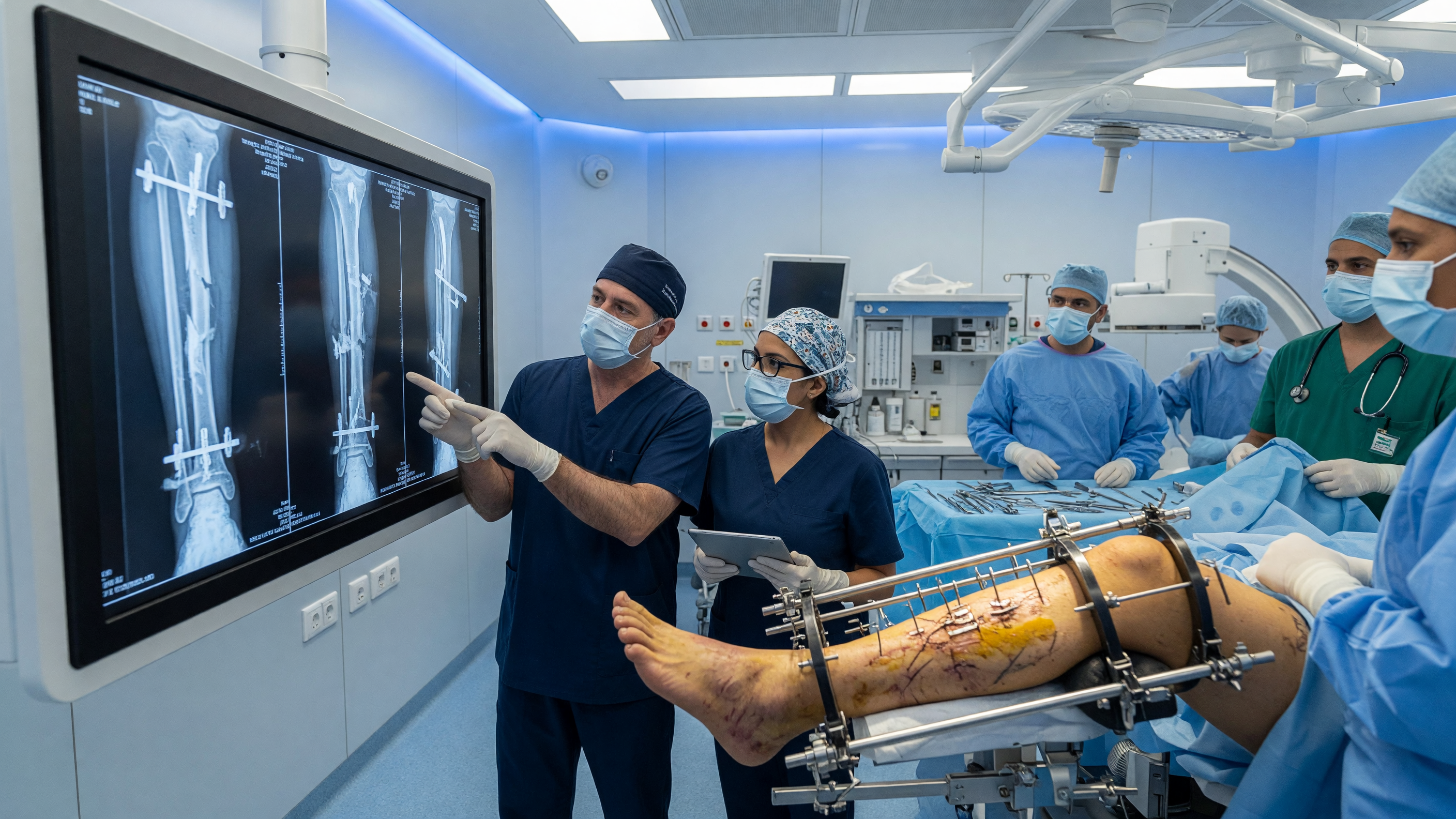
Complex orthopaedic trauma refers to severe bone and soft-tissue injuries involving multiple fractures, open wounds, or damaged nerves, blood vessels, and joints that need specialised surgical care. These injuries usually follow high-energy events like road accidents, falls, or crush injuries. They demand urgent, coordinated treatment to save limbs and restore function. This article explains what complex orthopaedic trauma is, its common causes and warning signs, possible complications, how it is diagnosed, and the advanced treatment options available at Lux Hospitals so you know when to seek expert help.
What Is Complex Orthopaedic Trauma?
Complex orthopaedic trauma means a severe musculoskeletal injury that goes beyond a simple break. It often involves several bones, joints, nerves, or blood vessels at once.
These injuries usually need a team of trauma surgeons and specialised techniques to heal properly. Key features include:
- Multiple or shattered bone fractures
- Open wounds exposing bone
- Damage to nerves and vessels
- Joint and cartilage involvement
- Loss of significant bone or tissue
Facing a serious injury? Consult the trauma experts at Lux Hospitals today.
Common Causes of Complex Orthopaedic Trauma
Most complex trauma results from high-energy forces that overwhelm the body's bones and joints. The impact is far greater than everyday sprains or falls.
Frequent causes include:
- Road traffic and motorbike accidents
- Falls from significant heights
- Industrial or machinery crush injuries
- Sports collisions and impacts
- Gunshot or blast injuries
Types of Complex Orthopaedic Injuries
Complex trauma covers a wide range of injury patterns. Each type needs a tailored surgical approach.
Common categories include:
- Open (compound) fractures
- Comminuted or shattered fractures
- Multiple fractures across limbs
- Fractures with nerve or vessel damage
- Combined fractures and dislocations
Unsure how severe your injury is? Get expert bone fracture treatment at Lux Hospitals.
Warning Signs and Symptoms
The signs of complex trauma are often obvious and alarming. They signal that urgent medical care is needed.
You may notice:
- Severe pain and visible deformity
- Bone protruding through skin
- Heavy bleeding or swelling
- Numbness or tingling in the limb
- Inability to move or bear weight
- Cold, pale fingers or toes
When Is It a Medical Emergency?
Some trauma situations can threaten life or limb within hours. Quick action protects circulation and prevents permanent damage.
Seek emergency care immediately if you see:
- Uncontrolled bleeding from the wound
- A limb that looks cold or blue
- Loss of pulse below the injury
- Exposed bone with contamination
- Signs of shock or confusion
In an emergency, head straight to Lux Hospitals for immediate trauma care.
Possible Complications If Untreated
Delayed or inadequate treatment of complex trauma raises the risk of lasting harm. Prompt expert care greatly improves outcomes.
Untreated injuries may lead to:
- Wound infection and bone infection
- Non-union or malunion of bones
- Permanent nerve or vessel damage
- Compartment syndrome in muscles
- Long-term stiffness or disability
How Complex Trauma Is Diagnosed
Diagnosis begins with stabilising the patient and assessing all injuries. Imaging confirms the extent of bone and soft-tissue damage.
Doctors typically use:
- Physical and neurovascular examination
- X-rays of affected regions
- CT scans for detailed bone mapping
- MRI for soft-tissue and nerve injury
- Blood tests and vascular studies
Get an accurate trauma assessment from the specialists at Lux Hospitals.
Treatment Options at Lux Hospitals
Treatment aims to stabilise fractures, restore alignment, and protect nerves and blood flow. The approach depends on injury severity.
Common procedures include:
- Closed reduction and casting for aligned breaks
- ORIF to fix broken bones with plates
- Intramedullary nailing for long-bone fractures
- External fixation for severe open fractures
- Ilizarov ring fixator for limb reconstruction
- Arthroplasty for fractures near joints
Recovery and Rehabilitation
Recovery from complex trauma is a gradual, staged process. Rehabilitation restores strength, movement, and independence.
A typical recovery plan involves:
- Pain and wound management
- Guided physiotherapy and exercises
- Gradual weight-bearing progression
- Follow-up imaging to confirm healing
- Nutrition support for bone repair
Begin your structured recovery with the rehabilitation team at Lux Hospitals.
Why Choose Lux Hospitals?
Lux Hospitals offers coordinated trauma care from experienced orthopaedic surgeons and support teams. Advanced technology supports faster, safer healing.
Patients benefit from:
- Experienced trauma and reconstruction surgeons
- Modern operating and imaging facilities
- Limb-saving and joint-preserving techniques
- Dedicated physiotherapy and rehab support
- Personalised recovery planning
Conclusion
Complex orthopaedic trauma involves serious injuries to multiple bones, joints, nerves, or soft tissues, usually from high-energy accidents. Because these injuries can threaten limb function and even life, early, specialised treatment is essential. Recognising warning signs and seeking urgent care greatly improves the chance of a full recovery.
With modern surgical techniques, from fixation and nailing to limb reconstruction, most patients regain mobility and independence over time. If you or a loved one has suffered a severe injury, do not delay. The orthopaedic trauma team at Lux Hospitals provides expert diagnosis, advanced surgery, and structured rehabilitation to help you heal and return to an active life.