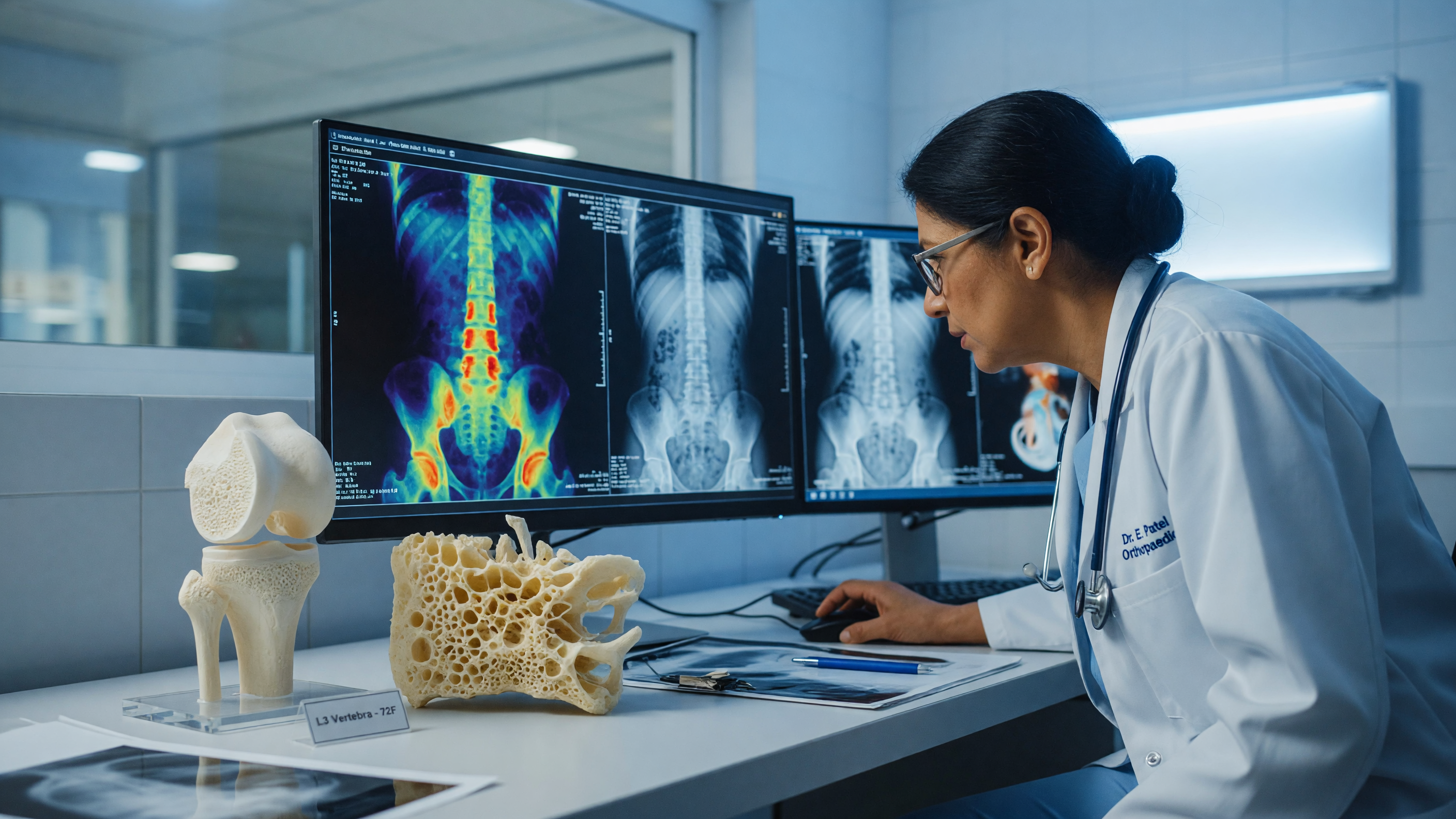
Osteoporosis fractures happen when weakened, low-density bones break easily—often from a minor fall or even everyday movement. Osteoporosis thins your bones silently, making the hip, spine, and wrist especially vulnerable. This guide explains why bone strength matters, the warning signs, who is at risk, and how fractures are diagnosed and treated. You will also learn practical prevention tips and the expert care available at Lux Hospitals. Strong bones protect your mobility and independence, so understanding your risk early can prevent painful, life-changing breaks. Read on to safeguard your skeleton for years to come.
What Is Osteoporosis?
Osteoporosis is a condition where bones lose density and become porous, fragile, and prone to breaking. It develops slowly and often shows no symptoms until a fracture occurs.
Your bones constantly renew themselves, but with age removal outpaces rebuilding. This imbalance leads to low bone mass:
- Bone tissue breaks down faster than it rebuilds
- Common after menopause and in older adults
- Often called a silent disease
- Confirmed by a bone mineral density test
Concerned about your bone health? Book a bone assessment at Lux Hospitals today.
Why Bone Strength Matters
Strong bones support your body, protect organs, and store essential minerals. When bone strength declines, even routine activities can cause painful breaks.
Fractures from weak bones affect far more than mobility. The consequences can be serious:
- Loss of independence and mobility
- Chronic pain and disability
- Higher risk of repeat fractures
- Reduced quality of life
Protect your mobility—schedule a bone-strength check at Lux Hospitals.
How Osteoporosis Causes Fractures
As bone density falls, the internal structure weakens and cannot withstand normal stress. These fragility fractures occur with minimal or no trauma.
Everyday events can trigger a break in osteoporotic bone. Common causes include:
- Minor falls from standing height
- Bending, lifting, or coughing
- Sudden twisting movements
- Low-impact knocks or bumps
If you suspect a break, explore expert bone fracture treatment at Lux Hospitals.
Common Osteoporosis Fracture Sites
Osteoporosis fractures tend to strike specific weight-bearing and vulnerable bones. Knowing these helps you stay alert to risk.
The most frequently affected areas are:
- Hip — often needs surgery
- Spine — causing height loss and stooping
- Wrist — common after a fall
- Shoulder and upper arm
- Pelvis in older adults
Warning Signs to Watch For
Osteoporosis itself is often silent, but certain clues suggest weakening bones. Spotting them early allows timely testing.
You may notice:
- Gradual loss of height
- A stooped or hunched posture
- Back pain from a collapsed vertebra
- Bones that break unexpectedly easily
- Receding gums or weak grip
Who Is at Risk?
Several factors increase your chance of developing osteoporosis and suffering fractures. Some you can control, others you cannot.
Key risk factors include:
- Being postmenopausal or over 65
- Family history of osteoporosis
- Low calcium and vitamin D intake
- Smoking and heavy alcohol use
- Sedentary lifestyle or low body weight
- Long-term steroid use
Know your risk—consult the bone specialists at Lux Hospitals for a personalised evaluation.
How Osteoporosis and Fractures Are Diagnosed
Early diagnosis protects you from preventable breaks. Doctors use simple, painless tests to measure bone health and detect fractures.
Common diagnostic tools include:
- DEXA scan for bone density
- X-rays to confirm fractures
- Blood tests for calcium and vitamin D
- Height and posture measurement
- FRAX fracture-risk assessment
Prevention Tips for Stronger Bones
Healthy habits can slow bone loss and lower fracture risk at any age. Prevention is always easier than treatment.
Strengthen your bones with these steps:
- Eat calcium-rich foods daily
- Get enough vitamin D and sunlight
- Do weight-bearing and strength exercise
- Quit smoking and limit alcohol
- Prevent falls at home
- Schedule regular bone density tests
Build lifelong bone strength—get expert guidance at Lux Hospitals.
Treatment Options at Lux Hospitals
Treatment combines medication, lifestyle support, and surgery when a fracture occurs. The goal is to heal breaks and prevent future ones.
Our orthopaedic team offers a full range of fracture care:
- Medications to strengthen bone
- Closed reduction and casting for simple breaks
- Internal fixation for complex fractures
- Hip replacement after severe hip breaks
- Rehabilitation and physiotherapy
Explore advanced fracture treatment with our experienced orthopaedic surgeons.
Why Choose Lux Hospitals?
Lux Hospitals combines experienced orthopaedic specialists with modern diagnostic and surgical facilities. We focus on complete bone health, not just fracture repair.
Patients choose us for:
- Skilled orthopaedic and bone specialists
- Advanced imaging and DEXA scanning
- Minimally invasive surgical options
- Personalised prevention and recovery plans
- Dedicated rehabilitation support
Choose expert care—book your consultation with the best orthopedic surgeon at Lux Hospitals.
Conclusion
Osteoporosis fractures are common, painful, and often preventable. Because bone loss happens silently, taking action before a break occurs is the smartest way to protect your health. Simple steps—good nutrition, regular exercise, fall prevention, and timely bone density tests—can keep your skeleton strong for decades.
If you have risk factors or have already suffered a fragility fracture, don't wait. Early diagnosis and expert treatment can prevent further breaks and preserve your independence. The orthopaedic team at Lux Hospitals offers complete care, from prevention and diagnosis to advanced surgery and rehabilitation. Strong bones mean a stronger, more active life—so prioritise your bone health today.