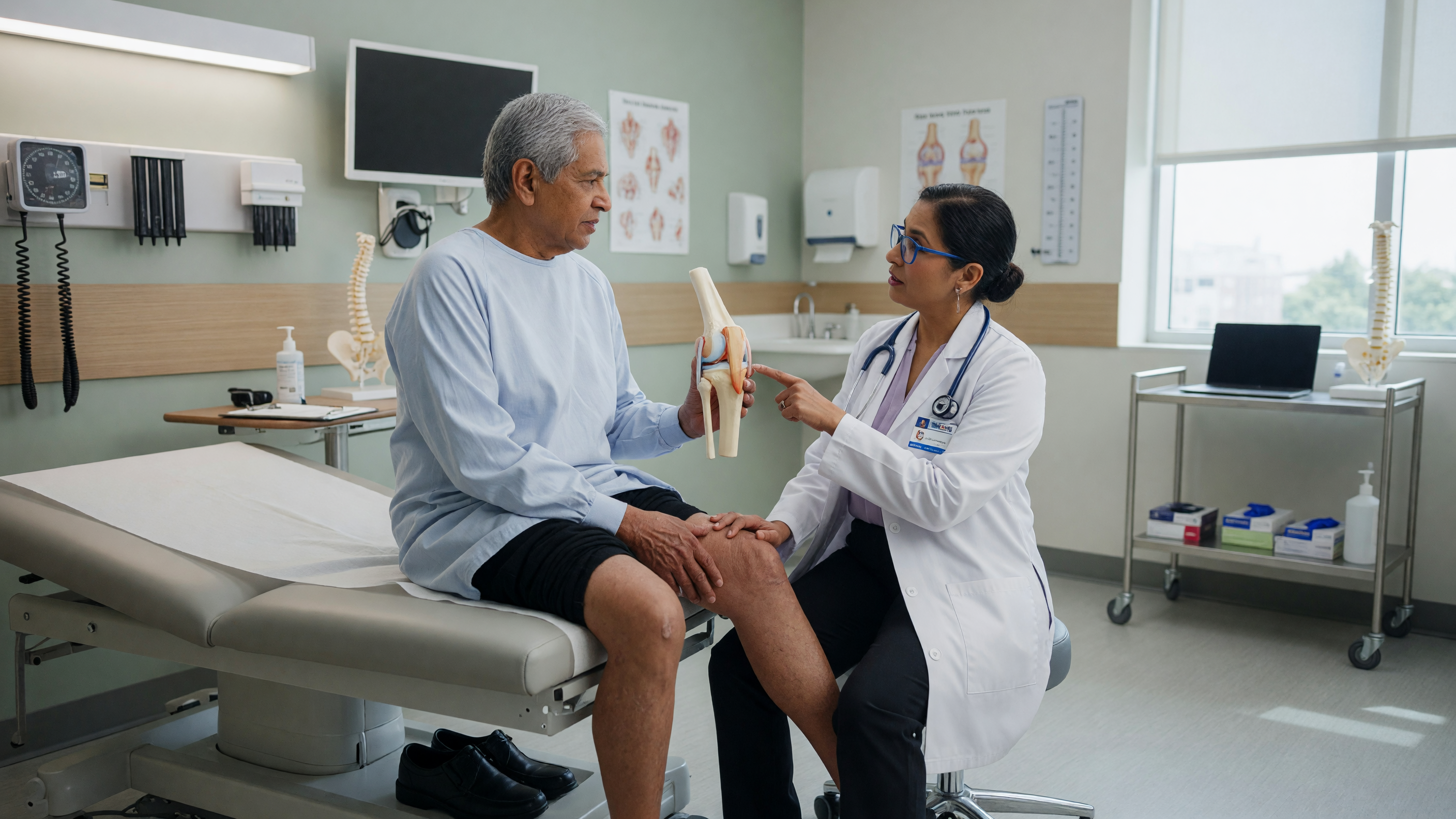
The earliest knee osteoarthritis symptoms are morning stiffness, mild joint pain during activity, and a grinding or clicking sensation in the knee. Catching these signs early can slow cartilage damage and protect your mobility. Knee osteoarthritis develops slowly as cushioning cartilage wears down, often over years. Ignoring subtle warning signs can lead to lasting joint damage and limited movement. This article explains the seven early signs you shouldn't ignore, other causes of knee pain, diagnosis, prevention tips, and treatment options at Lux Hospitals so you know exactly when to seek expert help..
Early Signs of Knee Osteoarthritis You Shouldn't Ignore
What Is Knee Osteoarthritis?
Knee osteoarthritis is a degenerative joint condition where the protective cartilage cushioning the knee gradually wears away. This leads to pain, stiffness, and reduced movement over time.
It is one of the most common causes of knee pain, especially in adults over 50. Early recognition of knee osteoarthritis symptoms helps protect the joint.
Key facts to know:
- Caused by cartilage wear in knee
- Progresses slowly over years
- More common with age and obesity
- Often affects one or both knees
- Manageable when caught early
Learn more about knee osteoarthritis treatment options at Lux Hospitals.
1. Morning Stiffness in the Knee
One of the first knee osteoarthritis symptoms is stiffness after waking or resting. The joint feels tight and hard to bend.
This knee joint stiffness usually eases within 30 minutes of movement. If it lingers longer, it may signal worsening cartilage damage.
You may notice stiffness:
- First thing in the morning
- After sitting for long periods
- When climbing out of a car
- Following inactivity or rest
- Improving gradually with movement
Don't ignore persistent stiffness—consult the specialists at Lux Hospitals.
2. Pain During or After Activity
Knee pain that appears during walking, stairs, or exercise is a common early warning sign. It often fades with rest at first.
As osteoarthritis advances, knee pain when walking may become constant. Pay attention to when pain flares.
Activities that may trigger pain include:
- Climbing or descending stairs
- Standing up from a chair
- Walking long distances
- Kneeling or squatting
- Getting up after sitting
Explore top causes of joint pain to understand your symptoms better.
3. Swelling Around the Joint
Joint swelling in the knee often results from inflammation or extra fluid buildup. The knee may look puffy or feel tight.
This joint swelling knee may come and go, worsening after activity. Recurrent swelling deserves medical evaluation.
Signs of swelling include:
- Visible puffiness around the kneecap
- Tightness when bending
- Reduced comfort while sitting
- Swelling after long walks
- Feeling of fullness in joint
4. Grinding or Clicking Sounds
A grinding, crackling, or clicking sensation—called crepitus—is a classic sign of cartilage wear. You may feel it when moving the knee.
This knee grinding sensation happens as rough joint surfaces rub together. It is often painless at first.
You might notice:
- Cracking sounds when bending
- Grinding during stairs
- Clicking while standing up
- A rough, catching feeling
- Sensation of bone-on-bone
If your knee grinds or catches, book an assessment at Lux Hospitals.
5. Reduced Range of Motion
As osteoarthritis progresses, bending or straightening the knee fully becomes harder. Everyday tasks start to feel restricted.
This loss of motion can affect walking, driving, and getting dressed. It signals the joint needs attention.
Signs of reduced motion include:
- Trouble fully bending the knee
- Difficulty straightening the leg
- Struggling to squat or kneel
- Limited flexibility over time
- Feeling of joint tightness
6. Weakness or Buckling
Some people feel the knee suddenly give way or feel unstable. This buckling can raise the risk of falls.
Weakness in the surrounding muscles often accompanies osteoarthritis. Strengthening exercises may help.
Watch for these instability signs:
- Knee giving out unexpectedly
- Feeling unsteady on stairs
- Loss of confidence walking
- Muscle weakness around knee
- Needing support to stand
Persistent instability needs expert care—visit Lux Hospitals for evaluation.
7. Warmth and Tenderness
An osteoarthritic knee may feel warm to the touch or tender when pressed. This reflects underlying inflammation.
Tenderness around the joint line is common as cartilage thins. It often worsens during flare-ups.
You may experience:
- Warmth over the joint
- Soreness when pressing the knee
- Tenderness along the joint line
- Discomfort after activity
- Mild redness in some cases
Other Causes of Knee Pain
Not all knee pain means osteoarthritis. Several other conditions can cause similar symptoms and need proper diagnosis.
A specialist can distinguish osteoarthritis from injuries or other joint problems.
- Meniscus tears from twisting
- ACL or ligament injuries
- Bursitis and tendon inflammation
- Gout or rheumatoid arthritis
- Old bone fracture near the joint
Unsure what's causing your pain? Get an accurate diagnosis at Lux Hospitals.
Prevention and Lifestyle Tips
Simple lifestyle changes can slow osteoarthritis progression and protect your knees. Small daily habits make a big difference.
Focus on reducing joint stress and staying active safely.
Helpful preventive steps include:
- Maintain a healthy body weight
- Stay active with low-impact exercise
- Strengthen thigh and leg muscles
- Choose supportive footwear
- Avoid prolonged high-impact activity
- Warm up before workouts
Diagnosis and Treatment at Lux Hospitals
Doctors diagnose knee osteoarthritis through a physical exam, medical history, and imaging like X-rays or MRI. This confirms the extent of cartilage damage.
Treatment ranges from conservative care to surgery, depending on severity:
- Medications and physiotherapy
- Weight management and exercise
- Knee cartilage repair regeneration
- Knee arthroscopy for early damage
- Partial knee replacement surgery
- Total knee replacement for advanced cases
Discover advanced knee replacement options tailored to your needs at Lux Hospitals.
Why Choose Lux Hospitals?
Lux Hospitals offers expert orthopedic care with advanced diagnostics and personalized treatment plans. Our specialists focus on preserving your natural joint whenever possible.
From early intervention to advanced surgery, patients receive comprehensive support.
What sets us apart:
- Experienced orthopedic surgeons
- Modern imaging and diagnostics
- Minimally invasive procedures
- Personalized rehabilitation programs
- Focus on joint preservation
- Compassionate, patient-first care
Take the first step toward pain-free movement—book a consultation at Lux Hospitals today.
Conclusion
Recognizing knee osteoarthritis symptoms early gives you the best chance to protect your joints and stay active. Warning signs like morning stiffness, pain during activity, swelling, grinding, and instability should never be ignored. The sooner you act, the more treatment options you have—from lifestyle changes to advanced surgery.
If you notice any of these signs, don't wait for the pain to worsen. Early diagnosis can slow cartilage damage and preserve your mobility for years to come. The orthopedic specialists at Lux Hospitals offer accurate diagnosis and personalized care for every stage of knee osteoarthritis. Schedule your consultation today and take control of your joint health.