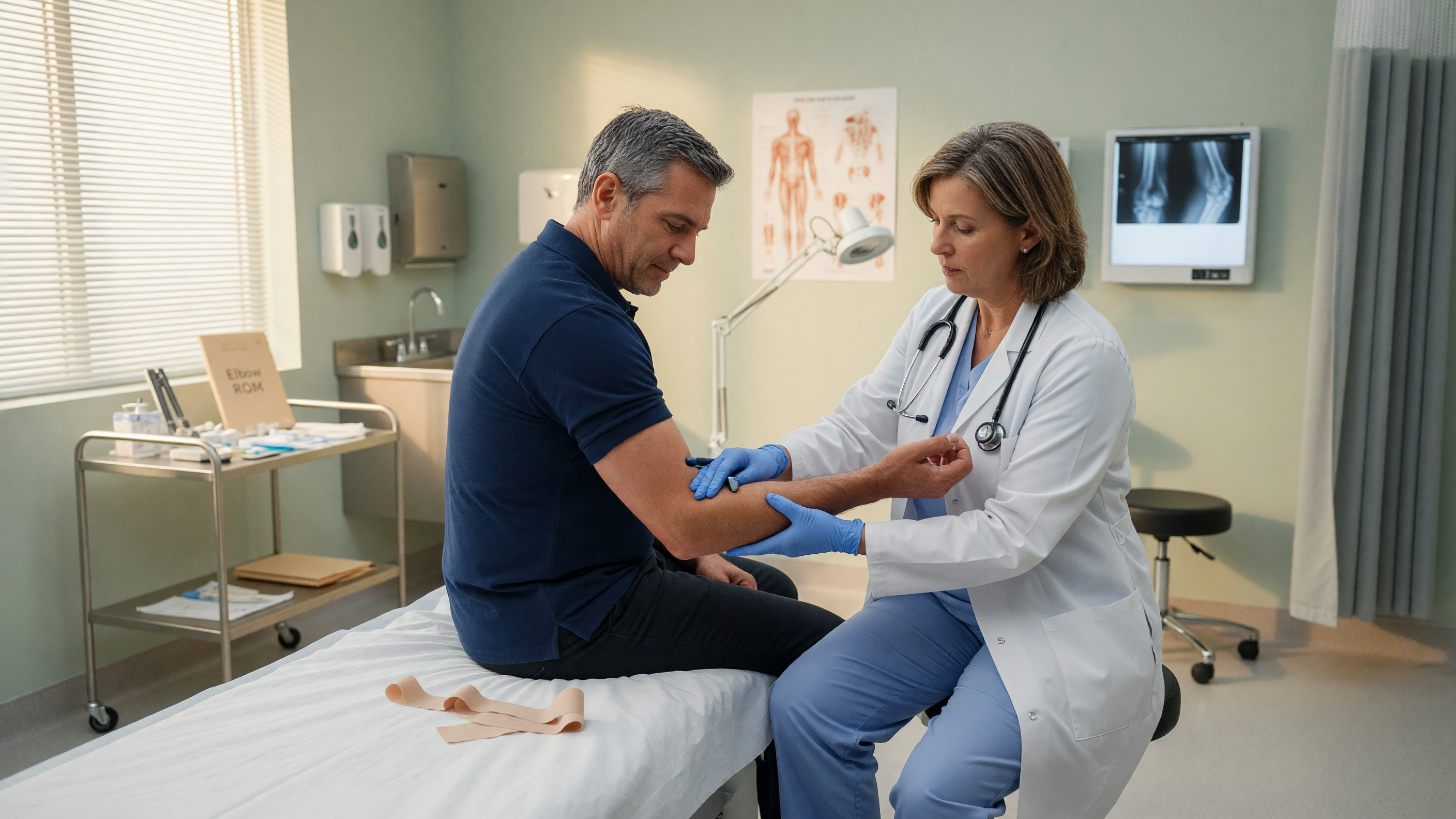
Tennis elbow treatment focuses on relieving pain and healing damaged forearm tendons. Most cases improve with rest, ice, activity changes, physiotherapy, and exercises. Bracing and anti-inflammatory medicines help, while injections or minor surgery are reserved for stubborn cases that do not respond to conservative care over several months.
What Is Tennis Elbow?
Tennis elbow, known medically as lateral epicondylitis, is a painful condition affecting the outer part of the elbow. It happens when the tendons that join your forearm muscles to the bony bump outside your elbow become overloaded.
Despite its name, you do not need to play tennis to develop it. Any repeated gripping or wrist movement can trigger the problem. Painters, plumbers, cooks, and office workers are all commonly affected.
The condition involves tiny tears and degeneration in the tendon rather than simple inflammation. This is why effective tennis elbow treatment focuses on healing and strengthening the tendon over time.
The main tendon involved attaches the extensor carpi radialis brevis muscle to the elbow. When this tendon is stressed repeatedly, microscopic damage builds up faster than the body can repair it.
Most people feel pain on the outside of the elbow that may spread down the forearm. Gripping objects, shaking hands, or lifting a cup can become surprisingly difficult.
Tennis elbow is very common, affecting around one to three percent of adults, most often between ages 30 and 50. The good news is that the large majority of cases improve with simple, non-surgical care.
Understanding the condition helps you take an active role in your recovery. Early attention usually means faster healing and a lower chance of long-term problems. With the right plan, most people return to normal activities without lasting limitations.
If elbow pain is interfering with daily tasks, book a consultation with a Lux Hospitals specialist for an accurate diagnosis.
Causes and Risk Factors
Tennis elbow develops from repeated strain on the forearm tendons. Activities that involve gripping, twisting, or repetitive wrist extension place the most stress on this area.
The damage usually builds gradually rather than from a single injury. Over weeks or months, small tears accumulate and weaken the tendon. This explains why symptoms often appear slowly.
Certain people are more likely to develop the condition. Knowing your risk factors can help you take preventive steps and seek early treatment.
While sports like tennis, squash, and badminton can contribute, occupational activities are an even more common cause. Poor technique and inadequate equipment also raise the risk.
Age plays a role, as tendons naturally lose elasticity over time. Most cases occur in middle-aged adults, though younger active individuals can be affected too.
Managing these factors early can reduce the severity of symptoms. Adjusting your technique, taking breaks, and strengthening the forearm all support healthier tendons and a smoother recovery.
- Repetitive gripping or lifting at work or during sports
- Using tools or racquets with the wrong size or weight
- Poor wrist and arm technique during repeated tasks
- Age between 30 and 50, when tendons weaken
- Sudden increase in activity without conditioning
- Jobs involving painting, plumbing, cooking, or typing
Symptoms and Diagnosis
The hallmark of tennis elbow is pain on the outer side of the elbow. This pain may radiate down the forearm toward the wrist and hand.
Symptoms often start mildly and worsen over time. Many people notice weakness when gripping objects or shaking hands. Simple actions like turning a doorknob or holding a coffee cup can hurt.
The pain typically increases with activity and eases with rest. You may also feel tenderness when pressing on the bony bump outside the elbow.
Doctors usually diagnose tennis elbow through a physical examination and your history. They will ask about your work, hobbies, and how the pain began. Specific movement tests help confirm the diagnosis.
Imaging is not always needed. However, an ultrasound or MRI may be ordered if the diagnosis is unclear or symptoms do not improve. X-rays can rule out arthritis or other bone problems.
It is important to distinguish tennis elbow from other conditions. Nerve compression, arthritis, and golfer's elbow can cause similar discomfort. A proper assessment ensures you receive the right treatment.
Early diagnosis improves outcomes. The sooner the tendon problem is identified, the easier it is to manage with conservative care. Delaying treatment can prolong recovery and increase the chance of chronic pain.
If you notice persistent elbow pain that limits daily activities, see a specialist. A clear diagnosis is the first step toward effective tennis elbow treatment and lasting relief.
Get a precise diagnosis at Lux Hospitals where experienced orthopaedic specialists assess your elbow pain thoroughly.
Non-Surgical Tennis Elbow Treatment
The vast majority of tennis elbow cases improve without surgery. Conservative treatment is almost always the first approach and is highly effective for most people.
The foundation of treatment is rest and activity modification. Avoiding or adjusting the movements that trigger pain gives the tendon time to heal. This does not mean complete immobility, but smart changes to daily tasks.
Ice packs applied for 15 to 20 minutes can reduce pain and swelling, especially after activity. Over-the-counter anti-inflammatory medicines may ease discomfort in the short term.
Bracing is another helpful option. A counterforce strap or forearm band reduces strain on the injured tendon. Wrist splints may also relieve pressure during recovery.
Physiotherapy is a cornerstone of non-surgical care. A trained therapist guides you through targeted exercises and techniques that promote healing and restore strength.
For stubborn cases, doctors may consider injections. Corticosteroid injections can provide short-term relief, though they are used cautiously. Platelet-rich plasma therapy is another option some specialists offer.
Most people see meaningful improvement within six to twelve months of consistent conservative treatment. Patience is important, as tendon healing takes time.
- Rest and modify activities that cause pain
- Apply ice to reduce pain and swelling
- Use a counterforce brace or forearm strap
- Take anti-inflammatory medicines as advised
- Begin guided physiotherapy and stretching
- Consider injections only for persistent cases
Exercises and Physiotherapy
Exercise-based rehabilitation is one of the most effective parts of tennis elbow treatment. Strengthening and stretching the forearm muscles helps the tendon heal and prevents recurrence.
Physiotherapists often focus on eccentric exercises. These involve slowly lowering a weight to load the tendon in a controlled way. Research shows this approach encourages tendon repair and reduces pain.
Stretching is equally important. Gentle wrist and forearm stretches improve flexibility and ease tension on the injured tendon. Stretches should be done slowly and never forced into pain.
A therapist may also use hands-on techniques. Massage, manual therapy, and mobilisation can improve blood flow and reduce stiffness around the elbow.
Some clinics offer additional treatments like ultrasound therapy or shockwave therapy. These may help certain patients, though results vary and they are usually combined with exercise.
Consistency is key. Doing the prescribed exercises regularly at home matters as much as your clinic sessions. Skipping routines often slows progress.
It is normal to feel mild discomfort during rehabilitation. However, sharp or worsening pain is a sign to stop and consult your therapist. Adjusting the program ensures safe and steady progress.
Proper technique makes a real difference. Learning the correct form from a professional prevents further strain and speeds recovery. Many people benefit from a tailored program suited to their daily activities.
Over time, these exercises build resilience in the tendon. A stronger forearm is far less likely to be injured again, making rehabilitation an investment in long-term elbow health.
- Eccentric wrist extension exercises with light weights
- Gentle forearm and wrist stretches held for 20-30 seconds
- Grip-strengthening exercises as pain allows
- Gradual progression in resistance over weeks
- Home exercise routine done several times weekly
Advanced and Surgical Options
Most people never need surgery for tennis elbow. However, a small number with persistent symptoms may benefit from advanced treatments when conservative care fails.
Surgery is usually considered only after six to twelve months of consistent non-surgical treatment without improvement. The goal is to remove damaged tendon tissue and promote healthy healing.
There are two main surgical approaches. Open surgery uses a small incision over the elbow, while arthroscopic surgery uses tiny instruments and a camera. Your surgeon will recommend the best option for your situation.
Before surgery, doctors often try advanced injections. Platelet-rich plasma uses your own blood components to stimulate healing. These options are still being studied but may help some patients.
Recovery after surgery involves a period of rest followed by gradual rehabilitation. A brace or splint may be used initially. Physiotherapy then restores strength and movement over several weeks.
Most people who undergo surgery experience significant pain relief. Full recovery can take several months, and returning to heavy activities requires patience.
As with any procedure, surgery carries some risks, including infection, stiffness, or incomplete relief. Discussing these honestly with your surgeon helps you make an informed decision.
Considering advanced treatment? Speak with the orthopaedic team at Lux Hospitals to explore the safest option for you.
Recovery and Prevention
Recovery from tennis elbow takes time and patience. Most people improve within six months to a year with consistent treatment. Tendons heal slowly, so gradual progress is normal.
During recovery, it is important to avoid returning to full activity too quickly. Rushing back often causes setbacks and prolongs the problem. Listen to your body and increase activity gradually.
Preventing recurrence is just as important as treating the initial injury. Once the tendon heals, maintaining forearm strength and flexibility lowers your risk significantly.
Simple changes can protect your elbow long term. Using proper technique, taking regular breaks, and choosing the right equipment all reduce strain on the tendons.
Warming up before activity and stretching afterward also help. Strong, flexible muscles absorb stress better and protect the vulnerable tendon attachment.
If your work involves repetitive tasks, consider ergonomic adjustments. Proper desk setup, tool grips, and posture make a meaningful difference over time.
Staying active in a balanced way supports overall joint health. Avoiding sudden spikes in intensity is one of the best ways to prevent re-injury.
If symptoms return, address them early rather than waiting. Prompt rest and a return to your exercise routine usually resolve flare-ups quickly. Building these habits keeps your elbows healthy for the long run.
- Return to activity gradually after symptoms improve
- Continue forearm strengthening exercises long term
- Warm up and stretch before repetitive activities
- Use ergonomic tools and proper technique
- Take regular breaks during repetitive tasks
When to See a Doctor
Mild elbow pain often improves with rest and home care. However, certain signs mean you should see a doctor promptly for proper evaluation.
If pain persists for more than a few weeks despite rest, it is time to seek professional help. Ongoing symptoms suggest the tendon needs targeted treatment.
See a specialist if the pain is severe or interferes with daily tasks. Difficulty gripping, lifting, or performing routine activities should not be ignored.
Other warning signs include swelling, redness, or warmth around the elbow. These could indicate infection or another condition requiring different care.
Numbness, tingling, or weakness in the arm or hand also warrant attention. These symptoms may point to nerve involvement rather than simple tennis elbow.
A doctor can confirm the diagnosis and rule out other causes. Conditions like arthritis, nerve compression, or fractures can mimic tennis elbow symptoms.
Early evaluation leads to better outcomes. The sooner treatment begins, the faster you are likely to recover and the lower your risk of chronic pain.
A specialist will design a treatment plan tailored to your needs. This may include physiotherapy, bracing, medicines, or further investigation if required.
Do not delay care out of fear of surgery. Remember that most cases are managed successfully without any operation. Getting expert advice early gives you the best chance of a smooth, lasting recovery.
Don't let elbow pain hold you back. Schedule an appointment with the orthopaedic experts at Lux Hospitals today.
Conclusion
Tennis elbow is a common but manageable condition affecting the tendons on the outer elbow. The good news is that most people recover fully with non-surgical tennis elbow treatment, including rest, bracing, physiotherapy, and targeted exercises. Patience matters, as tendon healing takes time, but consistent care leads to lasting relief. Surgery is rarely needed and reserved only for stubborn cases. Preventing recurrence through proper technique, regular strengthening, and ergonomic habits keeps your elbows healthy long term. If you experience persistent or severe elbow pain, seek an early diagnosis from a qualified specialist. With the right plan and professional guidance, you can return to your normal activities comfortably. The team at Lux Hospitals is ready to help you recover and protect your elbow health.
People Also Ask
How long does tennis elbow take to heal?
Most cases of tennis elbow improve within six months to a year with consistent conservative treatment. Mild cases may resolve faster, while persistent cases can take longer. Following a structured rehabilitation plan and avoiding overuse speeds recovery.
Can tennis elbow heal on its own?
Yes, many cases of tennis elbow improve on their own with rest and activity modification. However, healing is usually faster and more reliable with guided physiotherapy and exercises. Ignoring symptoms can prolong recovery.
Is heat or ice better for tennis elbow?
Ice is generally better for acute pain and swelling, especially after activity. Heat may help relax stiff muscles before exercise. Many people use ice during flare-ups and gentle heat before stretching, guided by their therapist.
What worsens tennis elbow?
Repetitive gripping, lifting, twisting, and continuing painful activities worsen tennis elbow. Poor technique, returning to activity too soon, and skipping rest also delay healing. Reducing strain on the tendon is essential for recovery.