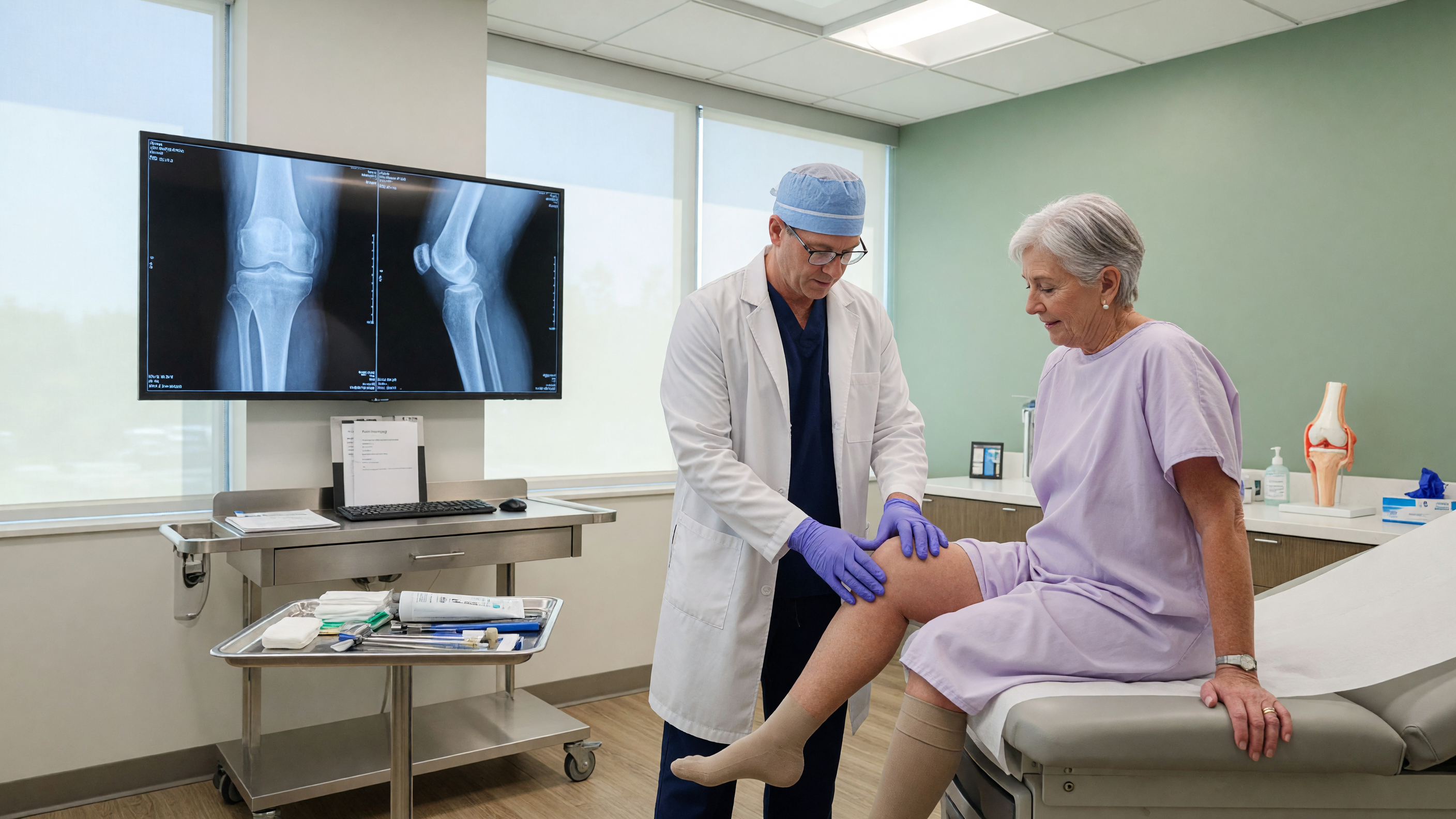
The best knee arthritis treatment depends on severity, ranging from lifestyle changes, physiotherapy and medications for mild cases to injections, arthroscopy or knee replacement for advanced arthritis. There is no single cure that fits everyone. Treatment aims to reduce pain, restore movement and slow joint damage. This article explains what knee arthritis is, its causes and symptoms, how it is diagnosed, and every treatment option available. You will also learn when surgery becomes necessary and why expert care makes a difference in long-term results.
What Is Knee Arthritis?
Knee arthritis is inflammation and progressive wear of the knee joint. It gradually damages the smooth cartilage that cushions the bones.
The most common form is osteoarthritis, though rheumatoid and post-injury arthritis also occur. Understanding the type guides the right knee arthritis treatment.
Main types include:
- Osteoarthritis — age-related cartilage wear
- Rheumatoid arthritis — autoimmune inflammation
- Post-traumatic arthritis — after injury
- Gouty arthritis — uric acid buildup
Confused about your joint pain? Book a knee evaluation at Lux Hospitals today.
What Causes Knee Arthritis?
Knee arthritis develops when cartilage breaks down faster than the body can repair it. Several factors accelerate this process.
Knowing the cause helps target treatment and prevent worsening. Learning the common causes of joint pain can guide early action.
Frequent contributors include:
- Aging and natural wear
- Excess body weight
- Previous knee injuries
- Family history of arthritis
- Repetitive stress or overuse
- Joint deformities or misalignment
Common Symptoms to Watch For
Symptoms usually build slowly and worsen with activity. Early recognition allows simpler, non-surgical treatment.
Many patients ignore mild signs until movement becomes limited. Do not wait for severe pain to seek help.
You may notice:
- Knee pain during movement
- Stiffness after rest
- Swelling around the joint
- Grinding or clicking sounds
- Reduced range of motion
- Weakness or buckling
Noticing these signs? Schedule a consultation with the knee specialists at Lux Hospitals.
How Is Knee Arthritis Diagnosed?
Diagnosis begins with a physical exam and detailed history. Your doctor checks swelling, alignment and joint movement.
Imaging confirms the severity and rules out other conditions. Accurate diagnosis shapes the right treatment plan.
Common tests include:
- X-rays to show joint narrowing
- MRI for cartilage detail
- Blood tests for inflammatory arthritis
- Joint fluid analysis
- Physical mobility assessment
Lifestyle Changes and Home Care
For mild arthritis, simple lifestyle changes often ease symptoms significantly. These form the foundation of every treatment plan.
Losing weight reduces pressure on the joint, while gentle activity keeps it flexible.
Helpful measures include:
- Maintaining a healthy weight
- Low-impact exercise like swimming
- Applying heat or cold packs
- Using supportive footwear
- Avoiding high-impact activities
Want a personalised knee care plan? Connect with Lux Hospitals experts today.
Medications and Joint Injections
Medications help control pain and inflammation when lifestyle steps aren't enough. They manage symptoms rather than cure the disease.
Injections offer targeted relief for moderate arthritis. Your specialist recommends options based on severity.
Common choices include:
- Paracetamol for mild pain
- Anti-inflammatory drugs (NSAIDs)
- Corticosteroid injections
- Hyaluronic acid injections
- Topical pain gels
Physical Therapy and Exercise
Physiotherapy strengthens muscles that support and stabilise the knee. Stronger muscles reduce joint stress and pain.
A guided program improves flexibility and delays surgery. Consistency matters more than intensity.
Typical therapy includes:
- Quadriceps strengthening exercises
- Range-of-motion stretches
- Low-impact aerobic activity
- Balance and stability training
- Posture and gait correction
Minimally Invasive Surgical Options
When conservative care fails, minimally invasive surgery may help. These procedures use small incisions and speed recovery.
Options like knee arthroscopy and cartilage repair and regeneration can treat early joint damage. They suit selected patients before replacement is needed.
Minimally invasive options include:
- Arthroscopy to clean the joint
- Cartilage repair procedures
- Removal of loose fragments
- Meniscus preservation surgery
- Realignment osteotomy
Explore joint-preserving surgery options with the orthopedic team at Lux Hospitals.
When Knee Replacement Is Needed
Severe arthritis with constant pain and disability may require surgery. Knee replacement replaces damaged surfaces with implants.
Modern total knee replacement surgery and partial knee replacement restore mobility and eliminate pain. Your surgeon decides based on damage extent.
Replacement is considered when:
- Pain persists despite treatment
- Daily activities become difficult
- Cartilage is severely worn
- Deformity affects walking
- Non-surgical options have failed
Treatment Options at Lux Hospitals
Lux Hospitals offers complete care for every stage of knee arthritis. Treatment is tailored to your age, activity and joint condition.
Our specialists provide advanced knee osteoarthritis treatment from conservative care to surgery.
Services include:
- Detailed diagnosis and imaging
- Medication and injection therapy
- Structured physiotherapy programs
- Arthroscopic joint surgery
- Partial and total knee replacement
Take the first step toward pain-free movement—visit Lux Hospitals for expert knee care.
Why Choose Lux Hospitals?
Choosing the right hospital shapes your recovery and long-term results. Lux Hospitals combines expertise with modern technology.
Our experienced orthopedic surgeon team delivers patient-focused, evidence-based care.
Patients choose us for:
- Skilled orthopedic specialists
- Advanced surgical facilities
- Personalised treatment plans
- Comprehensive rehabilitation support
- Proven track record of outcomes
Conclusion
The best knee arthritis treatment is the one matched to your specific condition. Mild cases often respond well to weight management, exercise, physiotherapy and medications. As arthritis progresses, injections, arthroscopy or joint-preserving surgery may help. For advanced cases, knee replacement offers lasting pain relief and restored mobility.
Early diagnosis is key to slowing joint damage and avoiding surgery. Do not ignore persistent knee pain or stiffness. A specialist can guide you toward the safest, most effective option. At Lux Hospitals, our orthopedic experts create personalised plans to help you move comfortably again. Reach out today for a thorough evaluation and a clear path forward.