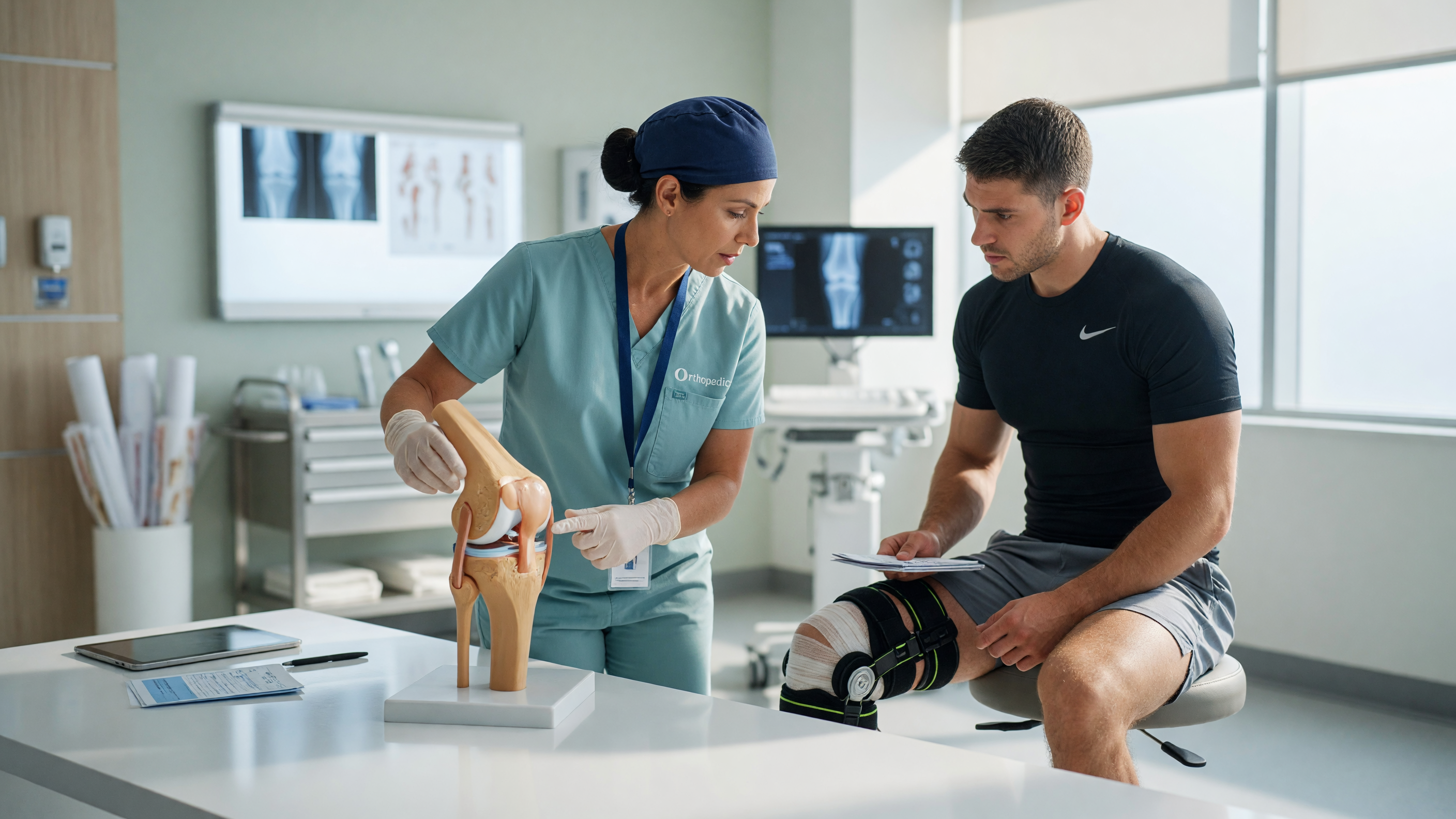
For most active adults and athletes, ACL surgery is generally better, while physiotherapy alone suits low-demand lifestyles or partial tears. The right ACL tear treatment depends on your activity level, tear severity, and knee stability, not one-size-fits-all rules. This article compares surgery and physiotherapy side by side. You'll learn how each works, recovery timelines, risks, and who benefits most from each path. We also cover diagnosis, combined approaches, and treatment options at Lux Hospitals. Use it to have a smarter conversation with your orthopedic specialist and choose confidently.
What Is an ACL Tear?
The anterior cruciate ligament stabilizes your knee during pivoting and jumping. A tear happens when this ligament stretches or ruptures, often during sports.
Many people feel a "pop" and rapid swelling. Understanding your injury guides the right ACL tear treatment.
Common signs of an ACL injury include:
- A popping sound at injury
- Sudden knee swelling
- Feeling the knee give way
- Pain during weight-bearing
- Reduced range of motion
Recognise these warning signs early—book an assessment at Lux Hospitals today.
ACL Surgery Explained
ACL surgery, or reconstruction, replaces the torn ligament with a graft from your own tissue or a donor. Surgeons perform it arthroscopically through tiny incisions.
It restores knee stability for demanding activities. Modern arthroscopic ACL reconstruction is minimally invasive with faster recovery.
Surgery is often recommended when:
- You play pivoting sports
- The knee feels unstable
- Other structures are also torn
- You are young and active
- Physiotherapy alone has failed
Physiotherapy Explained
Physiotherapy strengthens the muscles around the knee to compensate for the injured ligament. It is a structured, non-surgical ACL treatment path.
Guided rehabilitation improves balance, strength, and control. Many partial tears respond well without surgery.
A physio program typically involves:
- Quadriceps and hamstring strengthening
- Balance and proprioception drills
- Range-of-motion exercises
- Gradual return-to-activity plans
- Bracing during early phases
Explore tailored knee ligament and meniscus injuries treatment with our specialists at Lux Hospitals.
Key Differences at a Glance
Both approaches aim to restore function, but they differ in invasiveness and outcomes. Your goals matter most.
Here is how they compare:
- Surgery — best for high-demand athletes
- Physiotherapy — best for low-demand lifestyles
- Surgery — restores full pivoting stability
- Physiotherapy — avoids operative risks
- Surgery — longer initial recovery
- Physiotherapy — quicker but stability may vary
Who Should Choose Surgery?
Surgery suits people who need reliable knee stability for sport or physically active jobs. It also helps when the knee keeps buckling.
Combined injuries usually require operative repair. Your specialist weighs these factors carefully.
Strong candidates for ACL surgery include:
- Competitive or recreational athletes
- Frequent instability or giving way
- Associated meniscus or cartilage damage
- Younger, active individuals
- Physically demanding occupations
Considering an operation? Learn about ACL surgery at Lux Hospitals before deciding.
Who Suits Physiotherapy Alone?
Not everyone needs an operation. Physiotherapy can be highly effective for the right patient.
People with stable knees and lower activity demands often thrive with rehabilitation. Partial tears may heal functionally.
Physiotherapy alone may suit you if:
- You lead a low-impact lifestyle
- The tear is partial or mild
- Your knee remains stable daily
- You want to avoid surgery
- Older adults with modest activity goals
Recovery Timelines Compared
Recovery differs significantly between the two paths. Surgery involves a longer, staged rehabilitation.
Physiotherapy alone can restore function sooner but requires consistent effort. Both need patience.
Typical recovery expectations:
- Surgery — 6 to 12 months to sport
- Physiotherapy — 3 to 6 months for daily function
- Both require ongoing strengthening
- Return-to-sport testing before clearance
- Adherence strongly affects outcomes
Want a realistic recovery plan? Talk to the ACL tear treatment team at Lux Hospitals.
Risks and Downsides of Each
Every treatment carries trade-offs. Weighing them helps you choose wisely.
Surgery has operative risks, while physiotherapy may leave some instability. Discuss these with your doctor.
Potential downsides include:
- Surgery — infection or graft failure
- Surgery — longer rehab and cost
- Physiotherapy — residual knee instability
- Physiotherapy — risk of further meniscus damage
- Both — possible future osteoarthritis
How an ACL Tear Is Diagnosed
Accurate diagnosis determines the best treatment. Your specialist combines examination with imaging.
MRI confirms the tear and checks nearby structures like the meniscus and cartilage. This guides decisions.
Diagnosis usually involves:
- Physical stability tests
- Detailed injury history
- MRI scan of the knee
- Assessment of associated injuries
- Evaluation of activity goals
Treatment Options at Lux Hospitals
Lux Hospitals offers the full spectrum of care, from rehabilitation to advanced reconstruction. Treatment is personalised to your needs.
Our team also manages related injuries such as a meniscus tear treatment when present.
Available options include:
- Supervised physiotherapy programs
- Arthroscopic ACL reconstruction
- ACL and PCL reconstruction
- Revision ACL reconstruction
- Combined ligament and cartilage repair
Discover comprehensive ACL reconstruction options at Lux Hospitals.
Why Choose Lux Hospitals?
Choosing experienced specialists improves your outcome and confidence. Lux Hospitals blends expertise with modern technology.
We support you from diagnosis through full recovery. Your knee health is our priority.
What sets us apart:
- Experienced orthopedic and sports surgeons
- Minimally invasive arthroscopic techniques
- Dedicated rehabilitation support
- Personalised treatment plans
- Advanced imaging and diagnostics
Conclusion
There is no universal winner in ACL surgery versus physiotherapy—the best choice depends on you. Active athletes and unstable knees usually benefit from reconstruction, while stable knees and low-demand lifestyles may recover well with structured physiotherapy alone.
What matters most is an accurate diagnosis and a plan matched to your goals, age, and injury severity. Many patients even combine prehabilitation with surgery for the best results. Don't guess with something as important as your knee. Speak with an orthopedic specialist who can examine your injury, explain your options clearly, and guide you toward lasting stability and a confident return to the activities you love.