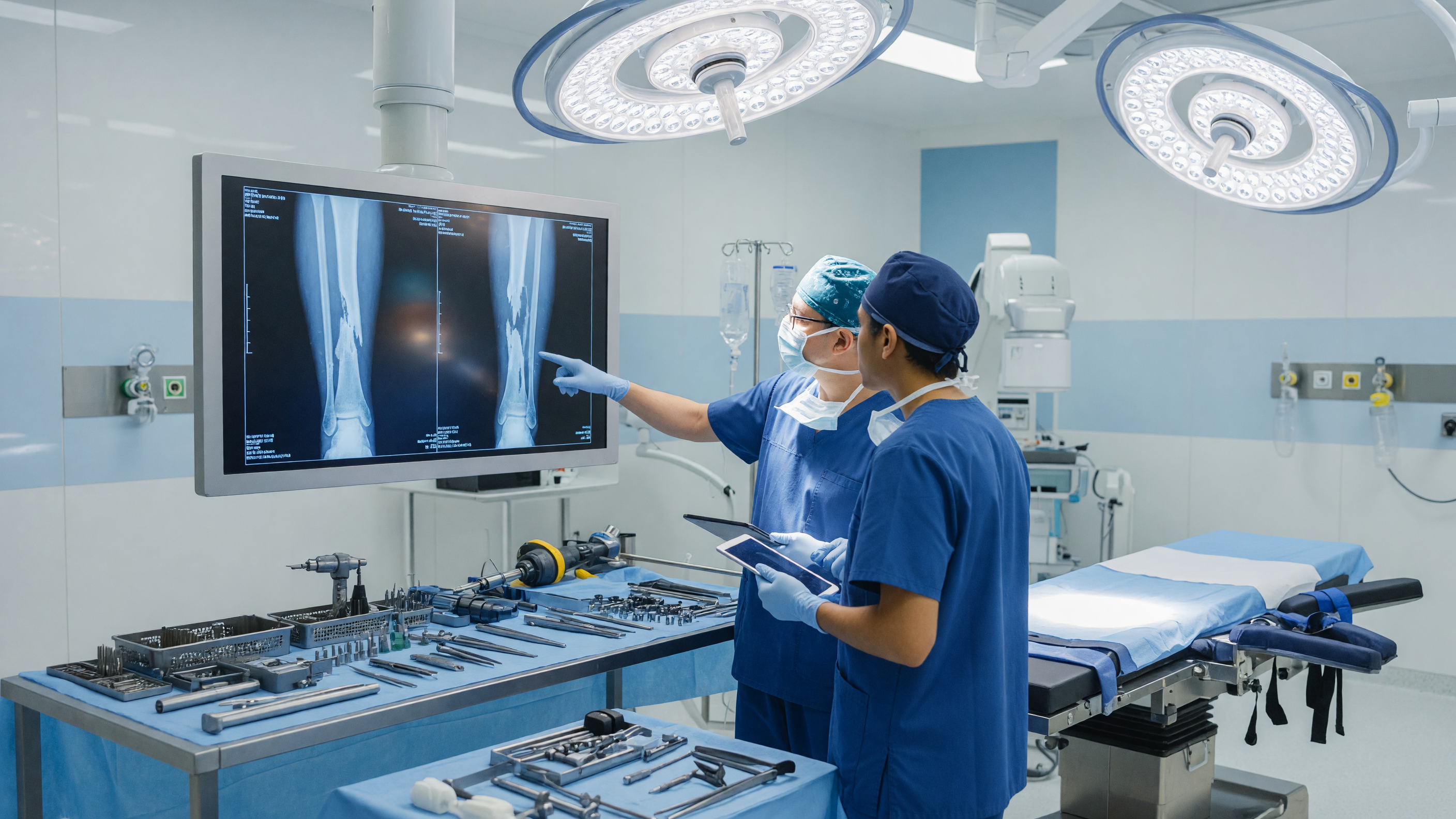
An open fracture almost always needs surgery because the broken bone has pierced the skin, exposing it to bacteria and raising infection risk. Nearly every open fracture requires urgent surgical cleaning (debridement) and stabilization within hours. This makes open fracture surgery an emergency rather than an option. In this guide, we explain what an open fracture is, when surgery becomes essential, the warning signs, the surgical techniques used, and how recovery works. You will also learn how expert orthopedic teams at Lux Hospitals treat these injuries safely and effectively.
What Is an Open Fracture?
An open fracture, also called a compound fracture, happens when a broken bone breaks through the skin. This creates a direct path for bacteria to reach the bone.
Unlike closed fractures, the wound is exposed to the outside environment. This raises the risk of serious infection.
Common features include:
- Visible bone or deep wound
- Bleeding at the injury site
- Severe pain and swelling
- Skin torn near the break
- Often from high-energy trauma
Suspect an open fracture? Seek emergency care at Lux Hospitals immediately.
Why Open Fractures Almost Always Need Surgery
Open fractures nearly always need surgery because the exposed bone must be cleaned and stabilized quickly. Waiting increases infection and healing problems.
Surgery serves several critical purposes at once. The main goals are:
- Remove dirt and dead tissue
- Prevent deep bone infection
- Realign the broken bone
- Stabilize the fracture securely
- Protect nearby nerves and vessels
Warning Signs You Need Emergency Surgery
Any open fracture is a medical emergency, but certain signs make surgery even more urgent. Recognizing them can save the limb.
Call for help immediately if you notice:
- Bone visible through the skin
- Uncontrolled or heavy bleeding
- Numbness or loss of movement
- Pale, cold, or blue skin
- Rapidly spreading swelling
- Signs of contamination in the wound
Don't wait—rush to Lux Hospitals for expert bone fracture treatment right away.
How Doctors Grade Open Fracture Severity
Surgeons use the Gustilo-Anderson classification to grade how severe an open fracture is. This helps decide the surgical approach and infection risk.
Grading depends on wound size, tissue damage, and contamination. The grades range from:
- Type I — small clean wound
- Type II — moderate wound, some damage
- Type IIIA — extensive soft tissue injury
- Type IIIB — bone exposed, needs coverage
- Type IIIC — major blood vessel damage
How Quickly Should Surgery Happen?
Timing is crucial for open fractures. Surgical cleaning ideally happens within hours of the injury to lower infection risk.
Several factors guide how fast surgery is performed. Doctors consider:
- Level of wound contamination
- Severity of the fracture grade
- Blood supply to the limb
- Patient's overall health
- Availability of surgical resources
For urgent, timely fracture treatment, trust the emergency team at Lux Hospitals.
Surgical Options for Open Fractures
After thorough cleaning, surgeons stabilize the bone using the safest technique for that injury. The choice depends on the fracture location and severity.
Common procedures include:
- ORIF — plates and screws fixation
- Intramedullary nailing for long bones
- External fixation for severe wounds
- Ilizarov ring fixator for complex cases
- Bone grafting when needed
When Surgery May Be Delayed
In some situations, definitive surgery is staged rather than done immediately. Doctors first stabilize the patient and control infection.
A temporary approach may be used when:
- Severe contamination needs repeat cleaning
- Soft tissue must heal first
- Patient is medically unstable
- Blood vessels need urgent repair
- Swelling is too severe initially
Complications of Untreated Open Fractures
Delaying treatment of an open fracture can lead to dangerous outcomes. The exposed bone is highly vulnerable.
Untreated injuries may cause:
- Deep bone infection (osteomyelitis)
- Non-union or delayed healing
- Permanent deformity or disability
- Nerve and blood vessel damage
- Sepsis, a life-threatening infection
- Possible limb amputation
Protect your limb—get expert bone fracture care at Lux Hospitals without delay.
Recovery After Open Fracture Surgery
Recovery from open fracture surgery takes time and depends on injury severity. Following your surgeon's plan speeds healing.
A typical recovery journey involves:
- Antibiotics to prevent infection
- Regular wound and dressing care
- Gradual weight-bearing as advised
- Physiotherapy to restore movement
- Follow-up X-rays to track healing
- Balanced nutrition for bone repair
Why Choose Lux Hospitals
Open fractures need rapid, skilled, and coordinated care. Lux Hospitals brings together experienced orthopedic surgeons and modern facilities.
Our patients benefit from:
- 24/7 emergency trauma readiness
- Advanced fixation and imaging technology
- Expert infection prevention protocols
- Personalized rehabilitation programs
- Compassionate, patient-focused care
Book a consultation with the orthopedic specialists at Lux Hospitals today.
Conclusion
An open fracture is a true emergency, and in almost every case it requires surgery to clean the wound, prevent infection, and stabilize the broken bone. Acting fast dramatically improves your chances of a full recovery and reduces serious complications like infection or limb loss.
If you or a loved one has a suspected open fracture, don't wait—seek immediate expert care. The orthopedic team at Lux Hospitals offers rapid emergency treatment, advanced surgical techniques, and dedicated rehabilitation to help you heal safely. Early, specialized care makes all the difference in protecting your mobility and long-term bone health.