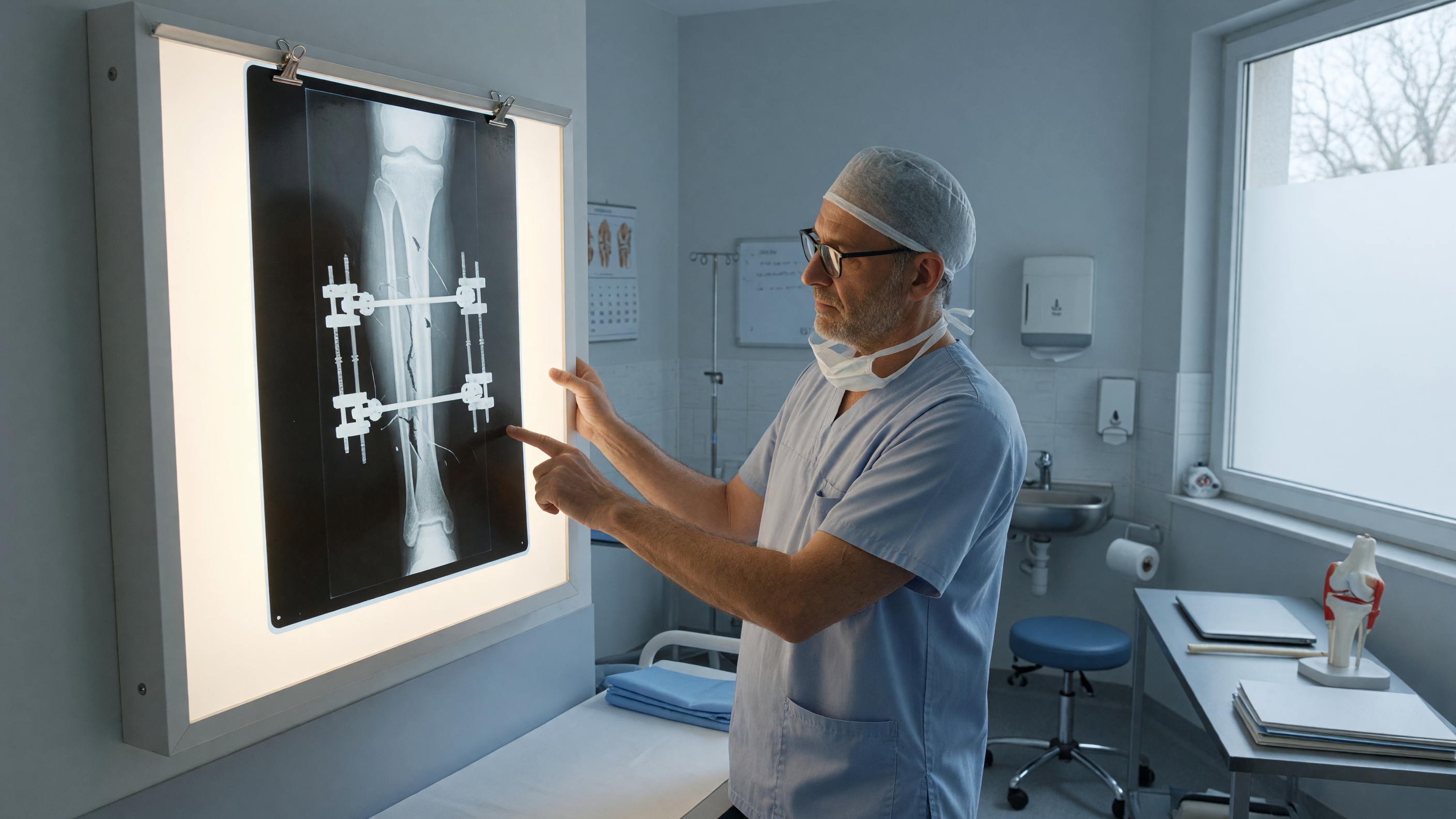
An infected nonunion fracture is a broken bone that fails to heal while also harbouring an ongoing infection, so the bone stays unstable and painful. It usually needs surgery, targeted antibiotics, and bone reconstruction to heal fully. This condition is one of the toughest problems in orthopedics, but it is treatable with the right expert care. In this article, we explain what causes infected nonunion fractures, their warning signs, how doctors diagnose them, and the modern treatment options available. You will also learn how specialists at Lux Hospitals approach recovery and restore function.
What Is an Infected Nonunion Fracture?
A nonunion is a fracture that stops healing before the bone fully joins. When bacteria also colonise the fracture site, it becomes an infected nonunion.
This combination of instability and infection makes healing very difficult. The bone cannot bridge the gap while active infection persists.
Key features include:
- Bone fails to unite naturally
- Persistent local infection present
- Ongoing pain and instability
- Often follows open fractures
- Requires combined surgical and medical care
Struggling with a fracture that won't heal? Consult the bone specialists at Lux Hospitals.
Common Causes of Infected Nonunion
Infected nonunion usually starts when bacteria enter the bone during injury or surgery. Poor blood supply then prevents proper healing.
Open fractures, where skin is broken, carry the highest infection risk. Contamination and inadequate fixation add to the problem.
Common causes include:
- Open or contaminated fractures
- Infection after fracture surgery
- Poor blood supply to bone
- Inadequate fracture fixation
- Retained dead or damaged tissue
- Delayed or improper wound care
Explore expert bone fracture treatment options at Lux Hospitals.
Risk Factors That Delay Healing
Certain patient factors raise the risk of both infection and nonunion. These slow the body's natural bone repair.
Managing these factors improves healing outcomes significantly. Your surgeon will assess them before planning treatment.
Major risk factors include:
- Diabetes and poor circulation
- Smoking and tobacco use
- Weak immune system
- Advanced age or osteoporosis
- Poor nutrition and low vitamin D
- Steroid or long-term medication use
Signs and Symptoms to Watch For
Recognising an infected nonunion early leads to better results. Symptoms often persist long after the original injury.
If a healing fracture suddenly worsens, seek medical attention. Learning to tell a sprain or a fracture apart also helps.
Warning signs may include:
- Persistent pain at fracture site
- Swelling, redness, or warmth
- Pus or draining wound
- Fever or feeling unwell
- Movement at the fracture
- Bone not healing over months
Notice these warning signs? Don't wait—book an assessment at Lux Hospitals today.
Complications If Left Untreated
An untreated infected nonunion can spread and cause lasting damage. The infection may become chronic and hard to clear.
Delays often lead to more complex surgery later. Early care protects the limb and function.
Possible complications include:
- Chronic osteomyelitis (bone infection)
- Permanent limb deformity
- Bone loss and shortening
- Loss of joint movement
- Sepsis in severe cases
- Risk of amputation
How Infected Nonunion Is Diagnosed
Diagnosis combines examination, imaging, and lab tests. This confirms both the nonunion and the infection.
Identifying the exact bacteria guides antibiotic choice. Accurate diagnosis is essential before surgery.
Common diagnostic tools include:
- X-rays showing unhealed fracture
- CT or MRI scans
- Blood tests and inflammatory markers
- Bone and tissue cultures
- Bone scans for infection extent
Get a precise diagnosis from the orthopedic team at Lux Hospitals.
Treatment Options at Lux Hospitals
Treating infected nonunion needs a two-part strategy: clear the infection and stabilise the bone. Care is tailored to each patient.
Surgeons remove infected tissue and use targeted antibiotics. Bone reconstruction follows once infection is controlled.
Core treatment steps include:
- Surgical removal of infected tissue
- Targeted long-term antibiotics
- Stabilising bone with fixation
- Bone grafting to fill gaps
- Staged reconstruction if needed
- Structured fracture treatment plan
Discover advanced fracture treatment tailored to you at Lux Hospitals.
Surgical Techniques for Bone Reconstruction
Several surgical methods help rebuild infected, non-healing bone. The choice depends on infection severity and bone loss.
External frames are often preferred for infected cases. They allow healing while managing infection.
Key surgical options include:
- Ilizarov ring fixator for gradual repair
- External fixation of fractures
- Open reduction and internal fixation
- Intramedullary nailing after clearing infection
- Bone grafting and transport techniques
Recovery and Rehabilitation
Recovery from infected nonunion is gradual and needs patience. Full healing can take several months.
Rehabilitation restores strength, movement, and confidence. Regular follow-up ensures the bone unites safely.
Recovery usually involves:
- Completing the full antibiotic course
- Guided physiotherapy and exercises
- Gradual weight-bearing progression
- Regular imaging follow-ups
- Good nutrition to support healing
- Wound care to prevent recurrence
Recover with expert-guided rehabilitation at Lux Hospitals.
Prevention and Bone Health Tips
Not every infected nonunion is preventable, but risk can be lowered. Prompt, proper fracture care is key.
Healthy habits also strengthen bones and speed healing. Protecting bone density matters, especially with osteoporosis.
Helpful prevention tips include:
- Treat open fractures urgently
- Follow all wound-care instructions
- Quit smoking and limit alcohol
- Eat calcium and protein-rich foods
- Maintain vitamin D levels
- Attend every follow-up appointment
Why Choose Lux Hospitals?
Infected nonunion needs experienced surgeons and coordinated care. Lux Hospitals brings both together under one roof.
Our team combines advanced techniques with personalised rehabilitation. Choosing the best orthopedic surgeon improves your outcome.
What sets us apart:
- Skilled orthopedic and trauma specialists
- Advanced imaging and diagnostics
- Modern reconstruction techniques
- Dedicated infection management
- Personalised rehabilitation support
- Compassionate patient-centred care
Ready for expert bone care? Schedule your consultation at Lux Hospitals today.
Conclusion
An infected nonunion fracture is a serious but treatable condition when addressed by experienced specialists. The key is early recognition, controlling the infection, and stabilising the bone so healing can finally occur. With modern techniques like the Ilizarov ring fixator, targeted antibiotics, and careful rehabilitation, most patients regain function and mobility.
If you have a fracture that isn't healing, persistent pain, or a draining wound, don't delay. Prompt expert care protects your limb and speeds recovery. The orthopedic team at Lux Hospitals offers comprehensive diagnosis, advanced surgery, and dedicated rehabilitation to help you heal completely and return to an active life.