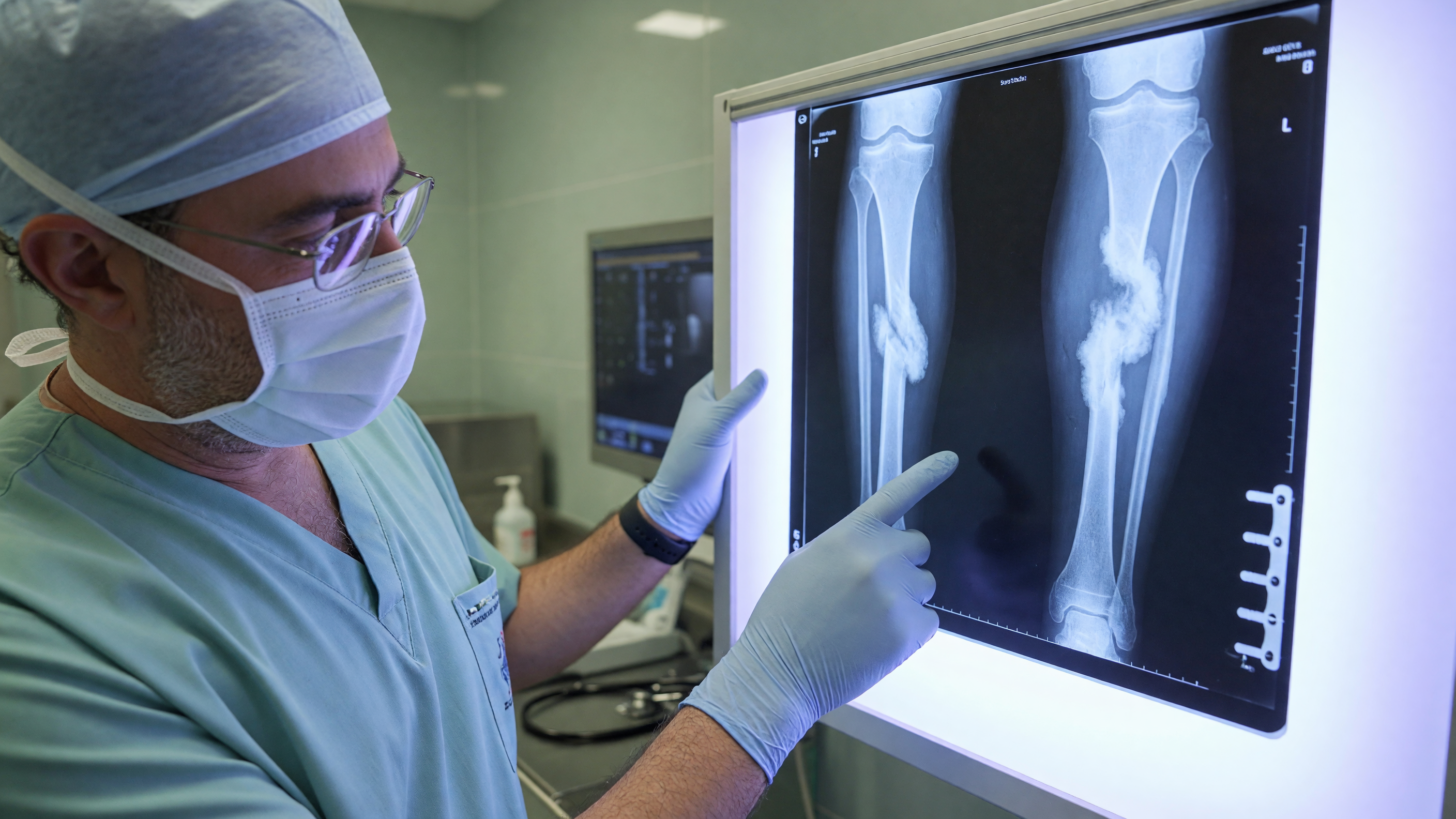
A fracture not healing—known as a nonunion—means the broken bone has stopped mending and shows no signs of union beyond the expected timeframe. Common warning signs include persistent pain at the fracture site, swelling, and movement at the break months after injury. Most bones heal within a few months, so ongoing symptoms deserve prompt attention. In this article, we explain the key signs of a nonunion, why fractures fail to heal, how doctors diagnose it, and the treatment options available. Understanding these clues early helps you get timely care and avoid long-term complications.
What Is a Nonunion?
A nonunion happens when a broken bone fails to heal completely within the expected time. The bone ends stay separated and do not form solid new bone.
Doctors distinguish this from a delayed union, where healing is slow but still progressing. A nonunion means the healing process has effectively stalled.
Key points to understand:
- Bone stops mending completely
- Different from slow, delayed union
- Usually diagnosed after several months
- Confirmed with imaging and symptoms
If your bone fracture treatment isn't progressing as expected, book an evaluation at Lux Hospitals.
1. Persistent Pain at the Fracture Site
Pain that lingers long after the injury is the most common sign of a fracture not healing. Normally, pain fades steadily as the bone knits together.
With a nonunion, discomfort may stay sharp or dull for months. It often worsens with weight-bearing or movement.
You may notice:
- Pain lasting beyond expected healing
- Discomfort during activity or pressure
- Aching that disturbs sleep
- Pain returning after brief improvement
2. Ongoing Swelling and Tenderness
Continued swelling around the break can signal that healing has stalled. Some swelling is normal early on, but it should ease steadily.
Persistent tenderness when you touch the area is another red flag. It suggests the bone remains irritated and unstable.
Signs to watch for:
- Swelling that does not subside
- Tenderness on light touch
- Soft-tissue puffiness near the break
- Warmth suggesting ongoing inflammation
Notice swelling weeks after a break? Learn whether it's a sprain or a fracture with our specialists.
3. Movement or Instability at the Break
Feeling movement at the fracture site is a strong indicator of nonunion. A healing bone should feel increasingly stable, not loose.
Some patients describe a sense of shifting or grinding when they move the limb. This abnormal motion means the bone ends have not united.
Warning signs include:
- Sensation of movement at the break
- Grinding or clicking feeling
- Limb feels weak or unreliable
- Difficulty bearing weight safely
4. No Progress on X-Rays
Imaging tells the clearest story. When repeated X-rays show no new bone forming across the gap, doctors suspect a nonunion.
A persistent visible line or a gap between bone ends confirms healing has stalled. Sometimes the bone ends look rounded or dense.
Radiographic clues include:
- No bridging bone across the fracture
- Persistent visible fracture line
- Gap between separated bone ends
- Rounded or sclerotic bone edges
Ask about advanced fracture treatment options and imaging at Lux Hospitals for an accurate diagnosis.
5. Visible Deformity or Warmth
An obvious change in the shape or alignment of the limb can point to a fracture that hasn't healed. The bone may angle or shorten.
Warmth and redness over the site may also suggest infection, a known cause of nonunion. These need urgent evaluation.
Look out for:
- Visible bend or shortening of limb
- Persistent redness over the site
- Warmth suggesting possible infection
- Skin changes or drainage near the wound
Why Fractures Fail to Heal
Bones need stability, blood supply, and good nutrition to heal. When any of these is missing, a nonunion can develop.
Infection and excessive movement at the site are frequent culprits. Poor initial alignment can also interrupt healing.
Common causes include:
- Poor blood supply to the bone
- Infection at the fracture site
- Inadequate immobilization or stability
- Large gap between bone fragments
- Smoking or poor nutrition
Concerned about slow healing? The orthopedic team at Lux Hospitals can pinpoint the cause quickly.
Who Is at Higher Risk
Certain factors make a fracture not healing more likely. Recognizing them helps guide closer monitoring.
Age, chronic illness, and lifestyle habits all play a role in bone repair. Some medications can slow the process too.
Higher-risk groups include:
- Smokers and heavy alcohol users
- People with diabetes or osteoporosis
- Older adults with weaker bones
- Patients on long-term steroids
- Those with severe or open fractures
How Nonunion Is Diagnosed
Diagnosis combines your symptoms with detailed imaging. Your surgeon reviews how much time has passed since the injury.
X-rays are the first step, but CT scans give a clearer view of the gap. Blood tests may check for hidden infection.
Diagnostic tools include:
- Repeated X-rays over time
- CT scans for detailed bone view
- Blood tests to rule out infection
- Physical exam for movement and pain
Get a thorough nonunion assessment from the best orthopedic surgeon at Lux Hospitals.
Treatment Options at Lux Hospitals
Treatment depends on the cause, location, and your overall health. The goal is to restore stability and stimulate bone growth.
Options range from minor procedures to surgery with bone grafting. Infection must be cleared first when present.
Common approaches include:
- Bone grafting to bridge the gap
- Internal fixation with plates or ORIF
- Intramedullary nailing for long bones
- Ilizarov ring fixator for complex cases
- External fixation of fractures when needed
Why Choose Lux Hospitals?
Nonunions demand experience and precise surgical planning. Our orthopedic team specializes in complex and failed fractures.
We combine advanced imaging, modern techniques, and personalized rehabilitation to give bones the best chance to heal.
What sets us apart:
- Experienced fracture and trauma specialists
- Advanced imaging and diagnostics
- Full range of surgical solutions
- Personalized rehabilitation plans
- Focus on lasting bone recovery
Don't let a fracture not healing hold you back—consult the experts at Lux Hospitals today.
Conclusion
A fracture not healing is not something to ignore. Persistent pain, swelling, movement at the break, and stalled progress on X-rays are all warning signs of a nonunion. The sooner these clues are recognized, the better the chances of successful treatment and a full recovery.
Many nonunions can be corrected with the right combination of surgery, bone grafting, and rehabilitation. If your bone hasn't healed within the expected timeframe, seek an expert evaluation promptly. The orthopedic specialists at Lux Hospitals offer advanced diagnosis and proven treatment options to help your bone heal and restore your mobility and quality of life.