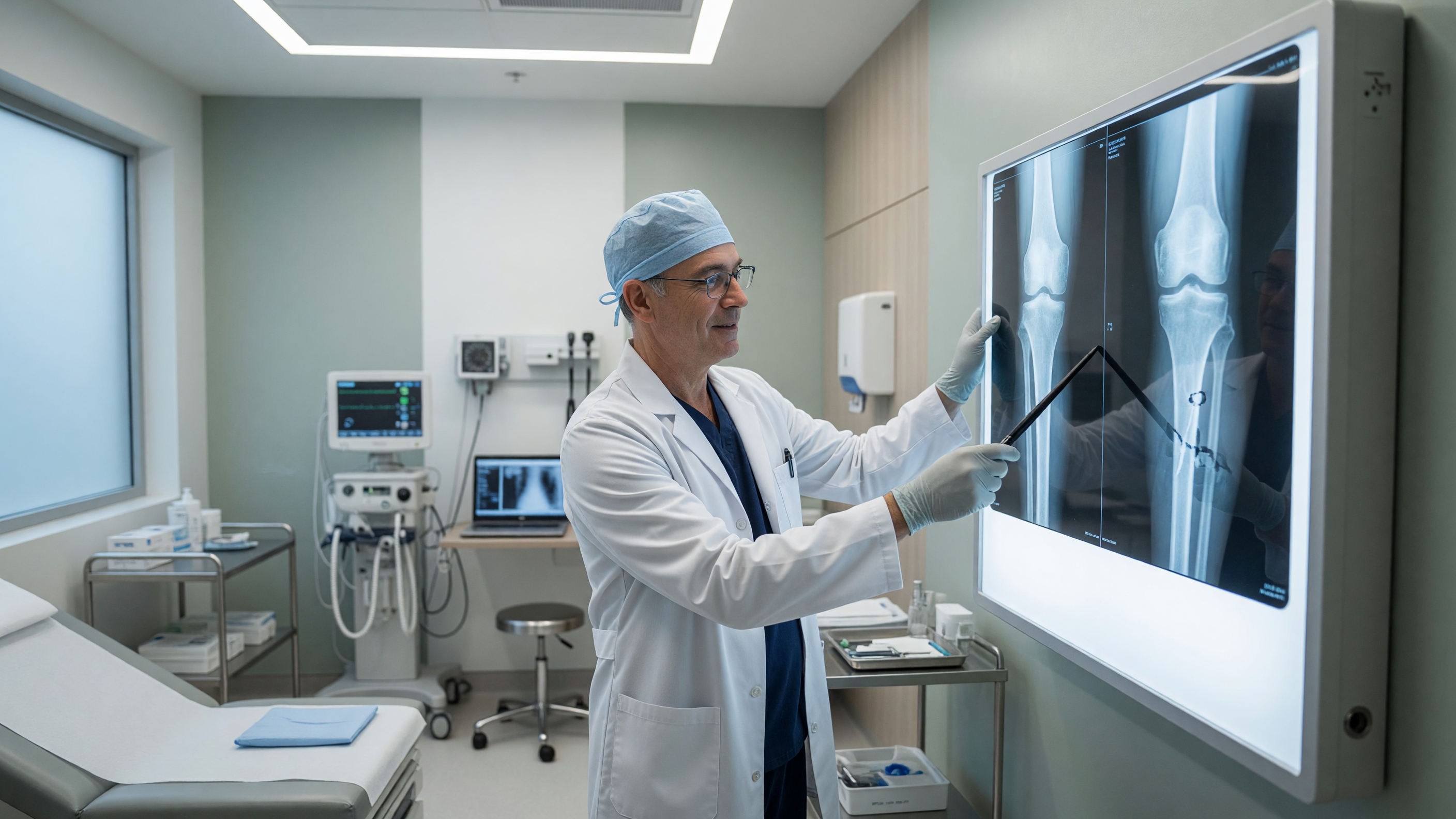
A delayed union is a fracture that heals slower than expected but is still healing, while a nonunion is a fracture that has stopped healing altogether and will not mend without intervention. Understanding delayed union vs nonunion matters because each needs a different treatment approach. This article explains what these conditions are, why they happen, the warning signs to watch for, and how they are diagnosed. We also cover the modern treatment options available and practical tips to support strong bone healing.
What Is a Delayed Union?
A delayed union means your fracture is still healing, but slower than the normal expected timeline for that bone. The bone is on track—it simply needs more time.
Healing rates vary by bone, age, and injury type. A delayed union often catches up with proper support and monitoring.
Key points to remember:
- Healing is slower than normal
- Bone is still actively mending
- Usually resolves with more time
- Confirmed by follow-up X-rays
- Rarely needs major surgery
Worried your fracture is healing slowly? Book a review with the bone specialists at Lux Hospitals.
What Is a Nonunion Fracture?
A nonunion is a fracture that has completely stopped healing. The bone fragments will not join without medical or surgical help.
Doctors often diagnose nonunion when there is no healing progress on scans over several months.
Common features include:
- No healing progress for months
- Bone ends remain separated
- Persistent pain at the site
- Often needs surgery to fix
- May involve poor blood supply
Key Differences at a Glance
The core difference in delayed union vs nonunion is progress. A delayed union is still moving toward healing, while a nonunion has stalled entirely.
Understanding this distinction guides the right treatment plan.
Here is how they compare:
- Delayed union — slow but progressing
- Nonunion — healing has fully stopped
- Delayed union — time often enough
- Nonunion — usually needs intervention
- Both confirmed by imaging over time
Get an accurate diagnosis for your slow-healing fracture at Lux Hospitals.
Common Causes of Poor Bone Healing
Many factors can slow or stop bone healing. Poor blood supply and infection are among the most common culprits.
Proper fracture treatment from the start reduces these risks.
Frequent causes include:
- Inadequate blood supply to bone
- Infection at the fracture site
- Unstable or poor fixation
- Severe or open fractures
- Large gaps between bone ends
- Smoking and poor nutrition
Who Is Most at Risk?
Certain people are more likely to experience delayed union or nonunion. Age and lifestyle play a major role.
Knowing your risk helps you and your doctor plan preventive care.
Higher-risk groups include:
- Smokers and heavy alcohol users
- People with diabetes
- Those with osteoporosis
- Older adults with weak bones
- Patients on certain medications
- People with poor nutrition
Concerned about weak bones? Learn about bone fracture treatment options at Lux Hospitals.
Warning Signs to Watch For
Recognizing the signs early helps prevent long-term problems. Persistent pain beyond the expected healing window is a key clue.
If healing seems stuck, seek a professional review promptly.
Warning signs may include:
- Ongoing pain at the fracture
- Swelling that does not settle
- Movement at the injury site
- Difficulty bearing weight
- No improvement over weeks
- Visible deformity of the limb
How Doctors Diagnose the Problem
Diagnosis relies on tracking healing over time using imaging and clinical checks. A single scan is rarely enough.
Doctors compare X-rays across several visits to judge progress.
Typical diagnostic steps include:
- Repeated X-rays over months
- CT scans for detailed views
- Blood tests to rule out infection
- Physical exam for stability
- Review of symptoms and history
For a thorough fracture assessment, consult the orthopedic team at Lux Hospitals.
Complications of Untreated Nonunion
Ignoring a nonunion can lead to lasting problems. The bone may never heal on its own, worsening pain and disability.
Early treatment reduces these risks significantly.
Possible complications include:
- Chronic, ongoing pain
- Permanent loss of function
- Limb deformity or shortening
- Muscle weakness and stiffness
- Increased risk of infection
- Reduced quality of life
Treatment Options at Lux Hospitals
Treatment depends on the type, location, and cause of the healing problem. Delayed unions often need only support and time, while nonunions usually require surgery.
Our specialists tailor each plan to the patient.
Common fracture treatment options include:
- Closed reduction and casting — for stable healing
- ORIF — plates and screws for fixation
- Intramedullary nailing — for long bones
- Ilizarov ring fixator — for complex cases
- Bone grafting to bridge gaps
- External fixation for severe injuries
Explore advanced fracture treatment tailored to you at Lux Hospitals.
Tips to Support Bone Healing
Simple lifestyle steps can boost your body's ability to heal fractures. Nutrition and avoiding harmful habits make a real difference.
Always follow your surgeon's specific advice too.
Helpful healing habits include:
- Quit smoking completely
- Eat calcium and vitamin D
- Avoid excess alcohol
- Follow weight-bearing guidance
- Attend all follow-up visits
- Manage diabetes and other conditions
Why Choose Lux Hospitals?
Lux Hospitals combines experienced orthopedic surgeons with modern imaging and surgical technology. We focus on accurate diagnosis and personalized care.
Our team manages simple fractures through to complex nonunions.
What sets us apart:
- Experienced fracture specialists
- Advanced diagnostic imaging
- Full range of surgical options
- Personalized recovery plans
- Dedicated rehabilitation support
- Compassionate patient-focused care
Choose expert bone care—schedule your consultation at Lux Hospitals today.
Conclusion
Understanding delayed union vs nonunion helps you know when a slow-healing fracture is simply taking time and when it needs active intervention. A delayed union is still progressing, while a nonunion has stopped and usually needs surgery to heal.
Early recognition of warning signs, proper diagnosis, and timely treatment protect your long-term mobility and comfort. If your fracture is not healing as expected, don't wait. The experienced orthopedic team at Lux Hospitals offers accurate diagnosis and advanced treatment options tailored to your needs, from casting and internal fixation to complex reconstruction—helping your bones heal and getting you back to daily life.