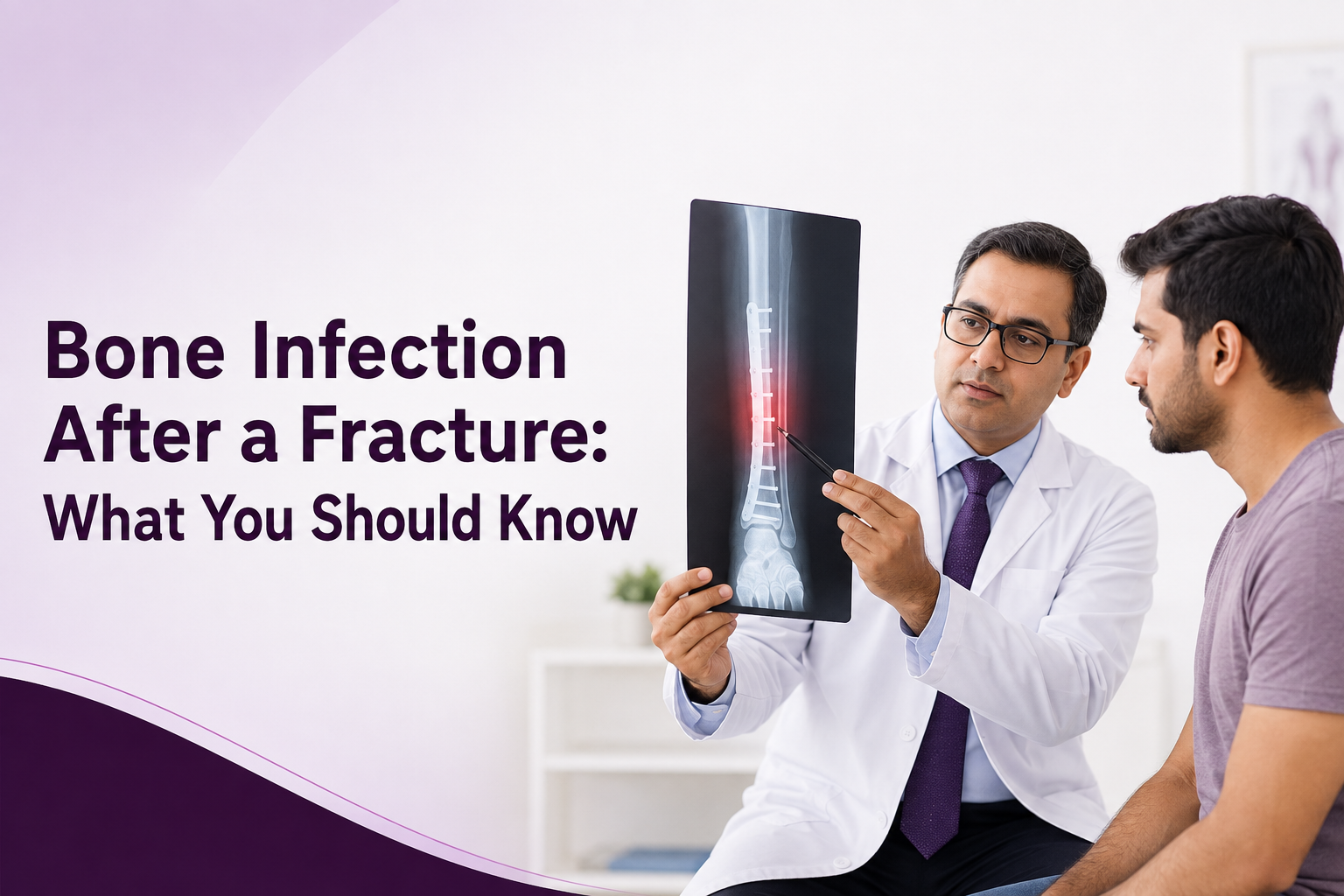
A bone infection after fracture, called post-traumatic osteomyelitis, happens when bacteria enter injured bone through a wound or surgery. It causes pain, swelling, fever, and delayed healing, and needs prompt antibiotics and sometimes surgery. This complication is more common after open fractures or operative repair. In this article, you will learn how bone infection after fracture develops, the warning signs to watch for, who is at risk, and how doctors diagnose and treat it. We also cover prevention tips and when to see an orthopedic specialist at Lux Hospitals.
What Is a Bone Infection After a Fracture?
A bone infection after fracture, medically called post-traumatic osteomyelitis, occurs when bacteria invade the broken bone. It can develop soon after injury or weeks later.
The infection may involve the bone, surrounding tissue, or surgical hardware. Prompt care during fracture treatment lowers this risk.
Key features include:
- Infection of bone after trauma
- Caused mainly by bacteria
- Can be acute or chronic
- Linked to open wounds or surgery
- Delays normal bone healing
Worried about a healing fracture? Consult the orthopedic experts at Lux Hospitals today.
How the Infection Develops
Bacteria usually enter when the skin breaks during the injury or through a surgical incision. Once inside, they multiply in bone tissue.
Hardware like plates or screws can also give bacteria a surface to cling to. Poor blood supply near the fracture makes it harder for the body to fight back.
Common entry routes include:
- Open wounds from the injury
- Surgical incisions or hardware
- Contaminated skin bacteria
- Bloodstream spread from elsewhere
- Poorly healing soft tissue
Warning Signs You Should Never Ignore
Early symptoms can be subtle but tend to worsen. Recognizing them quickly protects your bone and recovery.
Seek help if pain increases instead of improving. Knowing whether it is a sprain or a fracture also helps you act early.
Watch for these warning signs:
- Increasing pain and swelling
- Warmth and redness at site
- Fever or chills
- Pus or wound drainage
- Delayed or stalled healing
- Persistent fatigue and malaise
Notice these symptoms? Don't wait—get evaluated at Lux Hospitals right away.
Who Is Most at Risk?
Anyone with a fracture can develop infection, but certain factors raise the odds significantly. Understanding your risk helps guide prevention.
Patients with weakened immunity or poor circulation face higher chances. Careful bone fracture treatment reduces these risks.
Higher-risk groups include:
- People with diabetes
- Smokers and heavy drinkers
- Those with poor circulation
- Weakened immune systems
- Severe or open fractures
- Older adults with osteoporosis
Why Open Fractures Are Higher Risk
Open fractures break through the skin, exposing bone directly to the environment. This dramatically raises contamination risk.
Dirt, debris, and bacteria can enter the wound instantly. Emergency cleaning and antibiotics are essential.
Open fractures are riskier because they:
- Expose bone to outside bacteria
- Often carry dirt and debris
- Damage protective soft tissue
- Reduce local blood supply
- Require urgent surgical cleaning
Suffered an open fracture? Seek immediate care at Lux Hospitals to lower infection risk.
Complications of Untreated Bone Infection
Ignoring a bone infection can lead to serious, lasting damage. The infection may become chronic and difficult to cure.
Untreated cases can spread and threaten the limb or overall health. Early treatment prevents most of these outcomes.
Possible complications include:
- Chronic long-term osteomyelitis
- Bone death (osteonecrosis)
- Nonunion or failed healing
- Spread to nearby joints
- Blood infection (sepsis)
- Rare risk of amputation
How Doctors Diagnose Bone Infection
Diagnosis combines your symptoms, physical exam, and targeted tests. Accurate diagnosis guides the right treatment.
Doctors check the wound, order imaging, and test blood or tissue. Choosing the best orthopedic surgeon ensures a thorough workup.
Common diagnostic tools include:
- Blood tests for inflammation
- X-rays and MRI scans
- Bone scans for hidden infection
- Wound or tissue cultures
- Biopsy to identify bacteria
Get an accurate diagnosis from the experienced team at Lux Hospitals.
Treatment Options at Lux Hospitals
Treatment depends on infection severity, timing, and whether hardware is involved. Most patients need antibiotics, and many need surgery.
Our specialists tailor a plan to clear the infection and restore healing. Options during fracture treatment may vary.
Common treatments include:
- Targeted intravenous antibiotics
- Surgical cleaning (debridement)
- Removal or exchange of hardware
- External fixation of fractures
- Bone grafting for lost bone
- Ilizarov ring fixator for reconstruction
Explore advanced infection and fracture care at Lux Hospitals today.
How to Prevent Infection After a Fracture
Prevention starts at injury and continues through healing. Good wound care and follow-up are vital.
Controlling health conditions and avoiding smoking also help. Simple steps protect your recovery.
Helpful prevention measures include:
- Clean and cover wounds promptly
- Take antibiotics as prescribed
- Attend all follow-up visits
- Keep blood sugar controlled
- Stop smoking during healing
- Report new symptoms early
Recovery and Long-Term Outlook
With prompt treatment, most patients recover fully. Chronic infections may need longer care and repeated visits.
Healing takes patience, therapy, and monitoring. Following medical advice improves your outlook.
Recovery typically involves:
- Weeks of antibiotic therapy
- Gradual return to weight-bearing
- Physical therapy and rehab
- Regular imaging follow-ups
- Monitoring for recurrence
Why Choose Lux Hospitals?
Lux Hospitals combines expert orthopedic surgeons with advanced infection management. We treat simple and complex fracture complications.
Our team focuses on clearing infection while restoring bone strength and mobility. Comprehensive fracture treatment support is available under one roof.
Patients choose us for:
- Experienced orthopedic specialists
- Advanced diagnostic imaging
- Modern surgical techniques
- Personalized recovery plans
- Dedicated rehabilitation support
Trust your recovery to the orthopedic experts at Lux Hospitals—book a consultation now.
Conclusion
A bone infection after fracture is a serious but treatable complication when caught early. Watch for increasing pain, swelling, warmth, fever, or wound drainage, and never dismiss these warning signs. Prompt antibiotics, careful wound care, and sometimes surgery can clear the infection and protect your healing bone.
Prevention matters just as much—keep wounds clean, control health conditions, and attend every follow-up. If you have had a fracture and notice anything unusual, seek expert evaluation quickly. The orthopedic team at Lux Hospitals offers advanced diagnosis, personalized treatment, and dedicated rehabilitation to help you recover safely and regain full mobility.