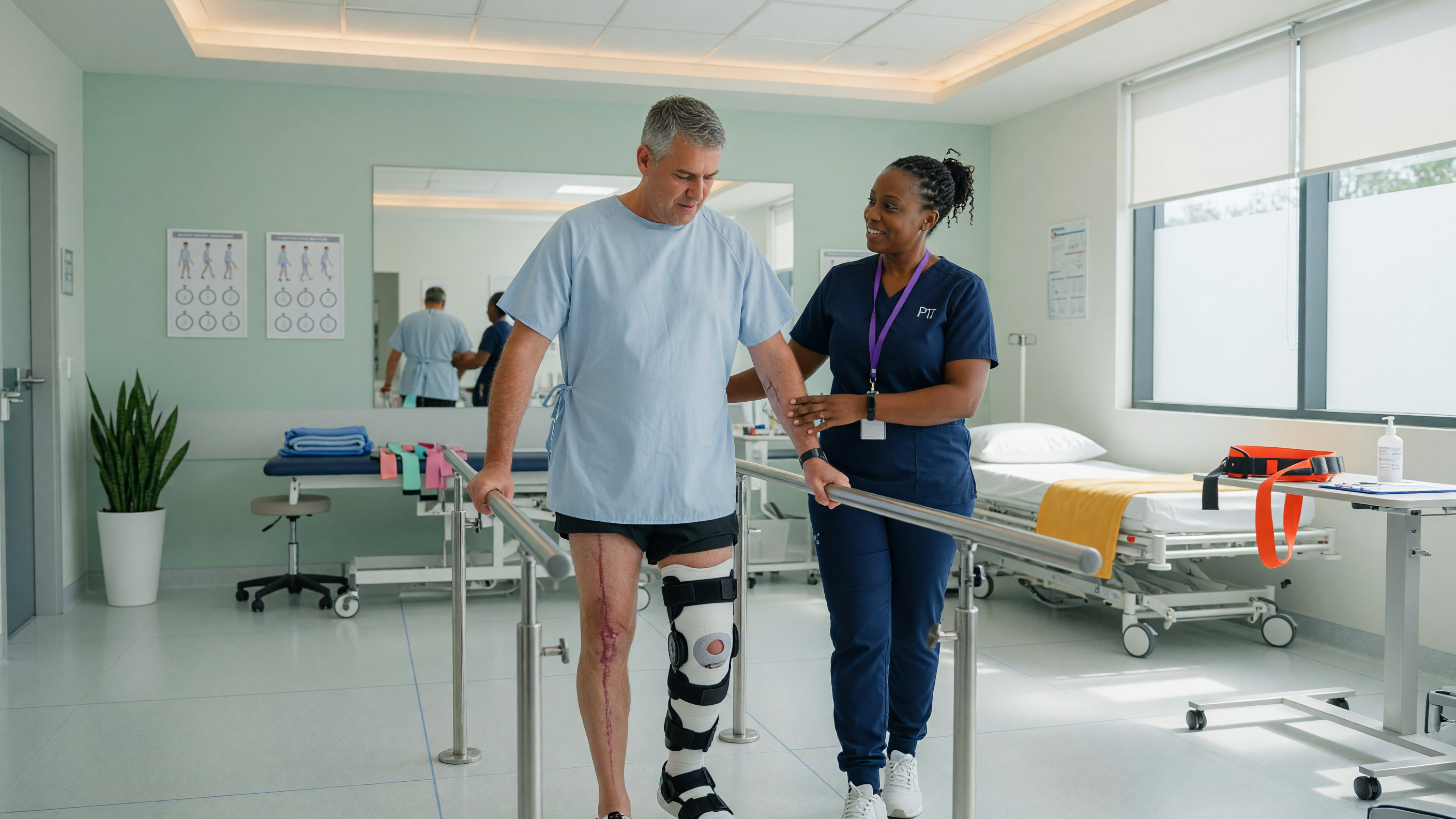
Walking is often difficult after fracture surgery because bone healing, muscle weakness, swelling, and stiffness all take time to resolve—usually weeks to months, not days. This is a normal part of recovery, though some cases need medical review. In this article we explain why mobility stays limited, the common causes behind slow progress, warning signs to watch, and how structured rehabilitation restores confident walking. You will also learn when to see a specialist and how expert care at Lux Hospitals supports a safe, steady return to movement after your bone fracture treatment.
Is Difficulty Walking After Surgery Normal?
Yes, some difficulty walking after fracture surgery is expected and usually temporary. Your body needs time to heal bone, rebuild muscle, and regain confidence.
Recovery depends on many factors, and progress is rarely a straight line. Timelines vary based on:
- Type and location of the fracture
- Your age and overall health
- Surgical method used
- Quality of physiotherapy
- How closely you follow instructions
For a clear recovery plan tailored to your fracture, consult the specialists at Lux Hospitals.
1. Your Bone Is Still Healing
Bone healing is a slow biological process that can take six weeks to several months. Until the fracture unites fully, walking will feel unstable or painful.
Several factors influence how fast your bone knits together:
- Fracture severity and alignment
- Adequate blood supply to the bone
- Nutrition, calcium, and vitamin D
- Smoking, which delays healing
- Diabetes or bone-thinning conditions
Not sure if your bone is healing well? Get expert bone fracture treatment reviewed at Lux Hospitals.
2. Muscle Weakness and Atrophy
After weeks in a cast or limited movement, muscles weaken and shrink. This muscle atrophy makes each step feel heavy and unsteady.
Weakness is common in the calf, thigh, and hip muscles. You may notice:
- Legs feeling tired quickly
- Difficulty lifting the foot
- Wobbly or unstable knees
- Reduced push-off while walking
- Needing support to stand
3. Swelling, Stiffness, and Pain
Persistent swelling and joint stiffness limit how far your joints can bend and straighten. This restricts a smooth walking pattern.
Stiffness often affects nearby joints, especially after leg fracture rehabilitation. Common issues include:
- Swelling around the surgery site
- Tight, stiff ankle or knee
- Pain during weight-bearing
- Limited range of motion
- Morning stiffness that eases slowly
Ongoing swelling or stiff joints? Have them assessed by the orthopedic team at Lux Hospitals.
4. Weight-Bearing Restrictions
Surgeons often limit how much weight you can put on the leg to protect healing bone and hardware. This deliberately slows walking early on.
Your surgeon may advise a staged approach, such as:
- Non-weight-bearing initially
- Partial weight-bearing with crutches
- Gradual progression to full weight
- Using a walker or cane
- Following imaging-based clearance
5. Nerve Issues and Poor Balance
Fractures and surgery can irritate nearby nerves, causing numbness, tingling, or weakness. Balance also declines after long inactivity.
These changes make walking feel unsafe and uncertain. You may experience:
- Numbness or pins-and-needles
- Foot dragging or slapping
- Poor coordination and balance
- Fear of falling
- Reduced sensation underfoot
Persistent numbness deserves attention—book a nerve and mobility evaluation at Lux Hospitals.
Complications That Slow Recovery
Most patients recover steadily, but certain complications can prolong difficulty walking. Recognising them early prevents long-term problems.
Complications that may delay progress include:
- Delayed or non-union of bone
- Infection at the surgical site
- Hardware loosening or irritation
- Blood clots in the leg
- Post-traumatic joint arthritis
Warning Signs You Should Not Ignore
Some symptoms signal a problem that needs prompt medical review rather than patience. Do not wait if your recovery suddenly worsens.
Seek help promptly if you notice:
- Increasing pain or swelling
- Redness, warmth, or fever
- New numbness or weakness
- Wound discharge or opening
- Sudden inability to bear weight
If any warning sign appears, contact Lux Hospitals immediately for urgent assessment.
How Rehabilitation Restores Walking
Structured physiotherapy is the key to walking normally again. It rebuilds strength, restores motion, and retrains a safe gait.
A good program is gradual and personalised. It typically includes:
- Gentle range-of-motion exercises
- Progressive strengthening work
- Balance and gait training
- Swelling and pain control
- Guided weight-bearing progression
Treatment Options at Lux Hospitals
When healing stalls, the right procedure can restore stability and mobility. Treatment depends on the fracture type and how it healed.
Depending on your case, options may include:
- Open reduction and internal fixation
- Intramedullary nailing for long bones
- External fixation for complex fractures
- Dynamic hip screw for hip fractures
- Joint replacement for severe damage
Explore advanced fracture treatment options with the surgeons at Lux Hospitals.
Why Choose Lux Hospitals?
Lux Hospitals combines experienced orthopedic surgeons with dedicated rehabilitation support. Care continues from surgery through your full return to walking.
Patients choose us for:
- Skilled fracture and joint specialists
- Advanced surgical technology
- In-house physiotherapy programs
- Personalised recovery planning
- Compassionate follow-up care
Take the next step toward walking confidently—schedule your consultation at Lux Hospitals today.
Conclusion
Difficulty walking after fracture surgery is usually a normal part of healing, driven by bone repair, muscle weakness, swelling, stiffness, and protective weight-bearing limits. With patience and structured physiotherapy, most people regain confident, pain-free walking over weeks to months.
Still, slow or worsening progress should never be ignored. Warning signs like increasing pain, numbness, or wound problems need prompt review. Expert evaluation ensures your bone is healing correctly and your rehabilitation is on track. If walking remains hard longer than expected, the orthopedic and rehabilitation teams at Lux Hospitals can identify the cause and guide you safely back to full mobility and an active, independent life.