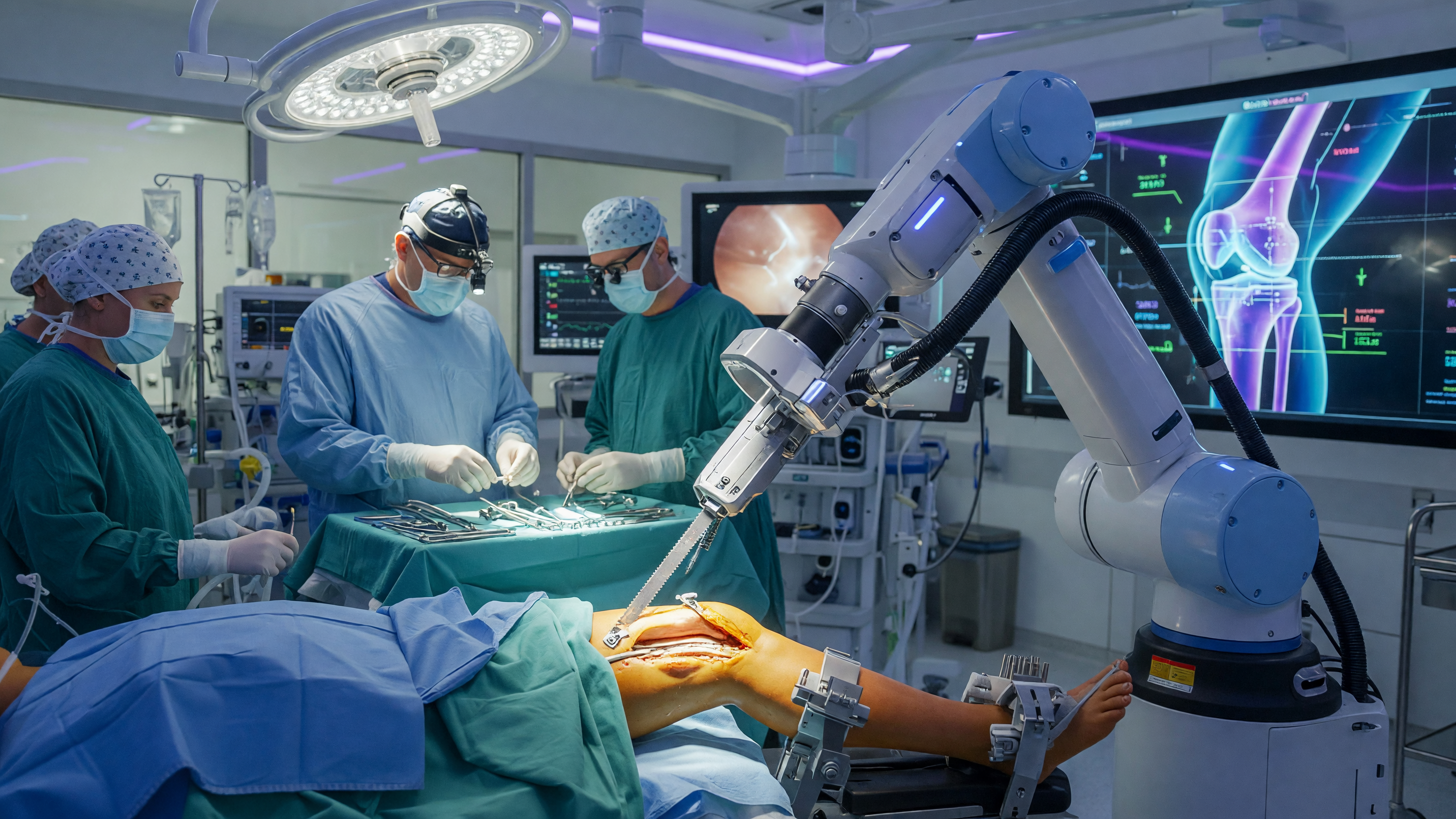
Robotic knee replacement is a surgery where a computer-guided robotic system helps the surgeon place your knee implant with precise, patient-specific accuracy. It combines 3D planning with real-time control for better alignment and faster recovery. This guide explains what the procedure is, how it works, and who benefits most. You will learn about the advantages, the step-by-step process, recovery timeline, and possible risks. We also cover how it compares with traditional surgery and how expert care at Lux Hospitals supports lasting, pain-free movement.
What Is Robotic Knee Replacement?
Robotic knee replacement is an advanced form of knee replacement surgery that uses a robotic arm to guide the surgeon. The robot follows a 3D digital plan built from your unique knee anatomy.
The surgeon stays fully in control throughout. The robot simply improves accuracy in bone preparation and implant positioning.
Key things to understand:
- Computer creates a 3D model of your knee
- Robot guides precise bone cutting
- Surgeon controls every movement
- Implant placed with patient-specific alignment
- Often used for advanced knee arthritis
Explore your options with the joint experts at Lux Hospitals today.
How Robotic Knee Replacement Works
The system converts a CT scan or intra-operative mapping into a virtual model of your joint. This lets the surgeon plan the exact implant size and position before cutting.
During surgery, the robotic arm keeps bone removal within safe, pre-set boundaries.
The process involves:
- Detailed 3D pre-surgical planning
- Real-time feedback during surgery
- Protection of surrounding soft tissue
- Precise ligament balancing
- Accurate implant alignment
Key Benefits of Robotic Knee Replacement
The main advantage is precision, which can improve implant fit and joint function. Better alignment often means a more natural-feeling knee.
Many patients also experience smoother, quicker recovery compared with older techniques.
Common benefits include:
- Highly accurate implant placement
- Less soft-tissue damage
- Reduced post-surgical pain
- Faster return to walking
- Potentially longer implant lifespan
- Better range of motion
Ask about robotic-assisted knee surgery during your consultation at Lux Hospitals.
Who Is a Good Candidate?
Robotic knee replacement suits people with severe knee damage who have not improved with non-surgical care. It is often recommended for advanced arthritis.
Your surgeon confirms suitability after imaging and a physical exam.
You may be a candidate if you have:
- Severe knee osteoarthritis pain
- Failed medication and physiotherapy
- Stiffness limiting daily activities
- Knee deformity or instability
- Good general health for surgery
Robotic vs. Traditional Knee Replacement
Both procedures replace damaged joint surfaces with an implant. The difference lies in how precisely the implant is positioned.
Robotic systems add planning and real-time guidance, while traditional surgery relies on manual instruments and surgeon experience.
Quick comparison:
- Robotic — 3D planning and guided cuts
- Robotic — often less tissue disruption
- Traditional — proven, widely available technique
- Traditional — depends more on manual alignment
- Both — aim to relieve pain and restore movement
Compare surgical approaches with a specialist at Lux Hospitals.
The Procedure Step by Step
Surgery usually takes one to two hours under spinal or general anesthesia. The robotic plan guides each stage for accuracy.
A clear sequence keeps the operation safe and efficient.
The steps typically include:
- Anesthesia and positioning of the leg
- Small incision to access the knee
- Robot-guided removal of damaged bone
- Precise placement of the implant
- Ligament balancing and testing motion
- Closing the incision and dressing
Recovery and Rehabilitation
Most patients stand and take a few steps within a day of surgery. Physiotherapy begins early to restore strength and motion.
Full recovery varies but generally continues over several weeks.
A typical recovery path includes:
- Walking with support within 24 hours
- Guided physiotherapy exercises
- Gradual return to daily tasks
- Swelling and pain steadily improving
- Most activities resumed in 6–12 weeks
Get a personalised rehabilitation plan from the physiotherapy team at Lux Hospitals.
Risks and Possible Complications
Robotic knee replacement is safe, but like any surgery it carries some risk. Precision planning can help lower certain complications.
Discuss your individual risk with your surgeon before deciding.
Possible complications include:
- Infection at the surgical site
- Blood clots in the leg
- Stiffness or limited motion
- Implant loosening over time
- Reaction to anesthesia
How to Prepare for Surgery
Good preparation improves your outcome and recovery speed. Your care team will guide you through pre-surgery steps.
Staying active and healthy beforehand helps rehabilitation.
Helpful preparation tips:
- Complete all pre-operative tests
- Manage weight and blood sugar
- Stop smoking before surgery
- Arrange home support and mobility aids
- Follow fasting and medication advice
Treatment Options at Lux Hospitals
Not everyone needs a full joint replacement. Our surgeons tailor treatment to your damage level and lifestyle goals.
Options range from joint-preserving procedures to advanced replacements.
Procedures we offer include:
- Total knee replacement for advanced arthritis
- Partial knee replacement for isolated damage
- Revision surgery for failed implants
- Knee arthroscopy for early joint issues
- Cartilage repair and regeneration
Book an evaluation at Lux Hospitals to find your best treatment path.
Why Choose Lux Hospitals?
Lux Hospitals combines experienced orthopedic surgeons with modern robotic technology. Our focus is safe, precise, and patient-centred care.
We support you from diagnosis through complete recovery.
What sets us apart:
- Skilled joint replacement specialists
- Advanced robotic surgical systems
- Personalised recovery programmes
- Dedicated physiotherapy support
- Transparent guidance at every step
Conclusion
Robotic knee replacement offers a highly precise, patient-specific approach to treating severe knee damage and arthritis. By combining 3D planning with real-time robotic guidance, it can improve implant alignment, reduce tissue damage, and support a smoother recovery. While it is not right for everyone, the technique represents an important advance in modern joint care.
If knee pain is limiting your daily life, the right diagnosis and treatment can restore your comfort and movement. The experienced orthopedic team at Lux Hospitals will assess your condition and recommend the most suitable option. Take the first step toward pain-free living by booking a consultation with our joint replacement specialists today.