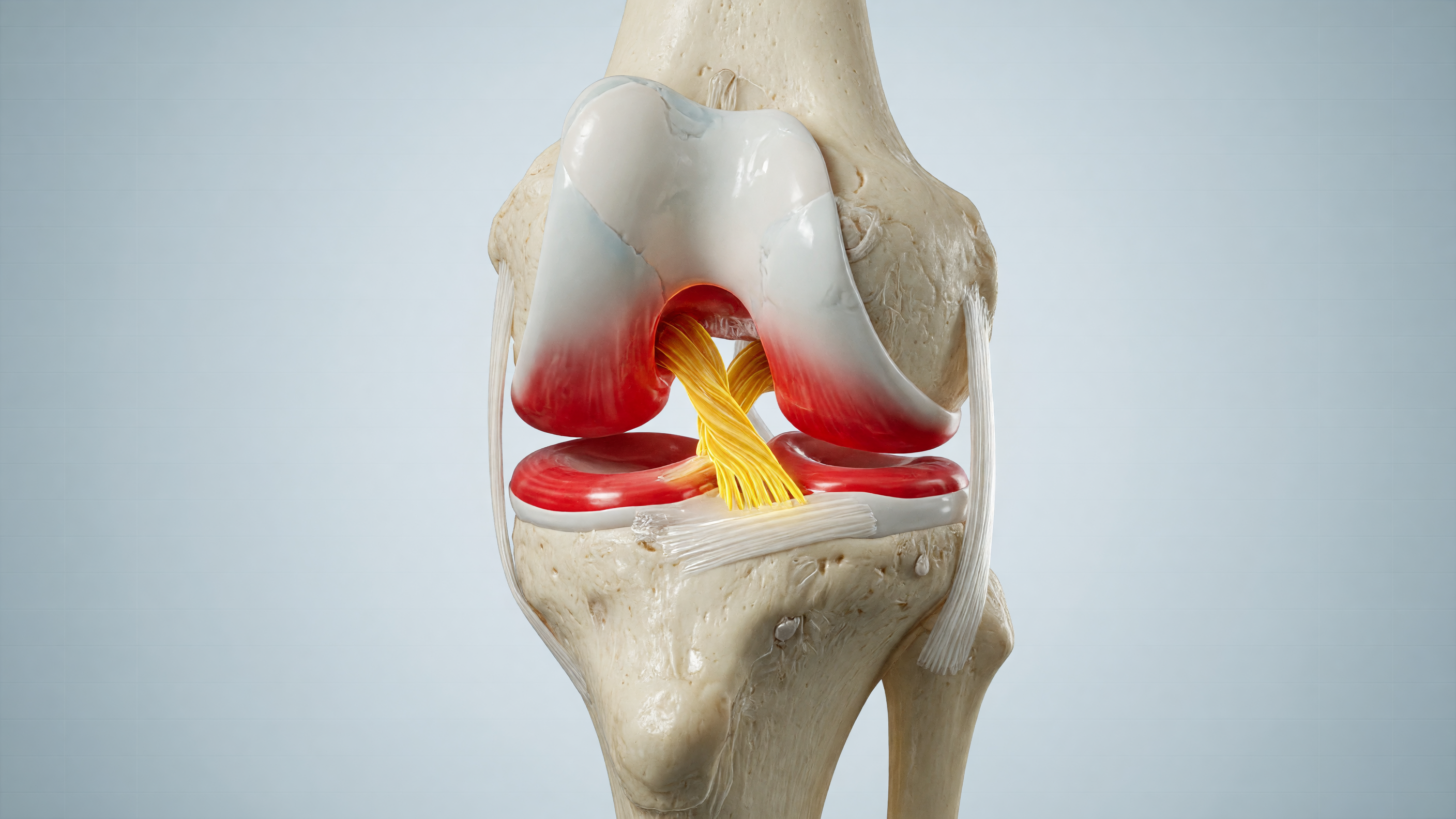
A meniscus tear vs ACL tear differ mainly in what gets injured: a meniscus tear damages the cartilage cushion in your knee, while an ACL tear ruptures a stabilizing ligament. Both cause knee pain and swelling, but the ACL usually gives sudden instability, whereas a meniscus tear brings locking or clicking. This article explains their causes, symptoms, diagnosis, and treatment options. You will learn how doctors tell them apart and when surgery is needed. Read on to understand each injury clearly and know when to seek expert orthopedic care.
What Is a Meniscus Tear?
The meniscus is a C-shaped piece of cartilage that cushions your knee. It sits between the thigh bone and shin bone, absorbing shock.
A tear happens when this cartilage is damaged, often by twisting. You may notice:
- Pain along the joint line
- Swelling that develops slowly
- Clicking or catching sensation
- Knee locking during movement
- Difficulty fully bending the knee
Explore expert meniscus tear treatment at Lux Hospitals for lasting relief.
What Is an ACL Tear?
The ACL, or anterior cruciate ligament, is a strong band deep inside the knee. It keeps the knee stable during pivoting and cutting.
An ACL tear is a stretch or rupture of this ligament. Common signs include:
- A loud pop at injury
- Rapid, severe swelling
- Feeling the knee give way
- Sharp pain during activity
- Inability to continue sport
Learn about advanced ACL tear treatment options at Lux Hospitals today.
Key Differences at a Glance
Both injuries affect the knee, but they involve different tissues. The meniscus is cartilage, while the ACL is a ligament.
Here are the main distinctions between them:
- Meniscus — cartilage cushion, causes locking
- ACL — ligament, causes instability
- Meniscus swelling builds gradually
- ACL swelling appears within hours
- Meniscus pain follows the joint line
- ACL injury often produces a pop
Different Causes of Each Injury
The way each injury occurs helps explain their differences. Meniscus tears often result from twisting or aging cartilage.
ACL tears usually come from sudden, forceful movements. Typical causes include:
- Sudden pivoting or direction changes
- Landing awkwardly from a jump
- Direct blow to the knee
- Deep squatting or kneeling
- Age-related cartilage wear
Read about the common causes of ACL tears and how to prevent them.
How Symptoms Compare
Symptoms overlap but have telling differences. Both cause pain and swelling, yet the pattern differs.
An ACL tear feels unstable, while a meniscus tear catches or locks. You may notice these contrasts:
- ACL: knee buckles under weight
- Meniscus: knee locks or catches
- ACL: immediate intense swelling
- Meniscus: slow, mild swelling
- Both: pain worsens with activity
How Doctors Diagnose Them
Diagnosis begins with a physical exam and your injury history. Specific tests stress the ligament or cartilage.
Imaging confirms the exact damage. Doctors commonly use:
- Lachman and pivot-shift tests for ACL
- McMurray test for meniscus
- MRI scans for soft tissue detail
- X-rays to rule out fractures
- Knee arthroscopy for direct viewing
Get an accurate knee injury diagnosis with the specialists at Lux Hospitals.
Can They Happen Together?
Yes, both injuries often occur at the same time. A violent twist can tear the ACL and meniscus together.
This combined injury is common in sports. Warning features include:
- Severe pain and rapid swelling
- Both locking and instability
- Major difficulty walking
- History of a twisting fall
- Sports involving pivoting
Treatment Options at Lux Hospitals
Treatment depends on tear size, location, and your activity level. Mild tears may heal with rest and therapy.
Severe or unstable tears often need surgery. Options at our center include:
- Physiotherapy and bracing for mild cases
- Arthroscopic meniscus surgery
- ACL reconstruction with grafts
- Meniscus root repair when possible
- Knee ligament and meniscus injury care
Consult our orthopedic team about knee ligament and meniscus injuries treatment.
Recovery and Rehabilitation
Recovery time varies by injury and treatment type. Meniscus repairs and ACL reconstruction need structured rehab.
Guided physiotherapy restores strength and stability. A typical recovery includes:
- Early swelling and pain control
- Gradual range-of-motion exercises
- Progressive strengthening program
- Balance and stability training
- Return to sport under guidance
Why Choose Lux Hospitals?
Our orthopedic specialists diagnose and treat knee injuries with precision. We combine advanced imaging and minimally invasive techniques.
Patients benefit from personalized recovery plans. Choose us for:
- Experienced knee and sports surgeons
- Modern arthroscopic technology
- Tailored rehabilitation programs
- Comprehensive pre- and post-op care
- Proven outcomes for knee injuries
Book your consultation with Lux Hospitals to protect your knee health today.
Conclusion
Understanding the meniscus tear vs ACL tear difference helps you respond to knee injuries wisely. A meniscus tear damages cartilage and causes locking, while an ACL tear ruptures a ligament and creates instability. Both share pain and swelling, but their causes, symptoms, and treatments differ in important ways.
Accurate diagnosis is key, since these injuries can occur together. Early evaluation prevents further damage and speeds recovery. If you experience knee pain, swelling, or instability after an injury, seek expert care promptly. The orthopedic team at Lux Hospitals offers advanced diagnosis, minimally invasive surgery, and structured rehabilitation to restore your mobility and confidence.