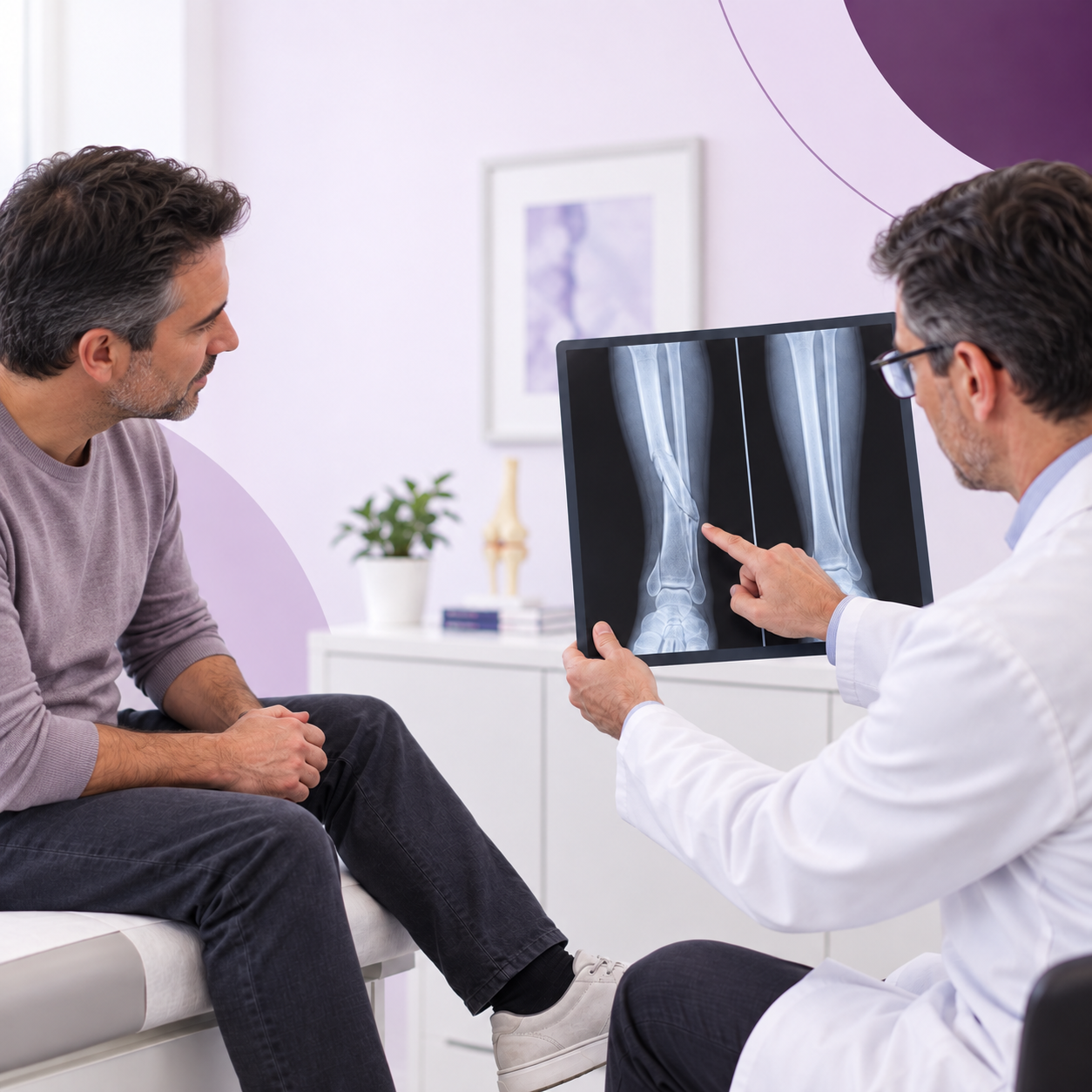
Yes, a malunited fracture can usually be corrected, most often through a surgical procedure called corrective osteotomy that realigns the bone. Left untreated, a malunion may cause deformity, pain, and reduced function. This article explains what a malunited fracture is, why it happens, and how malunited fracture correction works. We cover the warning signs, diagnosis, and modern surgical and non-surgical options available. You will also learn about recovery and when to see an orthopedic specialist. Read on to understand your treatment choices and how expert care restores alignment, movement, and confidence.
What Is a Malunited Fracture?
A malunited fracture, or malunion, is a broken bone that has healed in an abnormal position. The bone joins together but with poor alignment, angulation, rotation, or shortening.
This differs from a non-union, where the bone fails to heal at all. Malunion still forms solid bone, just in the wrong shape.
Malunion can affect any bone. Common areas include:
- Wrist and forearm bones
- Collarbone (clavicle)
- Ankle and lower leg
- Thigh bone (femur)
- Hand and finger bones
Concerned about a poorly healed break? Get expert bone fracture treatment at Lux Hospitals.
Why Do Fractures Heal in the Wrong Position?
Malunion usually happens when a fracture is not properly aligned during healing. Sometimes the injury is severe, or treatment was delayed or inadequate.
Several factors raise the risk of malunion:
- Poor initial fracture reduction
- Cast slipping or loosening early
- Ignoring or delaying medical care
- Complex or shattered fractures
- Weight-bearing before full healing
- Underlying osteoporosis or bone disease
Don't wait for a break to heal crooked—see the specialists at Lux Hospitals early.
Signs You May Have a Malunion
A malunion often becomes obvious weeks or months after the original injury heals. The limb may look or feel different than before.
Watch for these warning signs:
- Visible bend, twist, or deformity
- Persistent pain at the old fracture site
- Shortened or uneven limb length
- Reduced range of motion
- Difficulty with daily activities
- Nearby joint stiffness or arthritis
Notice a lasting deformity? Book an evaluation with the orthopedic team at Lux Hospitals.
Can a Malunited Fracture Be Corrected?
Yes. In most cases a malunited fracture can be corrected, restoring alignment and function. The main approach is a corrective osteotomy, where the surgeon cuts and realigns the healed bone.
Correction depends on the location, severity, and how the deformity affects you.
Treatment goals include:
- Restore normal bone alignment
- Relieve chronic pain
- Improve limb function and length
- Prevent joint arthritis
- Regain confidence in movement
How Malunion Is Diagnosed
Diagnosis begins with a physical exam and a review of your original injury. Your surgeon assesses deformity, movement, and pain.
Imaging confirms the extent and pattern of malunion:
- X-rays to measure angulation
- CT scans for complex 3D deformity
- Comparison views of the opposite limb
- Assessment of nearby joint damage
- Bone density testing when needed
Get an accurate diagnosis with advanced fracture treatment at Lux Hospitals.
Non-Surgical Management Options
Not every malunion needs surgery. Mild deformities that cause little pain or functional loss may be managed conservatively.
Non-surgical care focuses on comfort and function rather than realigning bone.
Options may include:
- Physiotherapy to improve strength
- Activity and lifestyle modifications
- Pain-relieving medications
- Orthotics, braces, or shoe lifts
- Regular monitoring for changes
Surgical Correction Techniques
When deformity is significant, surgery offers reliable malunited fracture correction. The surgeon realigns the bone and secures it while it heals.
Common procedures include corrective osteotomy combined with fixation. Techniques your surgeon may recommend:
- Corrective osteotomy to realign bone
- Open reduction internal fixation with plates
- Intramedullary nailing for long bones
- External or Ilizarov ring fixator
- Bone grafting to fill gaps
- Joint replacement if arthritis is severe
Explore modern surgical solutions like ORIF and osteotomy at Lux Hospitals.
Recovery After Correction Surgery
Recovery varies with the bone corrected and technique used. Healing the newly cut bone typically takes several weeks to months.
Rehabilitation is key to regaining full function.
What recovery usually involves:
- Protected weight-bearing initially
- Guided physiotherapy program
- Regular X-rays to track healing
- Gradual return to activity
- Follow-up to remove hardware if needed
Risks of Leaving a Malunion Untreated
An untreated malunion rarely improves on its own. Over time, poor alignment stresses nearby joints and tissues.
Delaying care may lead to:
- Progressive joint arthritis
- Chronic pain and stiffness
- Worsening visible deformity
- Muscle weakness and imbalance
- Long-term loss of mobility
Protect your joints—address a malunion early with the experts at Lux Hospitals.
Why Choose Lux Hospitals?
Lux Hospitals offers experienced orthopedic surgeons and advanced imaging for complex deformity correction. Care is tailored to your bone, lifestyle, and goals.
Our team also treats related conditions like knee osteoarthritis treatment and joint problems that malunion can cause.
What sets our care apart:
- Skilled deformity-correction specialists
- Advanced surgical and imaging technology
- Personalized rehabilitation plans
- Comprehensive joint and fracture care
- Compassionate, patient-focused support
Regain proper alignment and movement—consult the orthopedic experts at Lux Hospitals today.
Conclusion
A malunited fracture can almost always be corrected, especially when treated by an experienced orthopedic surgeon. Modern techniques like corrective osteotomy, plating, nailing, and ring fixators restore alignment, relieve pain, and improve function. The right approach depends on the affected bone, the severity of the deformity, and your overall health.
The key is not to ignore a poorly healed break, since untreated malunion can lead to arthritis and lasting disability. Early evaluation gives you the best chance of a full recovery. If you notice deformity, pain, or reduced movement after a fracture, seek expert care. The team at Lux Hospitals can assess your condition and design a personalized correction plan.