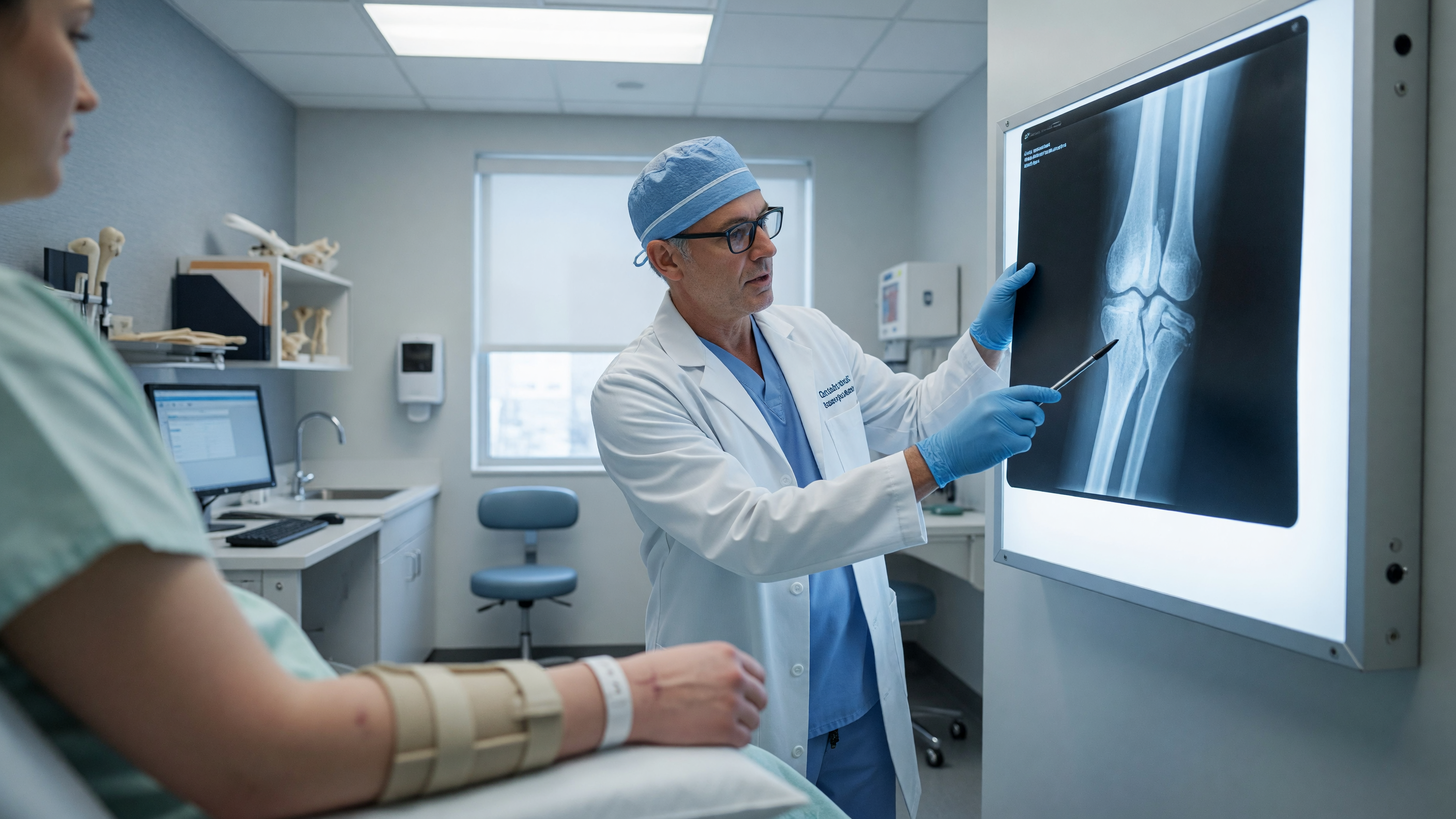
A malunion fracture happens when a broken bone heals in the wrong position, leaving it crooked, twisted, or shortened. Unlike a nonunion, the bone does heal—but not properly, causing deformity, pain, and reduced function. This misalignment can affect nearby joints and daily movement. In this article, we explain what a malunion fracture is, why it occurs, the warning signs to watch for, and the surgical and non-surgical treatments available. You will also learn how doctors diagnose malunions and how to protect your recovery so a fracture heals straight and strong.
What Is a Malunion Fracture?
A malunion fracture is a broken bone that has healed in an abnormal position. The bone knits back together, but with a bend, twist, rotation, or shortening.
This differs from normal healing, where fragments line up straight. A malunion leaves lasting deformity that can disrupt movement.
Common features include:
- Bone healed at a wrong angle
- Visible bend or twist
- Limb shortening or rotation
- Loss of normal alignment
- Persistent pain and stiffness
Concerned about a poorly healed fracture? Book an evaluation at Lux Hospitals today.
Malunion vs Nonunion: Key Differences
People often confuse malunion with nonunion, but they are different outcomes. Both are complications of fracture healing that need specialist care.
Understanding the distinction helps guide treatment:
- Malunion — bone heals in wrong position
- Nonunion — bone fails to heal at all
- Malunion causes deformity and dysfunction
- Nonunion causes instability and pain
- Both may need corrective surgery
Why Does a Bone Heal Incorrectly?
A malunion develops when broken fragments are not held in proper alignment while healing. Several factors increase this risk.
Common causes include:
- Poor initial fracture alignment
- Inadequate casting or immobilization
- Removing a cast too early
- Severe or complex fractures
- Untreated or ignored fractures
- Weight-bearing before healing
Proper fracture care prevents deformity—trust the specialists at Lux Hospitals.
Signs and Symptoms of a Malunion
Symptoms depend on which bone is affected and the degree of misalignment. Some malunions cause obvious deformity, while others show subtle problems.
You may notice:
- Visible bend or crooked limb
- Uneven or shortened limb length
- Chronic pain around the site
- Reduced range of motion
- Difficulty walking or gripping
- Nearby joint stiffness
Common Sites for Malunion Fractures
Malunions can affect nearly any bone, but some locations are more prone due to complex anatomy or high stress.
Frequently affected sites include:
- Wrist and forearm bones
- Collarbone (clavicle)
- Ankle and foot bones
- Long bones of the leg
- Hip and thigh (femur)
- Fingers and hand bones
If a healed bone looks or feels wrong, get expert bone fracture treatment at Lux Hospitals.
Complications of an Untreated Malunion
Ignoring a malunion can lead to progressive problems beyond the original injury. Misalignment places abnormal stress on joints and muscles.
Possible complications include:
- Early joint arthritis
- Chronic pain and disability
- Muscle weakness and imbalance
- Nerve or blood vessel compression
- Permanent loss of function
- Increased risk of re-injury
How a Malunion Is Diagnosed
Diagnosis combines a physical exam with imaging to measure the extent of deformity. Your surgeon assesses alignment, function, and joint impact.
Common diagnostic tools include:
- Detailed physical examination
- X-rays to confirm angulation
- CT scans for complex cases
- Limb length measurements
- Range-of-motion assessment
Get an accurate diagnosis from experienced orthopedic surgeons at Lux Hospitals.
Treatment Options at Lux Hospitals
Treatment depends on the deformity's severity, location, and impact on function. Mild cases may be managed conservatively, while others need surgery.
Options our specialists may recommend:
- Corrective osteotomy to realign bone
- ORIF with plates and screws
- Intramedullary nailing for long bones
- Ilizarov ring fixator for gradual correction
- Physical therapy and bracing
- Joint replacement if arthritis develops
Explore advanced fracture treatment tailored to you at Lux Hospitals.
How to Prevent a Malunion Fracture
Most malunions are preventable with prompt, proper fracture care. Following your treatment plan is essential.
Key prevention steps include:
- Seek immediate care after injury
- Ensure correct fracture alignment
- Keep casts and splints intact
- Avoid early weight-bearing
- Attend all follow-up X-rays
- Report new pain or deformity
Recovery and Rehabilitation Tips
Recovery after malunion correction takes time and commitment. Rehabilitation restores strength, mobility, and confidence.
Helpful recovery practices include:
- Follow physical therapy plans
- Eat calcium and protein-rich foods
- Avoid smoking and excess alcohol
- Gradually resume weight-bearing
- Attend scheduled follow-ups
- Manage bone health long term
Start your guided recovery with the rehabilitation team at Lux Hospitals.
Why Choose Lux Hospitals?
Lux Hospitals offers comprehensive care for complex and poorly healed fractures. Our team blends advanced surgery with personalized rehabilitation.
What sets us apart:
- Experienced orthopedic surgeons
- Advanced imaging and diagnostics
- Modern corrective surgical techniques
- Dedicated rehabilitation support
- Patient-centered treatment plans
Don't let a bone heal wrong—consult the experts at Lux Hospitals today.
Conclusion
A malunion fracture may seem like a healed injury, but improper alignment can cause lasting pain, deformity, and joint damage. Recognizing the warning signs early and seeking specialist care makes a real difference in your recovery.
With accurate diagnosis and modern corrective techniques, most malunions can be treated successfully, restoring both function and quality of life. Whether you need corrective surgery, realignment, or focused rehabilitation, timely intervention protects your long-term mobility. If you suspect a fracture has healed incorrectly, don't wait for complications to worsen. The orthopedic team at Lux Hospitals is ready to evaluate your condition and guide you toward stronger, straighter healing and a confident return to daily activities.