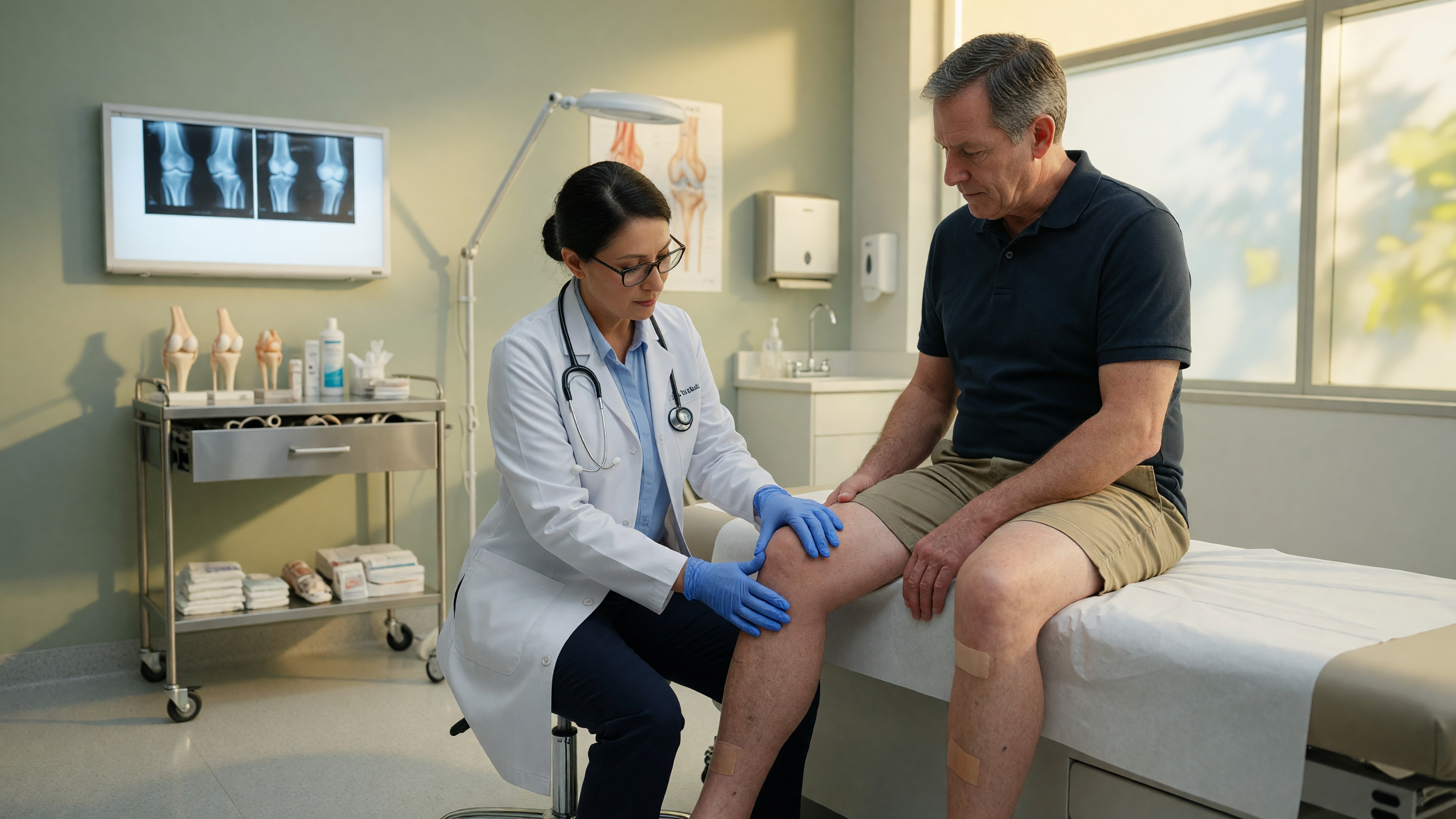
Knee pain often returns after treatment because the underlying cause was not fully corrected, rehabilitation was incomplete, or a new problem developed. Chronic knee pain can persist when arthritis progresses, muscles stay weak, or activity resumes too soon. Understanding why the ache comes back helps you choose lasting relief instead of temporary fixes. This article explains the common reasons chronic knee pain recurs, warning signs to watch for, and the diagnostic and treatment options available. You will also learn practical prevention tips and when to see an orthopedic specialist at Lux Hospitals.
What Is Chronic Knee Pain?
Chronic knee pain is discomfort that lasts longer than three months or keeps returning after treatment. It differs from a short-term ache linked to a single injury.
Recurring pain usually signals an unresolved problem inside the joint or surrounding tissues.
Common features include:
- Pain lasting over three months
- Stiffness after rest or activity
- Swelling that comes and goes
- Grinding or clicking sensations
- Reduced range of motion
Struggling with lasting knee pain? Book an expert evaluation at Lux Hospitals today.
1. Incomplete Rehabilitation
Stopping physiotherapy too early is one of the biggest reasons knee pain returns. Muscles around the joint stay weak and fail to protect it.
Without full recovery, everyday movements re-strain healing tissue.
Signs rehab was incomplete:
- Quitting exercises once pain eased
- Weak thigh and hip muscles
- Poor balance and stability
- Limping or altered walking pattern
- Skipped follow-up appointments
2. Progressing Arthritis
Treatment can ease symptoms, but it cannot always stop underlying disease. In many patients, knee osteoarthritis continues to wear down cartilage over time.
As the joint degenerates, pain gradually returns and may worsen.
Arthritis-related pain often brings:
- Morning stiffness lasting minutes
- Deep aching after walking
- Swelling and warmth
- Bone-on-bone grinding
- Reduced walking distance
Explore proven arthritis solutions with the specialists at Lux Hospitals.
3. Missed or Wrong Diagnosis
Sometimes pain returns because the true cause was never identified. Overlapping conditions can mimic one another.
A torn structure or hip problem may be misread as simple strain.
Commonly missed sources include:
- Undetected meniscus tear
- Hidden ligament injury
- Referred hip osteoarthritis pain
- Cartilage damage inside the joint
- Kneecap tracking problems
4. Returning to Activity Too Soon
Feeling better is not the same as being fully healed. Resuming sport or heavy work early can reopen an injury.
Tissue needs adequate time to regain strength.
Risky early habits include:
- Running before clearance
- Lifting heavy loads too soon
- Ignoring pain warning signals
- Skipping graded return plans
- Overtraining the recovering knee
5. Weight and Alignment Issues
Extra body weight multiplies the load on your knees with every step. Poor limb alignment adds uneven stress.
These forces can undo the benefits of treatment.
Factors that strain the joint:
- Excess body weight
- Bow-legged or knock-knee alignment
- Flat feet or poor footwear
- Weak core and hip muscles
- Prolonged standing or squatting
Get a personalised joint-protection plan at Lux Hospitals.
Other Causes of Recurring Knee Pain
Several less obvious problems can also bring pain back. Identifying them requires a careful specialist review.
These conditions often need targeted treatment rather than general rest.
Warning Signs You Should Not Ignore
Some symptoms suggest a serious problem needing prompt attention. Do not simply wait for these to pass.
Early review prevents further joint damage.
Seek care if you notice:
- Locking or giving-way knee
- Rapid, painful swelling
- Inability to bear weight
- Fever with a hot joint
- Visible deformity after injury
Don't ignore these warning signs—consult the orthopedic team at Lux Hospitals promptly.
How Doctors Diagnose the Cause
Finding why pain returned starts with a detailed history and physical exam. Imaging then confirms the source.
Accurate diagnosis guides the right treatment path.
Common evaluations include:
- Physical stability and motion tests
- X-rays for arthritis and alignment
- MRI for soft-tissue damage
- Assessment for intra-articular joint pathologies
- Review of previous treatment records
Treatment Options at Lux Hospitals
Treatment depends on the exact cause and severity of your chronic knee pain. Many patients improve without surgery.
Options range from conservative care to advanced surgery.
Common approaches include:
- Structured physiotherapy and strengthening
- Injections and medication for arthritis
- Knee arthroscopy for internal repairs
- Cartilage repair or meniscus surgery
- Knee replacement for advanced arthritis
Discover lasting relief with tailored knee treatments at Lux Hospitals.
How to Prevent Knee Pain From Returning?
Prevention protects the results of your treatment. Small daily habits make a big difference.
Consistency matters more than intensity.
Helpful prevention steps:
- Complete full rehabilitation programs
- Maintain a healthy weight
- Strengthen thigh and hip muscles
- Use proper footwear and technique
- Return to sport gradually
Why Choose Lux Hospitals?
Lux Hospitals combines experienced orthopedic specialists with advanced diagnostic and surgical technology. Care is tailored to your specific cause of pain.
We focus on lasting relief, not temporary fixes.
What sets our care apart:
- Expert orthopedic and sports specialists
- Accurate advanced imaging
- Personalised rehabilitation plans
- Minimally invasive surgical options
- Long-term follow-up support
Take the first step toward pain-free movement—book your consultation at Lux Hospitals.
Conclusion
Chronic knee pain rarely returns without a reason. Incomplete rehabilitation, progressing arthritis, a missed diagnosis, early return to activity, or extra joint load are the usual culprits. The good news is that most causes are treatable once correctly identified.
If your knee pain keeps coming back, do not settle for repeated temporary relief. A thorough evaluation can reveal the true source and guide a plan built for lasting results. From physiotherapy to advanced surgery, the right approach depends on your unique condition. Consult the experienced orthopedic specialists at Lux Hospitals to understand your pain and reclaim comfortable, confident movement for the long term.