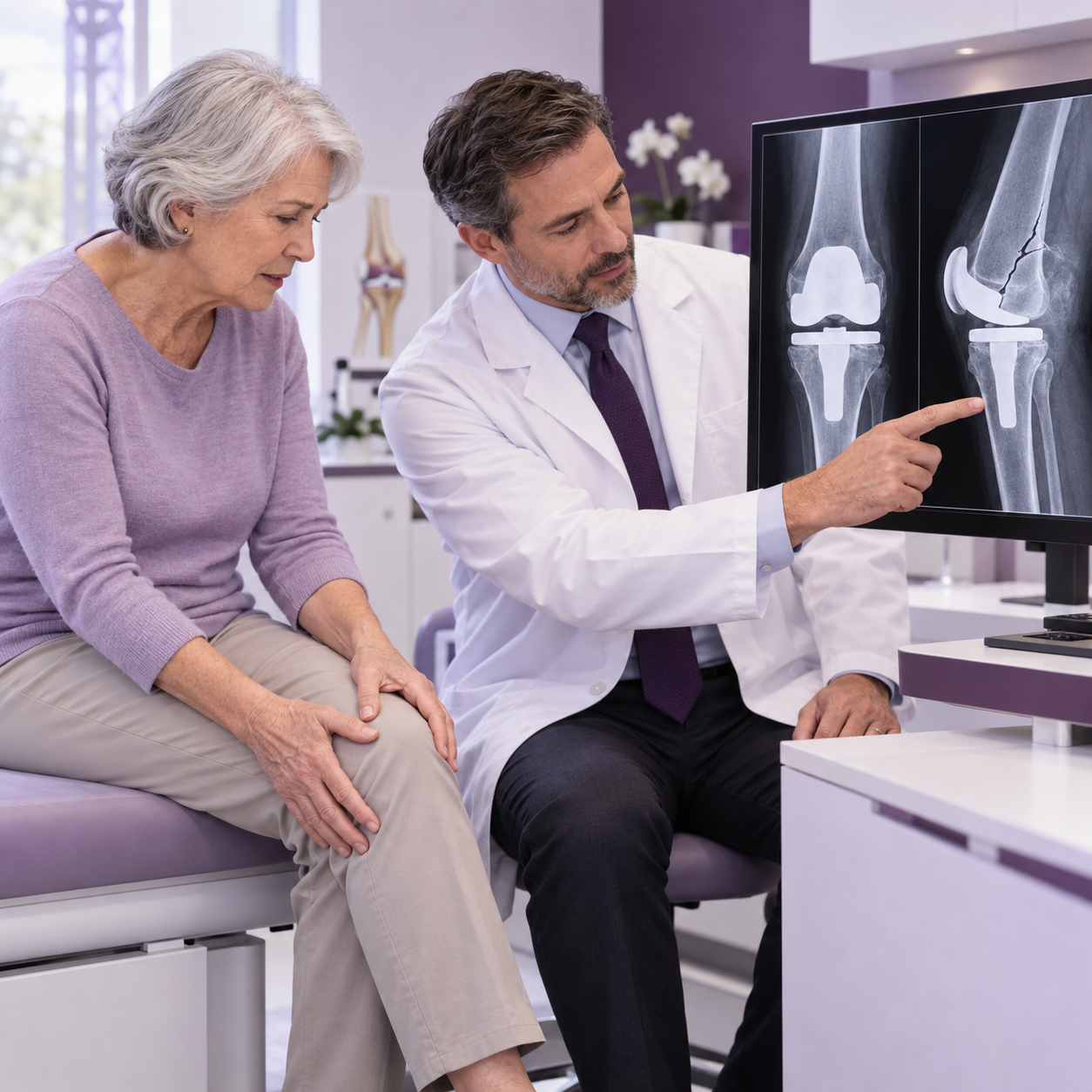
A periprosthetic fracture is a broken bone that occurs around an existing joint implant, such as a hip or knee replacement. The main symptoms are sudden pain, swelling, bruising, an inability to bear weight, and visible deformity near the implant. These fractures often follow a fall but can also signal a loosening implant. This article explains the warning signs, common causes, complications, and how doctors diagnose the problem. You will also learn about treatment options and why early specialist care at Lux Hospitals protects your mobility and recovery.
What Is a Periprosthetic Fracture?
A periprosthetic fracture is a bone break that happens around or near an artificial joint implant. It most often affects patients who have had a hip or knee replacement.
These fractures can occur during surgery or years later, usually after a fall. They need prompt evaluation because the implant is involved.
Key facts to understand:
- Break occurs around a joint implant
- Common after hip or knee replacement
- May happen during or after surgery
- Often triggered by a simple fall
- Requires urgent orthopedic assessment
If you have an implant and injure the joint, get evaluated at Lux Hospitals immediately.
1. Sudden Severe Pain Near the Implant
Sharp, intense pain around the replaced joint is the most common warning sign. It usually starts right after a fall or twist.
The pain often worsens with any movement and may not ease with rest. Ignoring it can delay important treatment.
You may notice pain that is:
- Sudden and severe in onset
- Focused around the implant site
- Worse with movement or standing
- Persistent even while resting
- Accompanied by tenderness to touch
Never dismiss sudden joint pain—consult the orthopedic experts at Lux Hospitals.
2. Swelling and Bruising
Rapid swelling and bruising near the implant often follow a periprosthetic fracture. This happens as bleeding and inflammation build up around the broken bone.
The area may feel warm, tight, and painful. Discoloration can spread over hours or days.
Signs to watch for include:
- Swelling around the joint
- Bruising or skin discoloration
- Warmth over the injured area
- Tightness or fullness sensation
- Reduced range of motion
3. Inability to Bear Weight
Many patients suddenly cannot stand or walk on the affected leg. This is a strong signal that the bone or implant is compromised.
Attempting to bear weight usually causes severe pain or a giving-way feeling. This limits mobility dramatically.
Watch for these functional changes:
- Cannot put weight on the leg
- Leg feels unstable or weak
- Sudden loss of walking ability
- Severe pain when standing
- Reliance on support to move
Loss of weight-bearing needs urgent care—reach the specialists at Lux Hospitals without delay.
4. Visible Deformity or Shortening
A displaced periprosthetic fracture can visibly change the shape or length of the limb. The leg may look bent, twisted, or shorter than the other side.
This usually indicates a serious break needing surgical repair. It should never be ignored.
Signs of deformity include:
- Limb appears bent or twisted
- Noticeable leg length difference
- Abnormal joint angle
- Foot rotated outward or inward
- Obvious change from normal shape
5. Instability, Grinding, or Clicking
A loose implant or fracture can create sensations of instability. You may feel the joint shift, grind, or click during movement.
These sounds and feelings suggest the implant is no longer secure. They often accompany chronic pain from implant loosening.
Common sensations reported are:
- Grinding or crunching noise
- Clicking during movement
- Joint feels loose or wobbly
- Sensation of the leg giving way
- Recurring pain around the implant
Persistent instability may mean implant loosening—book an evaluation at Lux Hospitals today.
Common Causes and Risk Factors
Periprosthetic fractures usually result from a combination of weakened bone and mechanical stress. Falls are the leading trigger.
Certain conditions raise your risk significantly, especially those affecting bone strength. Understanding these helps prevention.
Main causes and risk factors include:
- Falls or direct trauma
- Osteoporosis and weak bones
- Implant loosening over time
- Advanced age and frailty
- Previous revision joint surgery
- Poor bone quality around implant
Possible Complications If Untreated
Delaying treatment for a periprosthetic fracture can lead to serious problems. The implant may fail completely without prompt repair.
Bone healing becomes harder over time, and mobility can be permanently reduced. Early care prevents these outcomes.
Untreated fractures may cause:
- Permanent loss of mobility
- Implant loosening or failure
- Non-union or poor bone healing
- Chronic pain and disability
- Higher risk of infection
- Need for complex revision surgery
Don't risk lasting damage—early bone fracture treatment at Lux Hospitals protects your recovery.
How Periprosthetic Fractures Are Diagnosed
Diagnosis begins with a physical exam and a review of your surgical history. Your surgeon checks the implant's stability and the fracture pattern.
Imaging confirms the location and severity of the break. This guides the best treatment plan.
Common diagnostic steps include:
- Detailed physical examination
- X-rays of the affected joint
- CT scans for complex fractures
- Assessment of implant stability
- Blood tests to rule out infection
- Comparison with prior imaging
Treatment Options at Lux Hospitals
Treatment depends on fracture location, implant stability, and bone quality. Stable fractures may heal with conservative care, while unstable ones need surgery.
Our surgeons tailor each plan to restore function safely. Options range from fixation to implant revision.
Treatment approaches may include:
- Closed reduction and casting for stable breaks
- Open reduction internal fixation (ORIF)
- Revision knee replacement when implant loosens
- Revision hip replacement for hip fractures
- Bone grafting to support healing
- Guided physiotherapy and rehabilitation
Get a personalized treatment plan from the orthopedic team at Lux Hospitals.
Why Choose Lux Hospitals?
Lux Hospitals combines experienced orthopedic surgeons with advanced imaging and surgical technology. We specialize in complex fractures around joint implants.
Our team supports you from diagnosis through full rehabilitation. Personalized care improves recovery and long-term mobility.
What sets us apart:
- Skilled joint replacement specialists
- Advanced diagnostic imaging
- Expertise in revision surgery
- Comprehensive rehabilitation support
- Patient-centered treatment plans
- Focus on restoring mobility
Trust your recovery to the specialists—schedule your consultation at Lux Hospitals today.
Conclusion
A periprosthetic fracture is a serious injury that demands prompt attention, especially in patients with a hip or knee implant. Recognizing symptoms like sudden pain, swelling, inability to bear weight, deformity, and joint instability can help you seek care quickly. Early diagnosis through examination and imaging protects both the bone and the implant.
With the right treatment—whether fixation, casting, or revision surgery—most patients regain their mobility and quality of life. If you notice any warning signs after a fall or injury near your implant, don't wait. The experienced orthopedic team at Lux Hospitals offers accurate diagnosis, advanced treatment, and dedicated rehabilitation to help you heal and move confidently again.