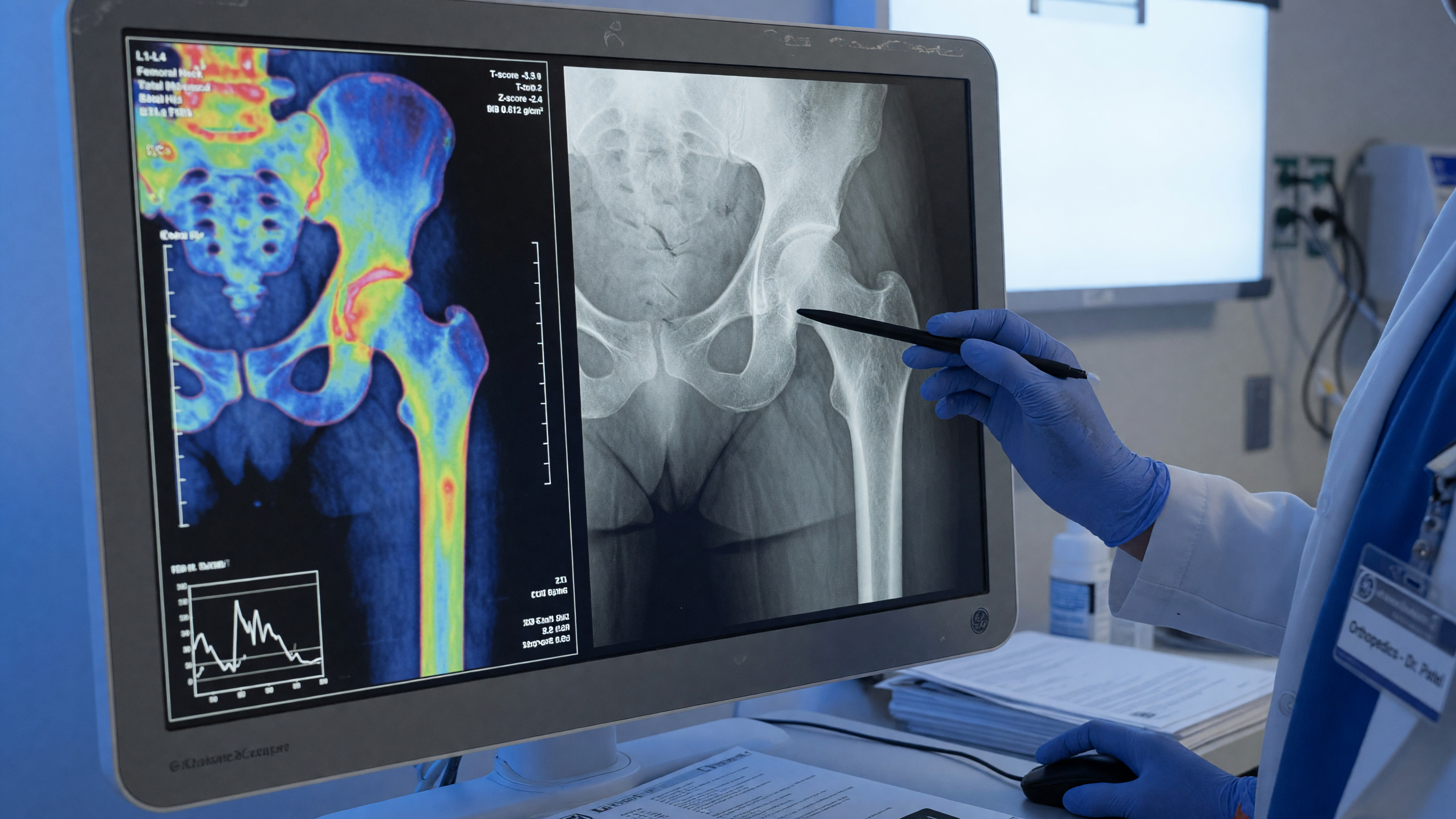
Osteoporosis increases fracture risk by thinning and weakening bones, so they break far more easily—often from a minor fall, bump, or even everyday movements. Weakened bone structure means less resistance to impact, making fragility fractures of the hip, spine, and wrist common. This article explains what osteoporosis is, why it raises fracture risk, common fracture sites, warning signs, risk factors, and how to protect your bones. You'll also learn about diagnosis, prevention tips, and the treatment options available at Lux Hospitals to keep your skeleton strong and mobile.
What Is Osteoporosis?
Osteoporosis is a condition where bones lose density and become porous, fragile, and prone to breaking. Bone is living tissue that constantly renews itself, but with osteoporosis, breakdown outpaces rebuilding.
This silent disease often shows no symptoms until a bone breaks. Key features include:
- Reduced bone mineral density
- Thinner, more porous bone structure
- Often symptomless until a fracture
- More common after age 50
- Affects women more than men
Worried about your bone health? Book a bone assessment at Lux Hospitals today.
How Osteoporosis Increases Fracture Risk
With osteoporosis, the inner honeycomb of bone becomes wider and weaker. This means bones can no longer absorb everyday stresses without cracking.
Even low-impact events can cause a break. Osteoporosis raises fracture risk because:
- Bones become brittle and thin
- Minor falls cause major breaks
- Reduced ability to absorb impact
- Fractures can occur spontaneously
- Healing is slower in weak bone
Common Osteoporotic Fracture Sites
Osteoporotic fractures, also called fragility fractures, tend to happen at predictable locations. These bones carry weight or absorb impact during falls.
The most common sites include:
- Hip—often disabling in older adults
- Spine—leading to height loss
- Wrist—common in falls
- Shoulder and upper arm
- Pelvis and ribs
Warning Signs of Weak Bones
Osteoporosis is often silent, but subtle clues may hint at bone loss before a fracture happens. Recognising them early allows timely intervention.
You may notice:
- Gradual loss of height
- Stooped or hunched posture
- Back pain from spine changes
- Bones breaking too easily
- Weakened grip strength
Notice these signs? Consult the orthopedic specialists at Lux Hospitals for a bone check.
Who Is Most at Risk?
Certain factors make bone loss and fractures more likely. Some you can change; others you cannot.
Common risk factors include:
- Women after menopause
- Age over 50
- Family history of osteoporosis
- Low calcium and vitamin D
- Smoking and heavy alcohol use
- Sedentary lifestyle or steroid use
Complications of Fragility Fractures
Fractures from osteoporosis can seriously affect independence and quality of life, especially in older adults. Hip fractures in particular carry major risks.
Complications may include:
- Loss of mobility and independence
- Chronic pain and disability
- Prolonged bed rest and blood clots
- Repeat fractures after the first
- Reduced overall quality of life
Don't let a fracture limit you—explore bone fracture treatment at Lux Hospitals.
How Osteoporosis Is Diagnosed
Diagnosis usually combines your history, risk assessment, and imaging. The gold-standard test measures bone density painlessly.
Doctors may use:
- DEXA scan (bone mineral density test)
- Height and posture measurements
- Blood tests for calcium and vitamin D
- X-rays to detect existing fractures
- Fracture risk (FRAX) assessment
Prevention Tips to Protect Your Bones
You can strengthen bones and lower fracture risk at any age through lifestyle changes. Prevention is far easier than treating a broken bone.
Protect your bones by:
- Eating calcium-rich foods
- Getting enough vitamin D
- Doing weight-bearing exercise
- Quitting smoking and limiting alcohol
- Preventing falls at home
- Regular bone density screening
Learn more on our World Osteoporosis Day resources and start protecting your bones.
Treatment Options at Lux Hospitals
Treatment focuses on strengthening bones and repairing fractures when they occur. Our orthopedic team tailors care to each patient.
Options may include:
- Medications to slow bone loss
- Calcium and vitamin D supplements
- Closed reduction and casting for simple fractures
- Surgical fixation for complex breaks
- Hip replacement for severe hip fractures
- Physiotherapy and rehabilitation
Explore expert fracture treatment options with our orthopedic team at Lux Hospitals.
Why Choose Lux Hospitals?
Lux Hospitals combines advanced diagnostics with experienced orthopedic surgeons to manage osteoporosis and its fractures. We treat everything from minor breaks to complex joint problems.
Patients choose us for:
- Skilled orthopedic specialists
- Modern bone density testing
- Minimally invasive fracture surgery
- Comprehensive rehabilitation programs
- Personalised bone-health plans
Take charge of your bone health—schedule your consultation at Lux Hospitals today.
Conclusion
Osteoporosis quietly weakens bones and dramatically raises fracture risk, turning minor falls into serious injuries. The good news is that osteoporosis is both preventable and treatable when caught early. A healthy diet, regular weight-bearing exercise, and timely bone density screening go a long way in keeping your skeleton strong.
If you have risk factors or have already had a fragility fracture, don't wait for the next break. Early diagnosis and expert care can protect your mobility and independence for years to come. The orthopedic team at Lux Hospitals offers advanced diagnosis, fracture repair, and personalised bone-health plans to help you stay active and fracture-free.