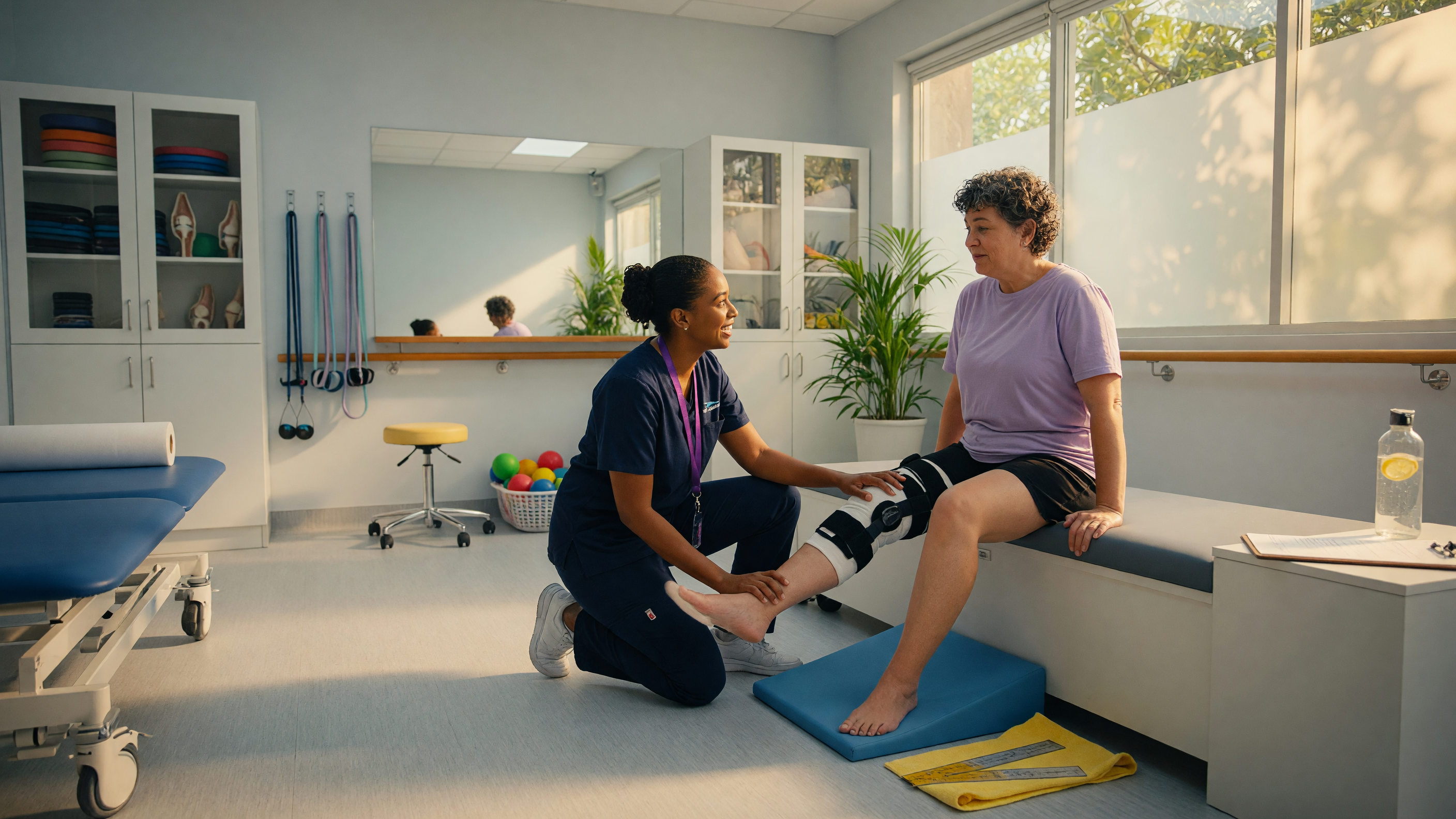
Most people recover from knee replacement surgery within 3 to 6 months, though full recovery and maximum strength can take up to a year. Early mobility begins within a day of surgery, with meaningful improvement over the first 6 to 12 weeks. This article explains the complete knee replacement recovery timeline, week-by-week milestones, physical therapy expectations, and factors that speed or slow healing. You'll also learn practical recovery tips and warning signs to watch for. Understanding what to expect helps you prepare, stay motivated, and return to daily life confidently and safely.
What Is Knee Replacement Recovery?
Knee replacement recovery is the healing and rehabilitation process after surgeons replace a damaged knee joint with an artificial implant. It restores movement, reduces pain, and rebuilds strength.
Recovery combines wound healing, physical therapy, and gradual return to activity. Progress happens in stages rather than all at once.
Recovery typically involves:
- Wound and tissue healing
- Regaining knee movement and flexibility
- Rebuilding muscle strength
- Learning to walk without support
- Returning to daily activities
Explore your options with the knee replacement specialists at Lux Hospitals.
The Overall Recovery Timeline
Most patients follow a predictable knee replacement recovery timeline, though individual healing varies. Early basic function returns quickly, while full recovery takes longer.
Here's a general overview of what to expect:
- First week — hospital stay and early walking
- Weeks 2–6 — reduced pain, more mobility
- Weeks 6–12 — near-normal daily activities
- 3–6 months — most function restored
- Up to 12 months — full strength returns
Read more about total knee replacement to understand the full procedure.
1. The First Week After Surgery
The first week focuses on managing pain, preventing complications, and starting gentle movement. Many patients stand and walk with support within 24 hours.
Most people stay in hospital for two to four days. Physical therapy begins almost immediately.
During the first week you can expect:
- Pain and swelling around the knee
- Walking short distances with a walker
- Simple bending and straightening exercises
- Blood clot prevention measures
- Wound care instructions from staff
Contact Lux Hospitals for personalised post-surgery rehabilitation guidance.
2. Weeks Two to Six
This stage brings noticeable improvement as swelling reduces and strength returns. Many patients switch from a walker to a cane.
Consistent physical therapy is essential during this period. Most people resume light daily tasks.
Common milestones during weeks two to six include:
- Reduced dependence on walking aids
- Improved knee bending range
- Driving again (with doctor approval)
- Return to desk-based work
- Lower need for pain medication
3. Weeks Six to Twelve
By this stage, most patients feel significantly stronger and more independent. Everyday movements become easier and less painful.
Exercises become more challenging to rebuild endurance. Many people who had knee osteoarthritis treatment notice major quality-of-life gains here.
You can typically expect to:
- Walk longer distances comfortably
- Climb stairs with more confidence
- Resume most household activities
- Enjoy improved sleep quality
- Increase strength and balance training
Ask the Lux Hospitals team which activities are safe at each recovery stage.
4. Three to Twelve Months
Between three and twelve months, recovery continues gradually toward full strength and stability. Most swelling resolves, and the knee feels natural.
High-impact activities may still need caution. Full benefit often appears around the one-year mark.
By this stage most patients can:
- Return to low-impact sports
- Walk and stand for long periods
- Resume active hobbies and travel
- Regain near-normal strength
- Experience minimal or no pain
Factors That Affect Recovery Speed
Recovery time differs from person to person. Several factors can speed up or slow down healing.
Understanding these helps you set realistic expectations and stay proactive.
Key factors affecting recovery include:
- Age and overall fitness level
- Weight and general health
- Commitment to physical therapy
- Presence of diabetes or other conditions
- Type of implant and surgical technique
- Smoking and nutrition habits
Discuss your personal recovery expectations with an orthopedic expert at Lux Hospitals.
The Role of Physical Therapy
Physical therapy is the single most important factor in successful knee replacement recovery. It restores movement, strength, and confidence.
Skipping sessions often leads to stiffness and slower progress. Consistency matters more than intensity.
Physical therapy typically focuses on:
- Restoring full range of motion
- Strengthening thigh and calf muscles
- Improving balance and stability
- Retraining a normal walking pattern
- Gradually increasing endurance
Tips for a Faster, Smoother Recovery
Simple daily habits can meaningfully improve your recovery experience. Small consistent efforts add up over time.
Follow your surgeon's plan closely and stay patient with progress.
Helpful recovery tips include:
- Do prescribed exercises daily
- Manage swelling with ice and elevation
- Take medications as directed
- Eat protein-rich, balanced meals
- Stay hydrated and rest well
- Attend all follow-up appointments
Book a follow-up consultation at Lux Hospitals to stay on track.
Warning Signs to Watch For
While most recoveries go smoothly, certain symptoms need prompt medical attention. Recognising them early prevents complications.
Contact your doctor immediately if problems arise, much like you would after any bone fracture treatment.
Seek medical help if you notice:
- Increasing redness or warmth
- Fever or chills
- Sudden severe pain or swelling
- Calf pain or leg swelling
- Drainage or foul odour from the wound
- Difficulty moving the knee at all
Knee Replacement Care at Lux Hospitals
Lux Hospitals offers comprehensive care from surgery through complete rehabilitation. Experienced surgeons and therapists guide every step of your recovery.
Whether you need a total knee replacement surgery or a partial knee replacement surgery, care is tailored to your needs.
Patients choose Lux Hospitals for:
- Skilled, experienced orthopedic surgeons
- Advanced surgical techniques
- Personalised rehabilitation programmes
- Modern facilities and equipment
- Dedicated follow-up support
Schedule your knee replacement consultation at Lux Hospitals today.
Conclusion
Knee replacement recovery is a gradual, staged journey that typically spans three to six months, with full strength returning within a year. Early mobility begins within days, while physical therapy, healthy habits, and consistent follow-up drive lasting results.
Every patient heals at their own pace, so patience and commitment matter greatly. By understanding the recovery timeline and following your surgeon's guidance, you can return to an active, pain-free life with confidence. If you're considering surgery or need expert rehabilitation support, the orthopedic team at Lux Hospitals is here to help you every step of the way. Reach out to plan your personalised recovery and regain your mobility.