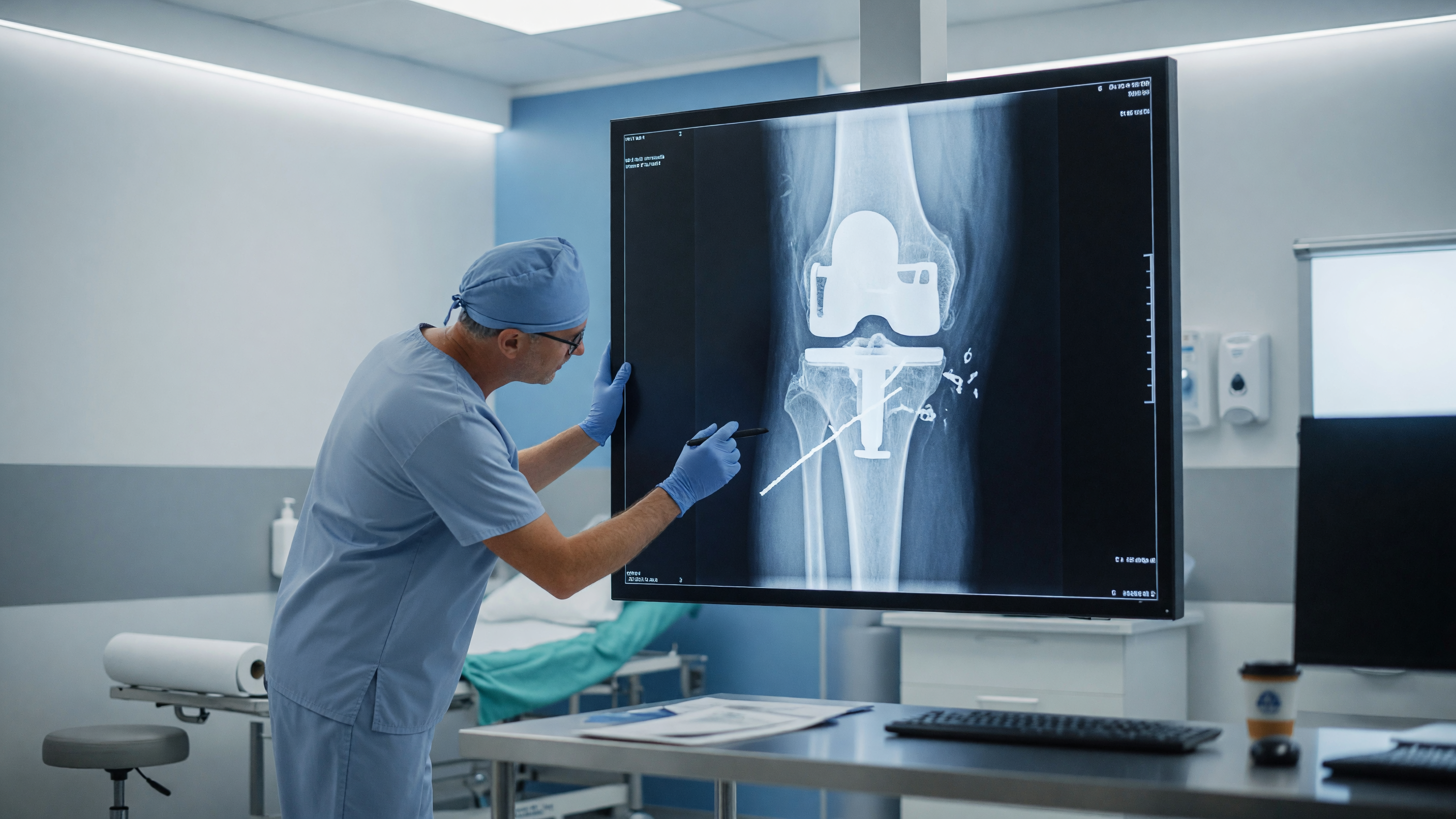
A fracture around a knee replacement, called a periprosthetic fracture, means a bone breaks near or around your artificial knee implant. It usually happens after a fall or from weakened bone, and it needs prompt orthopaedic care. This article explains what these fractures mean, why they happen, and the warning signs you should never ignore. We also cover how doctors diagnose them and the treatment options available. If you have had a knee replacement and worry about a break, read on for clear, practical guidance you can act on.
What Is a Fracture Around a Knee Replacement?
A fracture around a knee replacement, or periprosthetic fracture, is a broken bone next to your artificial knee implant. The break can affect the thigh bone, shin bone, or kneecap.
These fractures are different from ordinary breaks because the implant changes how the bone heals. They often need specialised orthopaedic treatment.
Key facts to understand:
- Break occurs near an existing implant
- Affects femur, tibia, or patella
- Called a periprosthetic fracture
- May involve implant loosening
- Requires expert surgical assessment
If you suspect a break near your implant, get evaluated at Lux Hospitals right away.
Why This Fracture Is Serious
This type of fracture is more complex than a normal broken bone. The presence of metal and cement limits how surgeons can fix it.
Untreated, it can lead to permanent loss of knee function. Prompt care protects your mobility and independence.
Complications may include:
- Loosening of the knee implant
- Poor bone healing or nonunion
- Chronic pain and instability
- Difficulty walking unaided
- Possible need for revision surgery
Don't ignore new knee pain after a fall—consult the experts at Lux Hospitals today.
Common Causes and Risk Factors
Most fractures around a knee replacement happen after a fall, even a minor one. Weak bone makes the injury far more likely.
Certain conditions raise your personal risk. Knowing them helps you stay cautious.
Common causes and risk factors include:
- Falls or direct trauma
- Osteoporosis and weak bones
- Advanced age and frailty
- Loose or worn implant
- Long-term steroid use
- Previous revision surgery
Concerned about bone strength? Ask about a bone-health check at Lux Hospitals.
Signs and Symptoms to Watch For
The symptoms often appear suddenly, usually right after a fall or twist. Pain around the operated knee is the most common warning.
Some people notice their knee feels unstable or looks misshapen. These signs need urgent attention.
You may notice:
- Sudden, severe knee pain
- Swelling and bruising
- Inability to bear weight
- Visible deformity or angulation
- Grinding or clicking sensation
- Knee giving way
Experiencing these signs? Book an urgent orthopaedic evaluation at Lux Hospitals.
Types of Periprosthetic Knee Fractures
Doctors classify these fractures by which bone breaks and where. The location guides the treatment plan.
Understanding the type helps you follow your surgeon's advice.
- Femoral fractures — above the implant
- Tibial fractures — below the implant
- Patellar fractures — around the kneecap
- Fractures with a stable implant
- Fractures with a loose implant
How Doctors Diagnose the Fracture
Diagnosis starts with an exam and a careful history of the fall. Imaging then confirms the break and its pattern.
Your surgeon also checks whether the implant is still firmly fixed. This decision shapes the whole treatment.
Diagnosis usually involves:
- X-rays of the knee and leg
- CT scans for detail
- Assessment of implant stability
- Bone density testing
- Review of original surgery records
Get accurate imaging and expert bone fracture treatment under one roof at Lux Hospitals.
Treatment Options at Lux Hospitals
Treatment depends on the fracture location, bone quality, and whether the implant is loose. Some fractures heal with support; others need surgery.
Our specialists tailor the plan to restore stability and mobility. Advanced fracture treatment options are available for complex cases.
Common approaches include:
- Bracing or casting for stable breaks
- Open reduction and internal fixation
- Plates, screws, or intramedullary nailing
- Revision knee replacement surgery
- Bone grafting for poor healing
Discuss the safest treatment path for your fracture with the surgeons at Lux Hospitals.
Recovery and Rehabilitation
Recovery takes patience and a structured plan. Healing may be slower than a first-time knee replacement.
Physiotherapy is essential to rebuild strength and movement. Your team guides how soon you can bear weight.
Recovery typically includes:
- Gradual, guided weight-bearing
- Regular physiotherapy sessions
- Pain and swelling management
- Follow-up X-rays to track healing
- Assistive devices while healing
How to Prevent These Fractures
You cannot prevent every fall, but you can lower your risk significantly. Strong bones and a safe home make a real difference.
Simple habits protect your knee implant for the long term.
Helpful prevention steps include:
- Treat osteoporosis early
- Ensure enough calcium and vitamin D
- Remove home trip hazards
- Do balance and strength exercises
- Attend regular implant check-ups
- Use good lighting and handrails
Protect your joints for life—schedule a preventive check-up at Lux Hospitals.
Why Choose Lux Hospitals?
Fractures around a knee implant demand experience and advanced tools. Our orthopaedic team handles these complex cases every day.
We combine precise diagnosis, modern surgery, and dedicated rehabilitation. Your recovery is our priority.
What sets us apart:
- Experienced joint replacement surgeons
- Advanced imaging and implants
- Complete revision surgery expertise
- Personalised rehabilitation programmes
- Compassionate, patient-first care
Conclusion
A fracture around a knee replacement is a serious but treatable injury that needs prompt expert care. It usually follows a fall, especially when bones are weakened by osteoporosis. Recognising the warning signs early—sudden pain, swelling, and difficulty walking—can protect your mobility and long-term joint function.
With accurate diagnosis and the right treatment, most people return to comfortable daily activity. Whether you need fixation, bone grafting, or revision surgery, timely action makes the biggest difference. If you have a knee implant and suspect a break, don't wait. The orthopaedic specialists at Lux Hospitals are ready to guide your diagnosis, treatment, and recovery every step of the way.