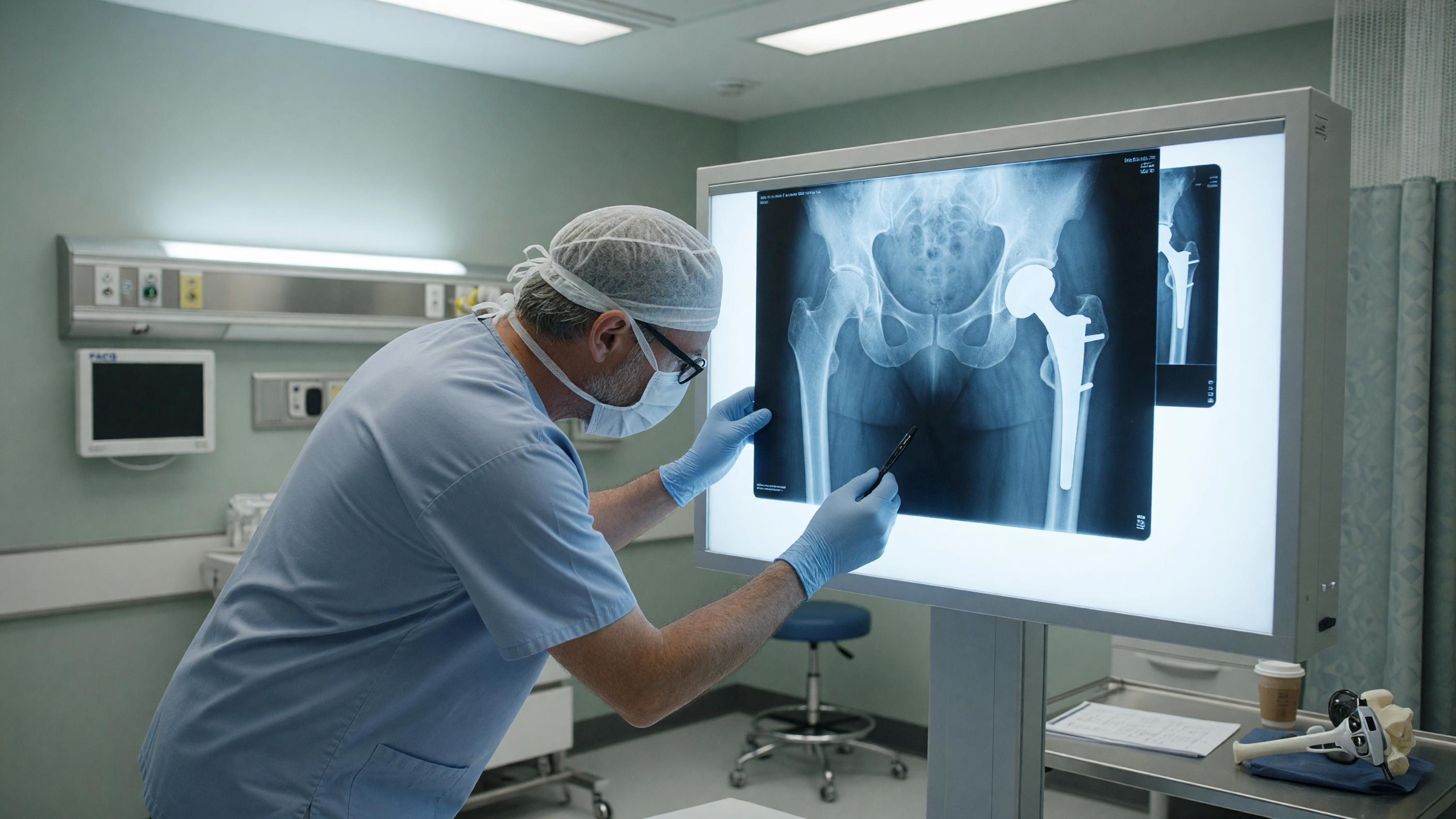
A fracture around hip replacement, called a periprosthetic fracture, is a break in the bone near or around your hip implant, usually after a fall or from weakened bone over time. It often needs surgery to stabilize the bone and sometimes to replace the implant. This article explains the main causes, warning signs, complications, diagnosis, and modern treatment options available at Lux Hospitals. You will also learn how to protect your implant and lower your risk. If you suspect a fracture, seek expert orthopedic care promptly to protect your mobility.
What Is a Fracture Around a Hip Replacement?
A fracture around hip replacement is a break in the bone next to an artificial hip joint. Doctors also call this a periprosthetic fracture.
It most often affects the thigh bone (femur) around the stem of the implant. These fractures can happen soon after surgery or many years later.
Key facts to understand:
- Break occurs near the implant
- Usually involves the femur
- Can happen early or late
- Often needs surgical repair
- More common with age
Concerned about hip implant pain? Book a consultation at Lux Hospitals today.
Common Causes of Periprosthetic Hip Fractures
Most fractures around a hip implant follow a fall or sudden trauma. However, weakened bone and implant issues also play a big role.
Understanding the cause helps guide the right treatment.
Common causes include:
- Falls or direct trauma
- Osteoporosis weakening bone
- Implant loosening over time
- Bone loss around the stem
- Repeated stress on the femur
- Infection weakening bone
Who Is Most at Risk?
Certain people face a higher chance of a periprosthetic hip fracture. Age and bone health are the biggest factors.
Knowing your risk helps you stay proactive with prevention.
You may be at higher risk if you have:
- Advanced age or frailty
- Weak bones from osteoporosis
- Previous revision hip surgery
- Rheumatoid arthritis
- Long-term steroid use
- Frequent falls or poor balance
Worried about your bone strength? Get an expert assessment at Lux Hospitals.
Warning Signs and Symptoms
A fracture around your implant usually causes sudden, sharp pain. Symptoms can appear right after a fall or gradually over time.
Never ignore new hip pain after a joint replacement.
Symptoms may include:
- Sudden severe hip or thigh pain
- Inability to bear weight
- Visible swelling or bruising
- Leg looking shorter or twisted
- Grinding or clicking sensation
- Instability while standing
Types of Fractures Around the Implant
Surgeons classify these fractures by location and implant stability. This helps decide between fixation and replacement.
Each type requires a tailored surgical plan.
Common fracture types include:
- Fractures above the implant stem
- Fractures around a stable stem
- Fractures around a loose stem
- Fractures below the implant
- Fractures near the socket (cup)
Get an accurate fracture diagnosis from the orthopedic team at Lux Hospitals.
Possible Complications If Left Untreated
Delaying treatment can worsen the fracture and damage the implant. Prompt care protects your long-term mobility.
An untreated periprosthetic fracture can lead to serious problems.
Complications may include:
- Implant loosening or failure
- Permanent limb deformity
- Chronic pain and disability
- Blood clots from immobility
- Non-healing of the bone
- Increased need for major surgery
How the Fracture Is Diagnosed
Diagnosis begins with a physical exam and detailed history of your symptoms. Imaging confirms the fracture and implant condition.
Accurate imaging guides whether the implant is stable or loose.
Diagnosis usually involves:
- Physical examination of the hip
- X-rays of the femur and implant
- CT scans for detailed views
- Blood tests to rule out infection
- Assessment of implant stability
Book advanced imaging and fracture evaluation at Lux Hospitals today.
Treatment Options at Lux Hospitals
Treatment depends on the fracture location and whether the implant is loose. Some fractures heal with fixation, while others need a new implant.
Our specialists offer complete solutions for periprosthetic fractures and general bone fracture treatment.
Treatment options include:
- ORIF — plates and screws for stable implants
- Revision hip replacement — for loose implants
- Cables and struts to support the bone
- Bone grafting for severe bone loss
- Non-surgical care for select stable fractures
Explore expert hip replacement care at Lux Hospitals for the right treatment plan.
Recovery and Rehabilitation
Recovery varies with the fracture type and surgery performed. Guided physiotherapy is essential for a strong return to mobility.
Most patients gradually regain walking ability with proper rehab.
Recovery typically involves:
- Early guided physiotherapy
- Gradual weight-bearing progression
- Walking aids like a walker
- Pain and swelling management
- Regular follow-up X-rays
- Bone-strengthening medication
How to Prevent a Fracture Around Your Implant
Prevention focuses on stronger bones and fewer falls. Simple lifestyle steps can protect your hip implant for years.
Proactive care lowers your risk of a future fracture.
Helpful prevention tips include:
- Treat osteoporosis early
- Take calcium and vitamin D
- Do balance and strength exercises
- Remove home fall hazards
- Attend regular implant check-ups
- Avoid high-impact activities
Protect your hip long-term with preventive orthopedic care at Lux Hospitals.
Why Choose Lux Hospitals?
Lux Hospitals combines experienced orthopedic surgeons with advanced technology. We manage complex fractures around hip implants with precision.
Our team supports you from diagnosis through full recovery.
What sets us apart:
- Skilled joint replacement specialists
- Advanced imaging and surgical tools
- Personalized treatment planning
- Dedicated physiotherapy support
- Comprehensive follow-up care
Conclusion
A fracture around hip replacement is a serious but treatable complication. Whether caused by a fall, weak bones, or implant loosening, early diagnosis makes a major difference in recovery.
Modern treatments range from fixation with plates and screws to revision hip replacement surgery, depending on your implant's stability. With prompt care, most patients regain their mobility and independence. If you notice sudden hip pain, difficulty walking, or instability after a joint replacement, do not wait. The experienced orthopedic team at Lux Hospitals offers accurate diagnosis, advanced surgical options, and dedicated rehabilitation to help you heal safely and confidently.