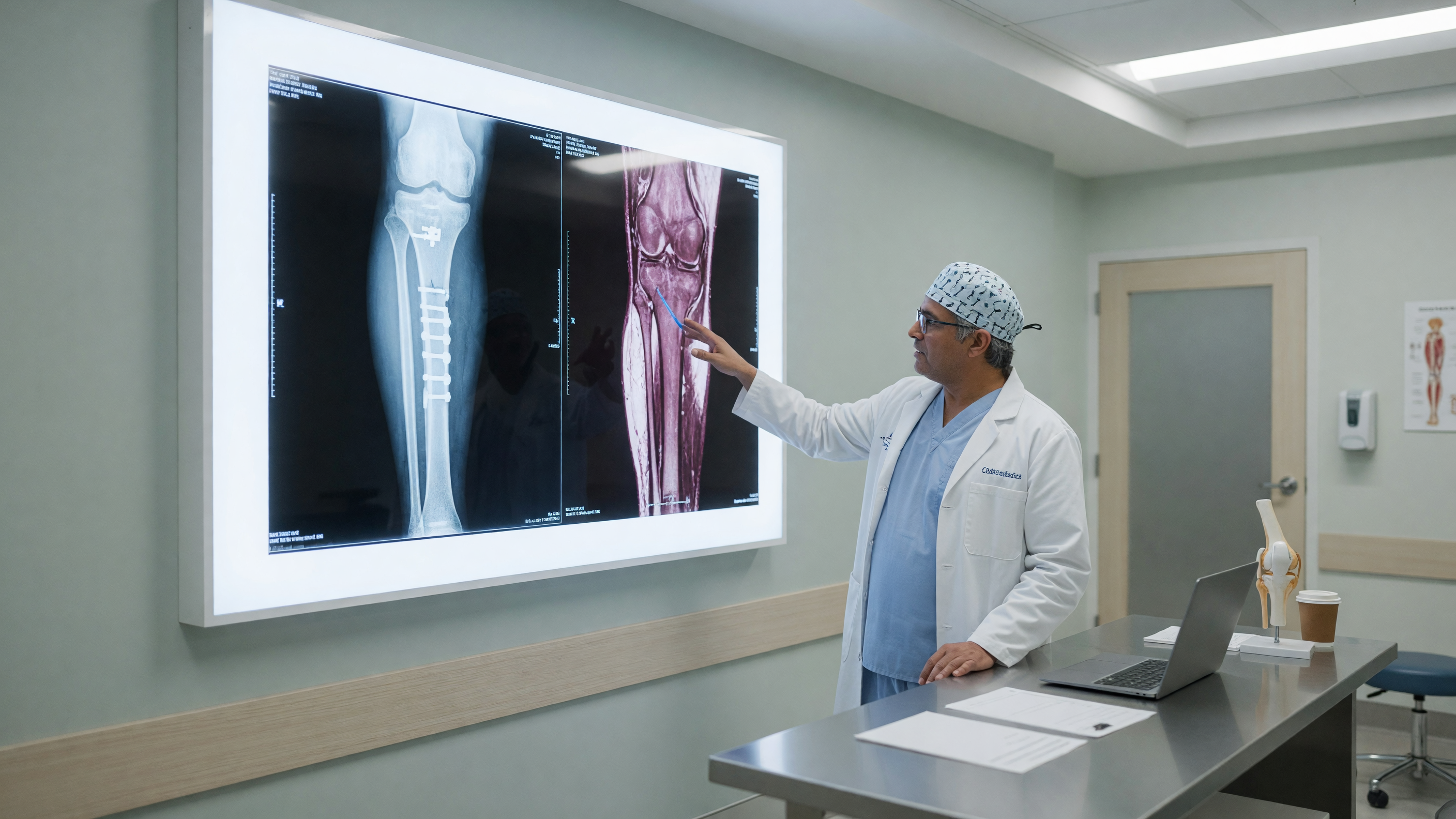
A bone tumor needs surgery when it is malignant, growing rapidly, causing pain or fractures, or pressing on nerves and blood vessels. Many benign tumors, however, only require monitoring. Knowing which situation applies to you depends on the tumor type, size, location, and behaviour. This article explains what bone tumors are, the warning signs that point toward surgery, how doctors diagnose them, and the treatment options available. You will also learn how specialists decide between watchful waiting and an operation, and when to seek expert care at Lux Hospitals.
What Is a Bone Tumor?
A bone tumor is an abnormal growth of cells within or on the surface of a bone. It forms when cells divide uncontrollably, creating a lump or mass.
Tumors can be benign (non-cancerous) or malignant (cancerous). They may start in the bone itself or spread there from another organ.
Bone tumors vary widely in behaviour:
- Can appear at any age
- Often found in arms or legs
- May be primary or metastatic
- Range from harmless to aggressive
- Some cause no symptoms at all
Concerned about an unexplained bone lump? Book an evaluation at Lux Hospitals today.
Benign vs Malignant Bone Tumors
Not every bone tumor is cancer. Most bone tumors are benign and never spread to other parts of the body.
Malignant tumors, however, grow quickly and can invade nearby tissue or spread. This distinction guides whether surgery is needed.
Key differences include:
- Benign — slow-growing, well-defined edges
- Benign — rarely spreads elsewhere
- Malignant — grows fast, invades tissue
- Malignant — can spread to lungs
- Both may still need surgery
Signs a Bone Tumor Needs Surgery
Surgery becomes necessary when a tumor threatens your health, function, or the strength of the bone. Certain warning signs make an operation more likely.
A specialist may recommend surgery if you notice:
- Persistent, worsening bone pain
- Rapid growth of a lump
- Fractures from minor injury
- Numbness or nerve pressure
- Signs of malignancy on scans
- Limited movement in a joint
Don't ignore persistent bone pain—consult the orthopedic experts at Lux Hospitals now.
When Monitoring Is Enough
Not all bone tumors require immediate surgery. Many benign, symptom-free tumors are simply watched over time.
Doctors may choose observation with regular imaging when the tumor is stable and harmless.
Monitoring may be suitable when:
- Tumor is small and benign
- No pain or symptoms present
- No risk of fracture
- Stable size on repeat scans
- Located away from vital structures
Common Types That May Need Surgery
Several bone tumor types are more likely to require surgical treatment. The decision depends on how each one behaves.
Common tumors that may need surgery include:
- Osteosarcoma — aggressive, often malignant
- Ewing sarcoma — needs combined treatment
- Chondrosarcoma — cartilage-based cancer
- Giant cell tumor — can be locally aggressive
- Osteochondroma — removed if symptomatic
Get an accurate diagnosis from the bone tumor specialists at Lux Hospitals.
Complications of Untreated Bone Tumors
Leaving certain bone tumors untreated can lead to serious problems. Malignant tumors may spread, becoming harder to treat.
Even some benign tumors weaken bone and cause pathologic fractures over time. Similar concerns arise with weakened bone in a bone fracture requiring prompt care.
Possible complications include:
- Bone fracture from weakened structure
- Spread of cancer to organs
- Permanent nerve or vessel damage
- Chronic pain and disability
- Loss of limb function
How Bone Tumors Are Diagnosed
Accurate diagnosis is essential before deciding on surgery. Doctors combine imaging with tissue testing to confirm the tumor type.
A biopsy is often the key step that identifies whether a tumor is benign or malignant.
Common diagnostic tools include:
- X-rays to view bone changes
- MRI for soft tissue detail
- CT scans and bone scans
- Biopsy to confirm tumor type
- Blood tests for markers
Schedule advanced bone tumor imaging and diagnosis at Lux Hospitals today.
Surgical Treatment Options
When surgery is required, the approach depends on the tumor's type, size, and location. The goal is to remove the tumor while preserving function.
Modern techniques often save the limb rather than removing it. Reconstruction may follow with implants similar to those used in joint replacement.
Surgical options may include:
- Curettage — scraping out the tumor
- Wide resection of malignant tumors
- Limb-sparing reconstruction surgery
- Bone grafting to fill gaps
- Joint replacement after removal
- Amputation in rare severe cases
Recovery After Bone Tumor Surgery
Recovery varies with the size of the surgery and the tumor type. Physiotherapy plays a major role in regaining strength and movement.
Some patients also need chemotherapy or radiation alongside surgery for malignant tumors.
Recovery typically involves:
- Guided physiotherapy and rehab
- Gradual return to weight-bearing
- Follow-up scans to check healing
- Wound care and infection prevention
- Additional cancer treatment if needed
Begin a personalised recovery plan with the rehabilitation team at Lux Hospitals.
Why Choose Lux Hospitals?
Lux Hospitals offers expert, patient-centred care for bone tumors and complex orthopedic conditions. Our team uses advanced imaging and modern surgical techniques.
From diagnosis to recovery, you receive coordinated support at every step, including guidance from an experienced orthopedic surgeon.
What sets us apart:
- Experienced orthopedic and tumor specialists
- Advanced diagnostic and imaging tools
- Limb-sparing surgical expertise
- Multidisciplinary treatment approach
- Comprehensive rehabilitation support
Conclusion
A bone tumor needs surgery when it is malignant, growing quickly, causing pain, weakening the bone, or pressing on nerves. Benign, stable tumors may only require monitoring with regular scans. The right decision depends on a careful diagnosis, including imaging and often a biopsy.
Early evaluation is the safest path. If you notice persistent bone pain, a growing lump, or an unexplained fracture, seek expert care promptly. The specialists at Lux Hospitals combine accurate diagnosis, advanced surgical options, and dedicated rehabilitation to protect your health and mobility. Don't delay—timely assessment can make all the difference in your outcome and quality of life.