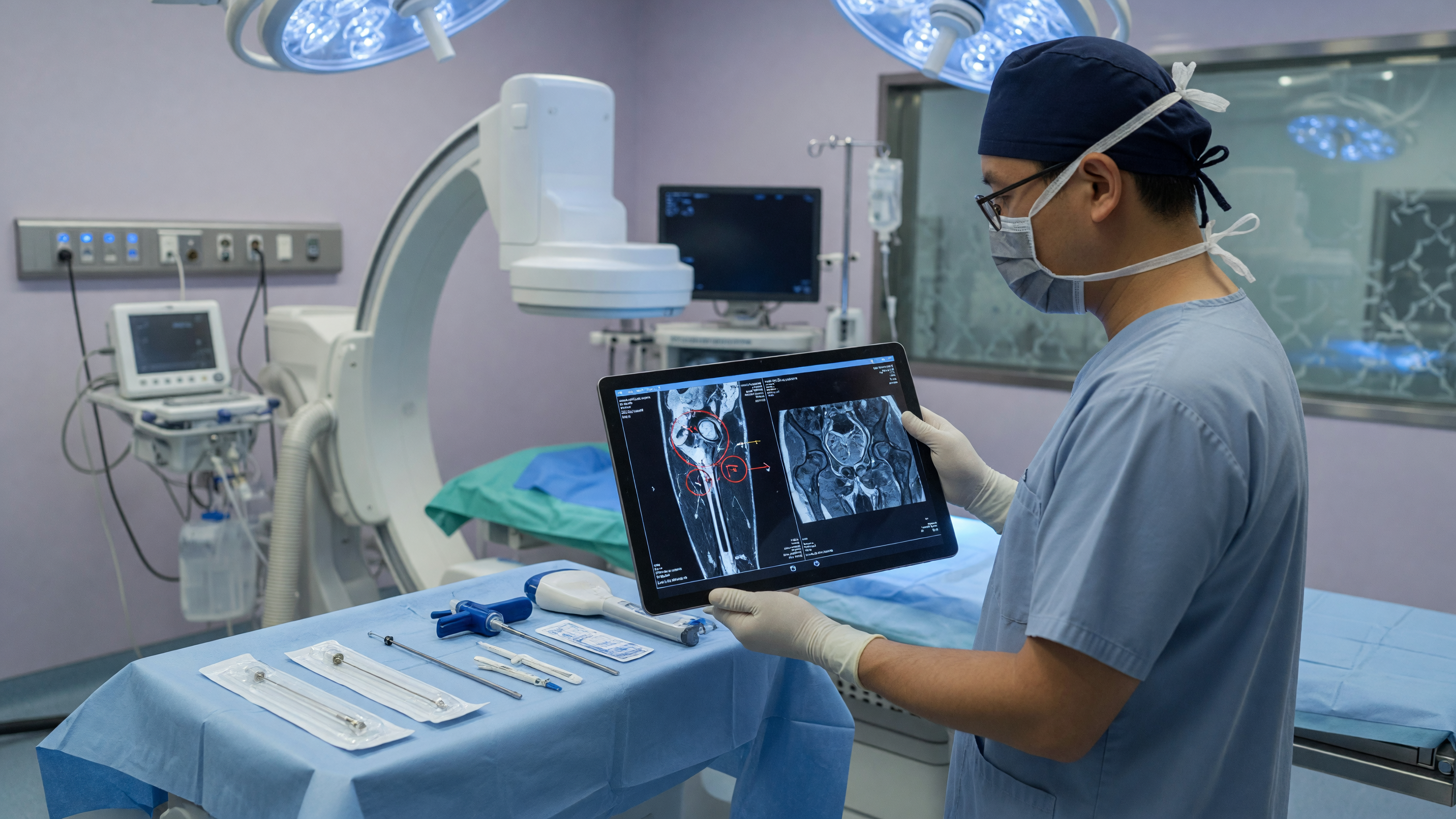
A bone tumor biopsy is a procedure that removes a small sample of bone tissue so a pathologist can examine it and confirm whether a tumor is benign or cancerous. It is needed because imaging alone cannot reliably tell tumor types apart, and an accurate diagnosis guides the correct treatment. This article explains what a biopsy is, the main types, why doctors recommend it, how it is done, and what recovery involves. You will also learn about complications, results, and how specialists at Lux Hospitals plan safe, precise care for bone tumors.
What Is a Bone Tumor Biopsy?
A bone tumor biopsy is a diagnostic procedure that collects a tissue sample from an abnormal bone growth. The sample is examined under a microscope to identify the exact nature of the tumor.
It is the most reliable way to confirm a diagnosis. Doctors rely on it because scans can suggest, but not prove, what a tumor is.
A biopsy typically helps with:
- Confirming whether a tumor exists
- Identifying tumor cell type
- Grading how aggressive it is
- Guiding the treatment plan
Concerned about an unexplained bone lump? Book an evaluation at Lux Hospitals.
Why Is a Bone Tumor Biopsy Needed?
Imaging such as X-rays, MRI, and CT can reveal a suspicious area but cannot always distinguish harmless from dangerous tumors. A biopsy provides definitive proof.
This certainty prevents both under-treatment and unnecessary surgery. Accurate results shape every next step.
A biopsy is needed to:
- Confirm benign or malignant status
- Determine cancer type and grade
- Rule out infection or other causes
- Plan surgery, chemotherapy, or radiation
- Avoid treating a wrong diagnosis
When Do Doctors Recommend a Biopsy?
A biopsy is usually advised after imaging or symptoms raise concern about a bone lesion. It follows a clinical exam and scans, not before them.
Your doctor may weigh symptoms similar to those in the top causes of joint pain before recommending a biopsy.
Signs that may prompt a biopsy include:
- A persistent, unexplained bone lump
- Deep or worsening bone pain
- Abnormal area seen on imaging
- Unexplained fracture without injury
- Suspicious findings needing confirmation
Don't ignore persistent bone pain—consult the specialists at Lux Hospitals today.
Types of Bone Tumor Biopsy
There are several biopsy methods, chosen based on tumor size, location, and depth. The goal is to get a good sample with minimal risk.
Your surgeon selects the safest, most accurate approach for your case.
Common types include:
- Fine needle aspiration — thin needle, small sample
- Core needle biopsy — hollow needle, tissue core
- Image-guided biopsy — CT or ultrasound guided
- Open (incisional) biopsy — surgical tissue sample
- Excisional biopsy — entire small tumor removed
Telling Benign From Malignant Tumors
Not all bone tumors are cancerous. Many are benign and may need only monitoring, while malignant ones require prompt treatment.
Only a biopsy can reliably separate the two. This distinction changes the entire care plan.
Key differences a biopsy helps reveal:
- Benign — slow-growing, non-spreading
- Malignant — aggressive, can spread
- Cell type and abnormality level
- Tumor grade and behaviour
- Whether the growth is primary or secondary
How the Biopsy Is Performed
The procedure varies by type but is planned carefully to protect surrounding tissue. Needle biopsies are often done under local anaesthesia.
Open biopsies may need general anaesthesia and are done in an operating room, sometimes alongside bone fracture treatment planning when bone is weakened.
A typical biopsy involves:
- Numbing or anaesthetising the area
- Locating the tumor with imaging
- Removing a tissue sample
- Sealing the site and dressing it
- Sending the sample to pathology
Get expert, image-guided biopsy planning at Lux Hospitals for safe, accurate results.
How to Prepare for a Bone Biopsy
Good preparation improves safety and comfort. Your team will give specific instructions based on the biopsy type and anaesthesia used.
Much like the steps needed to prepare for a knee arthroscopy surgery, planning matters.
Before your biopsy, you may need to:
- Share all medications and allergies
- Pause blood thinners if advised
- Fast before general anaesthesia
- Arrange transport home afterward
- Complete any pre-biopsy imaging
Risks and Possible Complications
A bone tumor biopsy is generally safe, especially when performed by experienced specialists. Complications are uncommon but possible.
Knowing them helps you spot warning signs early and seek prompt care.
Potential risks include:
- Bleeding or bruising at the site
- Infection needing treatment
- Pain or temporary stiffness
- Nerve or blood vessel injury
- Rarely, spread along the needle track
Choose an experienced orthopedic team at Lux Hospitals to minimise biopsy risks.
Understanding Your Biopsy Results
A pathologist studies the sample and prepares a detailed report. Results usually take a few days, though special tests may take longer.
Your doctor explains what the findings mean for you. This guides the next steps clearly.
Your report may describe:
- Whether the tumor is benign or malignant
- The specific cell type
- The tumor grade
- Molecular or genetic markers
- Recommended treatment direction
Treatment and Care at Lux Hospitals
Treatment depends entirely on the biopsy findings. Benign tumors may only need observation, while cancerous ones need coordinated care.
Our team plans treatment based on tumor type, grade, and your overall health, and can address related orthopedic issues like joint pain such as knee osteoarthritis treatment.
Treatment options may include:
- Active monitoring for benign tumors
- Surgical removal of the tumor
- Chemotherapy or radiation for cancer
- Bone reconstruction after removal
- Rehabilitation and follow-up care
Why Choose Lux Hospitals?
Bone tumor care needs precision, experience, and teamwork. The right center improves both accuracy and outcomes.
Our specialists combine advanced imaging with careful biopsy planning, and patients often look for the best orthopedic surgeon for such sensitive procedures.
At Lux Hospitals you benefit from:
- Experienced orthopedic specialists
- Advanced imaging and diagnostics
- Safe, image-guided biopsy techniques
- Multidisciplinary treatment planning
- Compassionate follow-up care
Trust your bone health to the specialists at Lux Hospitals—schedule your consultation today.
Conclusion
A bone tumor biopsy is the most reliable way to find out exactly what a bone growth is and how to treat it. While imaging can point to a problem, only a tissue sample can confirm whether a tumor is benign or malignant, and how aggressive it may be. This certainty prevents both unnecessary surgery and delayed treatment.
If you have an unexplained bone lump, persistent pain, or a suspicious scan finding, early evaluation matters. The experienced orthopedic team at Lux Hospitals offers safe, precise biopsy techniques and clear guidance on your results. With accurate diagnosis and coordinated care, you can move forward with confidence toward the right treatment.