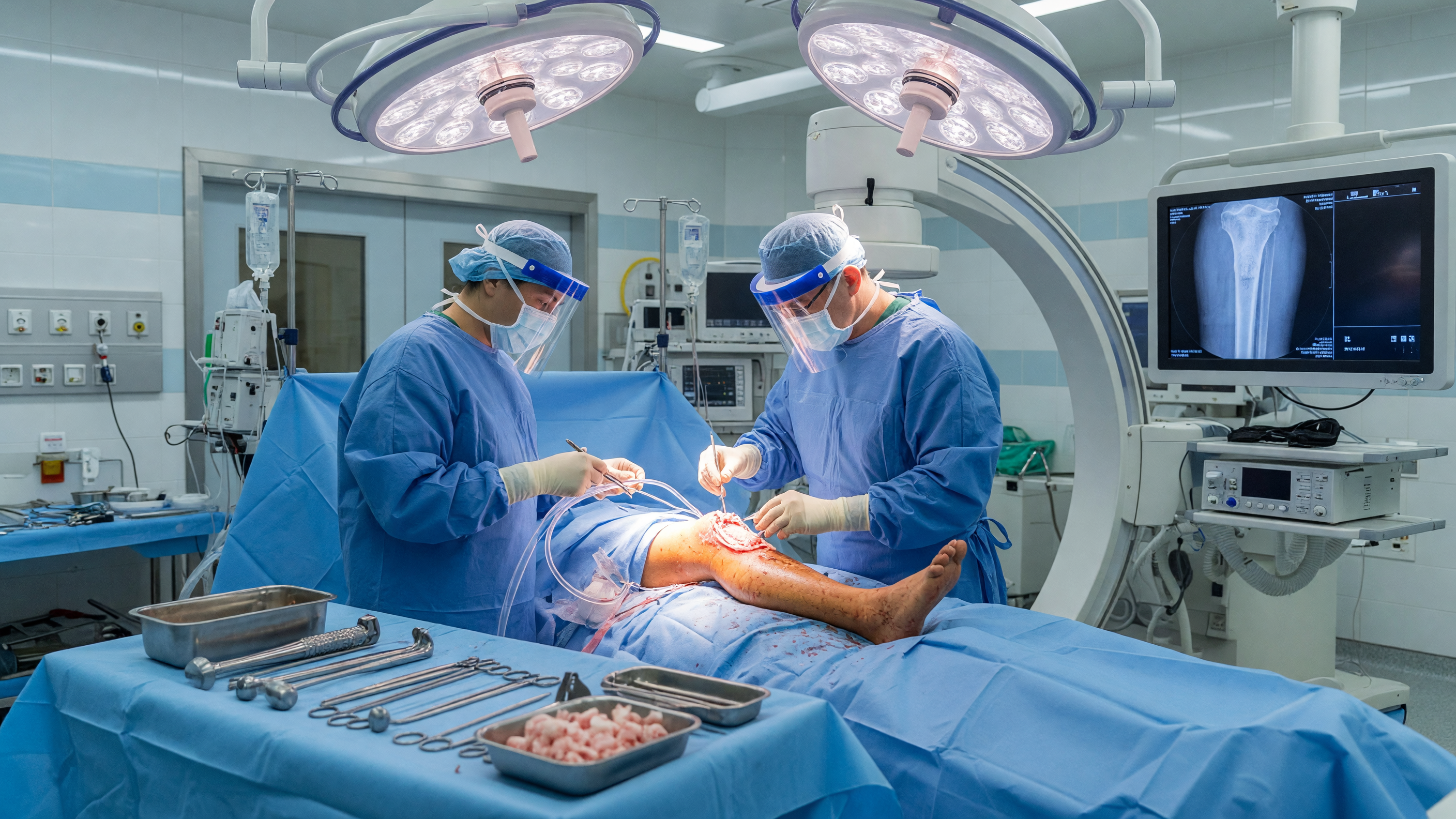
Bone grafting for a nonunion fracture is used when a broken bone fails to heal on its own, typically after six to nine months without progress. Surgeons add graft material to stimulate new bone growth and bridge the gap. This article explains what nonunion means, why fractures fail to heal, the signs to watch for, and the graft types available. You will also learn how the procedure works, recovery expectations, and when to see a specialist. Understanding these steps helps you make informed decisions about restoring bone strength and mobility.
What Is a Nonunion Fracture?
A nonunion fracture is a break that has stopped healing and shows no sign of joining. Doctors usually diagnose it when a fracture fails to unite within nine months.
Unlike a delayed union, which heals slowly, a nonunion needs active intervention.
Common features include:
- Persistent pain at the fracture site
- No new bone on X-rays
- Movement at the break
- Swelling or tenderness months later
- Difficulty bearing weight
Concerned about a slow-healing break? Book an evaluation with the orthopedic team at Lux Hospitals.
What Is Bone Grafting?
Bone grafting is a surgical procedure that places living or processed bone tissue into the fracture gap. The graft acts as a scaffold and stimulus for new bone formation.
It encourages the body to bridge the break and regain strength.
Bone grafts help by providing:
- A framework for new bone cells
- Growth-stimulating proteins
- Bone-forming living cells
- Structural support across the gap
Explore advanced bone fracture treatment options guided by specialists at Lux Hospitals.
Why Some Fractures Fail to Heal
Bones need stability, blood supply, and good nutrition to heal. When one of these is missing, a nonunion can develop.
Certain fractures and health conditions raise the risk considerably.
Common causes include:
- Poor blood supply to the bone
- Infection at the fracture site
- Inadequate immobilization or fixation
- Smoking and poor nutrition
- Diabetes or osteoporosis
- Severe or open fractures
Signs You May Have a Nonunion
A nonunion often reveals itself through ongoing symptoms long after the expected healing time. Recognizing them early leads to faster treatment.
If a fracture still hurts months later, imaging is essential.
Warning signs may include:
- Pain lasting beyond expected recovery
- A gap visible on X-ray
- Instability or abnormal motion
- Persistent swelling or warmth
- Inability to use the limb normally
Struggling to tell a sprain or a fracture apart? Get a clear diagnosis at Lux Hospitals.
When Is Bone Grafting Used?
Bone grafting is used when conservative measures and standard fixation fail to unite a fracture. It is most common in established nonunions with a bone gap or dead tissue.
Surgeons often combine grafting with revised hardware for stability.
Grafting is typically recommended when:
- The fracture shows no healing after months
- There is a gap between bone ends
- Previous surgery failed to unite bone
- Infection has been cleared
- Bone loss follows trauma or tumor removal
Types of Bone Grafts
Several graft options exist, chosen based on the size of the defect and the patient's health. Each has distinct advantages.
Your surgeon selects the type that best supports healing.
Common graft choices include:
- Autograft — your own bone, best healing
- Allograft — donor bone, no second site
- Synthetic graft — ceramic or bioactive material
- Bone marrow aspirate — cell-rich injection
- Bone morphogenetic proteins — growth stimulators
Discuss the right graft option for your recovery with the surgeons at Lux Hospitals.
How the Procedure Works
The surgery is performed under anesthesia and often alongside internal fixation. The surgeon cleans the fracture site and removes any dead or infected bone.
Graft material is then packed into the gap to promote union.
Key steps generally involve:
- Exposing and cleaning the fracture
- Removing scar or dead tissue
- Placing graft into the defect
- Securing bone with plates or nails
- Closing and immobilizing the limb
Recovery and Rehabilitation
Healing after bone grafting takes time, often several months. Follow-up X-rays track new bone formation.
Physical therapy restores strength and range of motion gradually.
Recovery usually includes:
- Limited weight-bearing initially
- Regular imaging to confirm healing
- Guided physiotherapy sessions
- Nutritional support for bone growth
- Avoiding smoking and alcohol
Get a personalized rehabilitation plan from the experts at Lux Hospitals.
Reducing Your Risk of Nonunion
Many nonunions can be prevented with proper fracture care and healthy habits. Following your surgeon's instructions is vital.
Protecting bone health also supports strong healing.
Helpful steps include:
- Quit smoking completely
- Eat calcium and protein-rich foods
- Follow immobilization instructions carefully
- Manage diabetes and osteoporosis
- Attend all follow-up appointments
Why Choose Lux Hospitals?
Lux Hospitals offers advanced orthopedic care for complex and failed fractures. Our specialists use modern imaging, fixation, and grafting techniques.
We tailor every treatment plan to your needs and recovery goals.
Patients choose us for:
- Experienced orthopedic surgeons
- Comprehensive fracture treatment services
- Modern surgical and imaging technology
- Personalized rehabilitation support
- Compassionate, patient-focused care
Don't let a nonunion limit your life—consult the orthopedic experts at Lux Hospitals today.
Conclusion
Bone grafting is a proven solution when a fracture fails to heal naturally. By adding graft material, surgeons restore the biology and stability a broken bone needs to unite. Recognizing the signs of nonunion early and seeking specialist care can prevent long-term disability and repeated surgeries.
If you have a fracture that isn't healing, don't wait. Early evaluation, the right graft choice, and structured rehabilitation offer the best chance of full recovery. The orthopedic team at Lux Hospitals combines advanced techniques with personalized care to help you regain strength and mobility. Schedule a consultation today to explore your treatment options and take the first step toward healing.