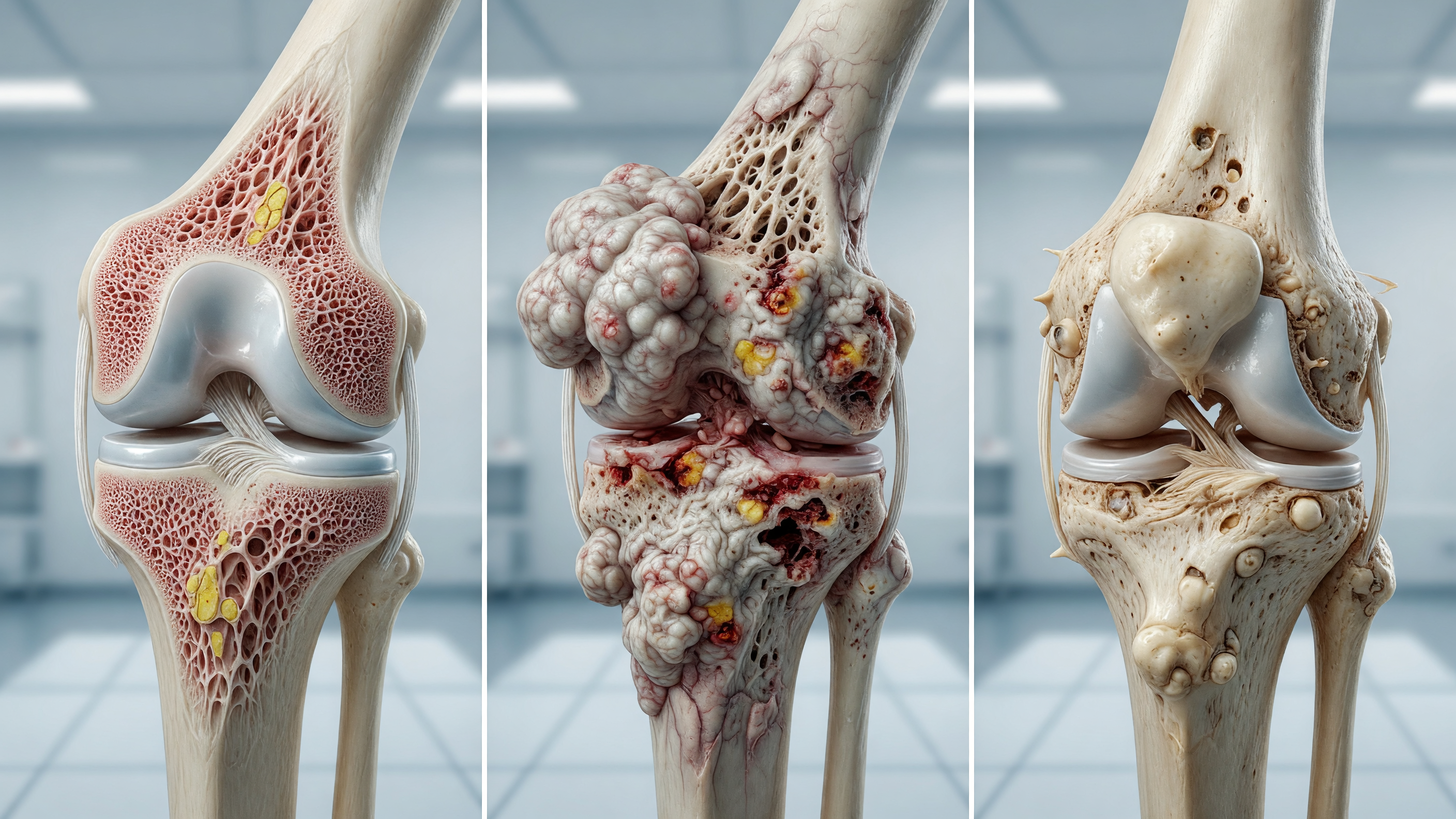
Bone cancer and arthritis both cause bone or joint pain, but they are very different conditions. Bone cancer is a tumor growing within bone tissue, while arthritis is inflammation or wear-and-tear of the joints. Bone cancer often causes deep, persistent pain that worsens at night, whereas arthritis pain flares with movement and eases with rest. This article explains the difference between bone cancer and arthritis, including their symptoms, causes, diagnosis, and treatment. Understanding these distinctions helps you seek the right care early and know when your pain needs urgent evaluation.
What Is Bone Cancer?
Bone cancer is a rare condition where abnormal cells grow uncontrollably inside bone tissue. It can start in the bone (primary) or spread from another organ (secondary).
Primary bone cancers like osteosarcoma often affect children and young adults. The pain is typically deep, constant, and may worsen at night.
Common features of bone cancer include:
- Deep, persistent bone pain
- Swelling or a palpable lump
- Unexplained fractures
- Fatigue and weight loss
- Pain worsening at night
If you notice persistent, unexplained bone pain, get evaluated at Lux Hospitals promptly.
What Is Arthritis?
Arthritis is inflammation of one or more joints, causing pain and stiffness. It is far more common than bone cancer and usually develops with age or joint wear.
Osteoarthritis results from cartilage breakdown, while rheumatoid arthritis is an autoimmune disorder attacking the joints.
Typical signs of arthritis include:
- Joint pain during movement
- Morning stiffness that eases
- Swelling around joints
- Reduced range of motion
- Grinding or clicking sensation
Key Differences at a Glance
The clearest way to separate these conditions is by where the pain originates and how it behaves. Bone cancer targets the bone itself, while arthritis affects the joint spaces.
Here are the main distinctions:
- Bone cancer — tumor inside bone tissue
- Arthritis — inflammation of the joints
- Cancer pain — constant, worse at night
- Arthritis pain — worsens with activity
- Bone cancer — often a visible lump
- Arthritis — joint stiffness and swelling
Unsure which condition you have? Book a diagnostic consultation at Lux Hospitals today.
How Symptoms Differ
Although both cause discomfort, the symptom patterns are quite distinct. Recognizing them helps guide the urgency of your visit.
Bone cancer often brings systemic symptoms like weight loss, which arthritis rarely does.
Compare the key symptoms:
- Bone cancer — deep pain, lumps, fatigue
- Arthritis — stiff, achy, swollen joints
- Cancer — fractures without major injury
- Arthritis — pain in multiple joints
- Cancer — night pain disturbing sleep
Causes and Risk Factors
The underlying causes of these conditions are entirely different. Understanding risk factors helps identify who is most vulnerable.
Arthritis is often one of the top causes of joint pain and links to age and repetitive strain.
Key risk factors include:
- Bone cancer — genetic syndromes, radiation exposure
- Arthritis — aging and cartilage wear
- Cancer — previous cancer history
- Arthritis — obesity and joint overuse
- Autoimmune triggers for rheumatoid arthritis
Concerned about ongoing joint pain? The orthopedic team at Lux Hospitals can help.
Understanding the Pain Patterns
Pain behavior is one of the most telling clues in bone cancer vs arthritis. The timing and triggers differ significantly.
Bone cancer pain persists even at rest and often intensifies overnight. Arthritis pain typically improves with rest and worsens after activity.
Distinguishing pain patterns:
- Cancer pain — constant, unrelenting
- Arthritis pain — activity-related flares
- Cancer — night pain waking you up
- Arthritis — morning stiffness under an hour
- Cancer — localized to one bone area
How Each Is Diagnosed
Accurate diagnosis relies on imaging and, sometimes, tissue sampling. A specialist evaluation is essential to confirm the cause.
Bone cancer usually requires a biopsy, while arthritis is diagnosed through clinical exam and X-rays.
Common diagnostic tools include:
- X-rays for bone changes
- MRI or CT scans
- Bone biopsy for tumors
- Blood tests for inflammation
- Physical joint examination
Get an accurate diagnosis from the best orthopedic surgeon at Lux Hospitals.
Warning Signs You Shouldn't Ignore
Some symptoms warrant urgent medical attention, especially those suggesting bone cancer. Early evaluation improves outcomes.
Don't dismiss unexplained fractures or a growing lump as ordinary aches.
Seek prompt care if you notice:
- Bone pain worsening at night
- A firm, growing lump
- Fracture from minor injury
- Unexplained weight loss
- Persistent fatigue with pain
Treatment Options at Lux Hospitals
Treatment depends entirely on the diagnosis. Bone cancer requires oncology-based care, while arthritis is managed with orthopedic and joint therapies.
For advanced joint damage, options like knee osteoarthritis treatment or hip osteoarthritis treatment restore mobility.
Common arthritis and joint treatments include:
- Medications and physiotherapy
- Knee replacement for severe damage
- Hip replacement for worn joints
- Arthroscopy for joint repair
- Cartilage regeneration procedures
Explore personalized treatment plans with the specialists at Lux Hospitals.
Why Choose Lux Hospitals?
Lux Hospitals combines expert orthopedic and diagnostic care under one roof. Our team ensures accurate diagnosis and tailored treatment.
Whether you need bone fracture treatment or advanced joint surgery, we prioritize your recovery and comfort.
What sets us apart:
- Experienced orthopedic specialists
- Advanced imaging and diagnostics
- Minimally invasive surgical options
- Comprehensive rehabilitation support
- Patient-centered, compassionate care
Conclusion
Bone cancer and arthritis may both cause pain, but they are fundamentally different in cause, symptoms, and treatment. Bone cancer involves tumor growth within bone and often brings deep, constant, night-time pain, while arthritis affects the joints with activity-related stiffness and swelling. Knowing these differences helps you respond appropriately and seek timely care.
Never ignore persistent bone pain, an unexplained lump, or fractures from minor injuries. Early evaluation makes a real difference in outcomes. If you're unsure about your symptoms, consult the experienced orthopedic team at Lux Hospitals for an accurate diagnosis and a treatment plan designed around your needs.