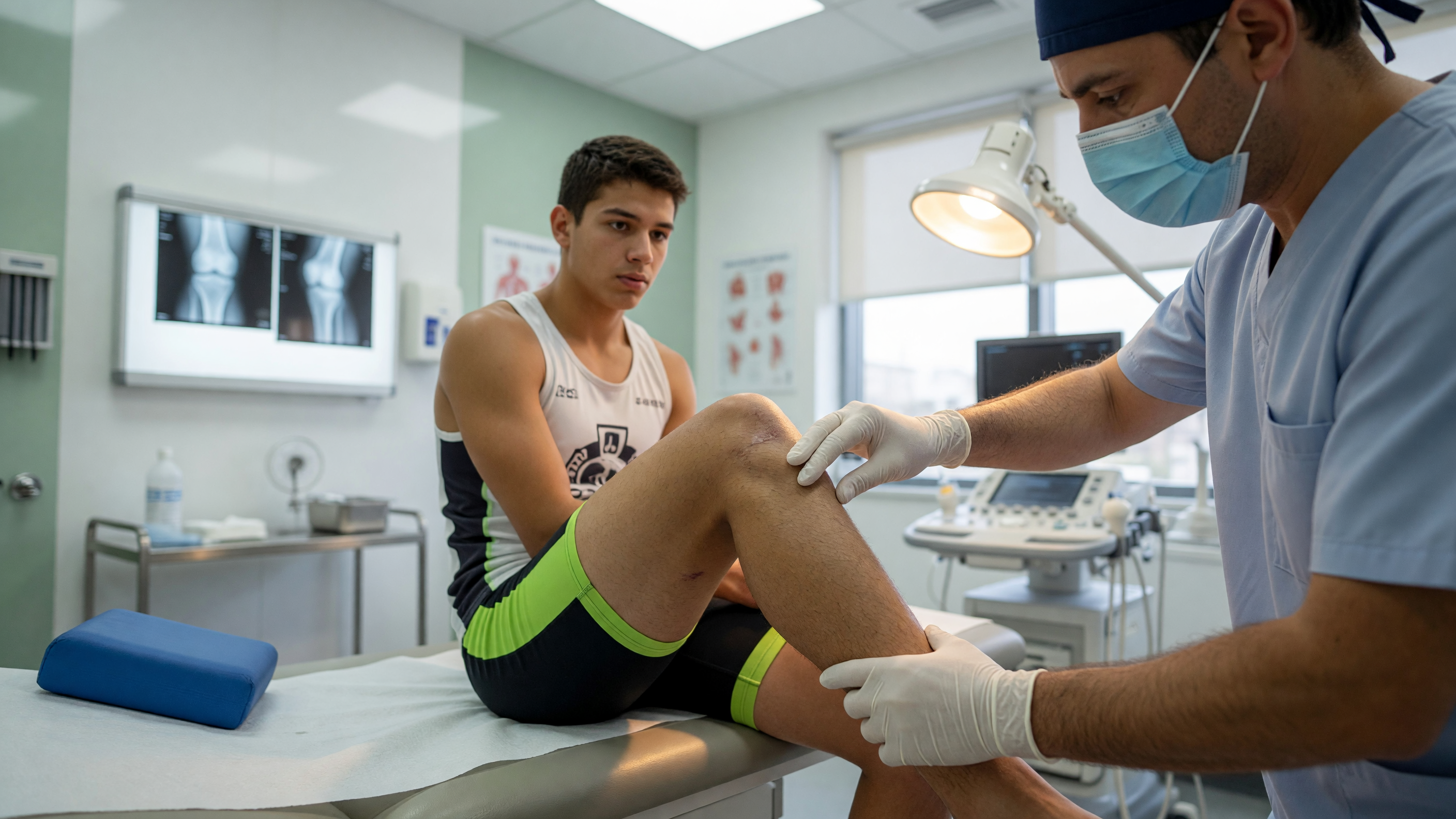
ACL tear symptoms usually include a loud popping sound, sudden knee pain, rapid swelling, and a feeling that the knee will give way. These signs often appear right after a sudden twist, awkward landing, or direct blow to the knee. Recognising them early helps you get timely care and avoid further damage. This article explains what the ACL does, the seven most common warning signs, other causes of knee pain, how doctors diagnose an ACL injury, and the treatment options available at Lux Hospitals so you know exactly when to seek help.
What Is an ACL Tear?
The anterior cruciate ligament (ACL) is one of four main ligaments stabilising your knee. It keeps the shinbone from sliding too far forward.
An ACL tear happens when this ligament is overstretched or ruptured, often during sports. It is a common knee ligament injury.
Tears range in severity:
- Grade 1 — mild stretch, ligament intact
- Grade 2 — partial tear
- Grade 3 — complete rupture
- Often linked to twisting movements
Concerned about a knee injury? Book an evaluation at Lux Hospitals today.
1. A Popping Sound at Injury
Many people hear or feel a distinct "pop" at the moment of injury. This is one of the most telling ACL tear symptoms.
The sound often coincides with a sudden twist or pivot. You may notice it during:
- Rapid direction changes
- Awkward landings from a jump
- Sudden stops while running
- Direct impact to the knee
2. Sudden, Severe Knee Pain
Sharp pain usually strikes immediately after the ligament tears. The intensity often forces athletes to stop playing.
The pain may settle slightly but returns with movement. Common patterns include:
- Deep pain inside the knee
- Worse when standing or twisting
- Pain during weight-bearing
- Persistent ache at rest
3. Rapid Swelling Within Hours
Swelling from an ACL tear typically develops within a few hours. It results from bleeding inside the joint.
This is different from a minor sprain, where swelling is often slower. Watch for:
- Visible puffiness around the knee
- Tightness or fullness feeling
- Reduced ability to bend
- Swelling that worsens quickly
Notice rapid knee swelling after an injury? Consult the specialists at Lux Hospitals promptly.
4. Knee Instability or Giving Way
A torn ACL makes the knee feel loose or unstable. Many describe the joint "giving way" during movement.
This instability can make daily activities risky. You may notice:
- Buckling when changing direction
- Feeling the knee shift
- Difficulty on stairs
- Reduced confidence in the leg
5. Limited Range of Motion
After the injury, bending or straightening the knee becomes difficult. Swelling and pain restrict movement.
Some people cannot fully extend the leg. Signs include:
- Stiffness when bending
- Trouble straightening fully
- Locking sensation
- Reduced flexibility over days
6. Difficulty Bearing Weight
Standing or walking often feels unstable and painful. Some patients need support to move.
This symptom overlaps with other injuries, so proper assessment matters. Understanding the difference between a sprain or a fracture is important. You may experience:
- Limping while walking
- Needing crutches for support
- Fear of putting weight down
- Leg feeling weak
Struggling to bear weight on your knee? Get an expert diagnosis at Lux Hospitals.
7. Tenderness and Warmth
The injured knee may feel warm and tender to the touch. This reflects inflammation inside the joint.
Tenderness often spreads across the joint line. Look for:
- Warmth over the knee
- Soreness when pressed
- Redness in some cases
- Discomfort with light touch
Other Causes of Knee Pain
Not every knee injury is an ACL tear. Similar symptoms can arise from other structures.
A meniscus or cartilage problem often accompanies ligament damage. Consider these possibilities:
- A meniscus tear injury
- Other knee ligament and meniscus injuries
- Kneecap dislocation
- Cartilage damage
- Early knee osteoarthritis
How an ACL Tear Is Diagnosed
Doctors combine your history with a physical exam. Special tests check knee stability and ligament integrity.
Imaging confirms the diagnosis and rules out fractures. Common steps include:
- Lachman and pivot-shift tests
- MRI to assess the ligament
- X-rays to exclude fractures
- Assessment of associated injuries
Get an accurate ACL tear diagnosis with advanced imaging at Lux Hospitals.
Treatment Options at Lux Hospitals
Treatment depends on tear severity, activity level, and stability. Mild tears may heal with therapy, while complete tears often need surgery.
Our team offers proven ACL tear treatment tailored to you. Options include:
- Physiotherapy and bracing
- Arthroscopic ACL reconstruction
- ACL and PCL reconstruction
- Revision ACL reconstruction
- Rehabilitation programmes
Why Choose Lux Hospitals?
Lux Hospitals combines experienced surgeons with modern, minimally invasive techniques. We focus on restoring strength and stability.
Our care spans diagnosis to full recovery. Patients benefit from:
- Expert orthopaedic specialists
- Advanced arthroscopic surgery
- Personalised rehabilitation plans
- Comprehensive follow-up care
- Sports injury expertise
Don't ignore knee instability—schedule your consultation at Lux Hospitals today.
Conclusion
Recognising ACL tear symptoms early can make a real difference in your recovery. A popping sound, sudden pain, rapid swelling, and knee instability are the clearest warning signs to watch for. Ignoring them may lead to further cartilage or meniscus damage and long-term problems.
If you suspect an ACL injury, don't wait for symptoms to worsen. A prompt evaluation helps confirm the diagnosis and guides the right treatment, whether that's physiotherapy or reconstruction surgery. The expert orthopaedic team at Lux Hospitals offers advanced diagnosis, minimally invasive treatment, and personalised rehabilitation to get you moving confidently again. Book your consultation today and take the first step toward a stable, pain-free knee.